
Importance of Roof Vents & Common Types for Florida Homes
Roof vents are not something most Jacksonville homeowners think about until something goes wrong. But proper roof ventilation is one of the more important factors in how well a home holds up over time, and it comes up in more inspection types than most people realize.
Whether you are buying, selling, or maintaining a home in Northeast Florida, understanding how roof vents work and what inspectors or buyers will look for is practical knowledge worth having before you really need it.
Why Roof Ventilation Matters in Florida
A roof ventilation system creates continuous airflow through the attic space. Cool, fresh air enters through intake vents at the soffits. Hot, moist air escapes through exhaust vents near the ridge. That exchange keeps trapped air from building up directly above your living space.
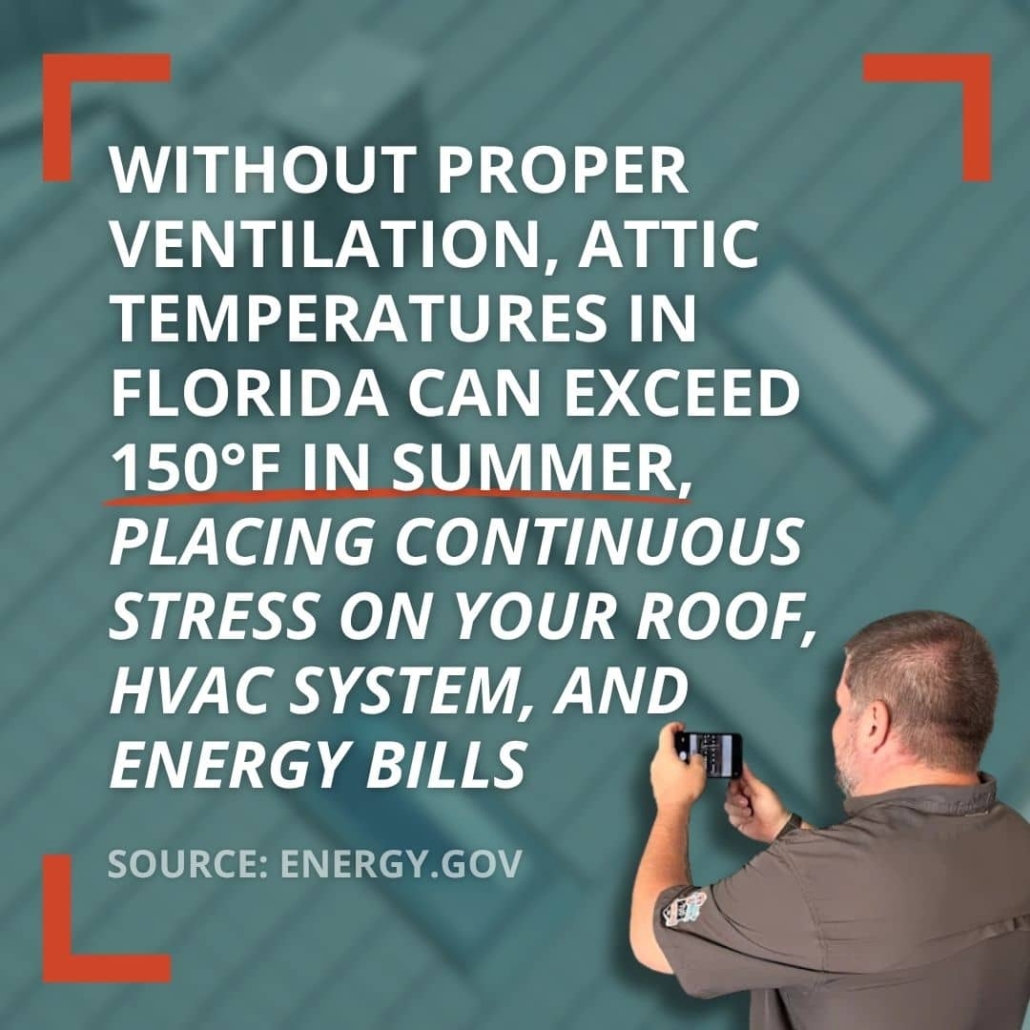
Without proper attic ventilation, attic temperatures in a Jacksonville summer can exceed 150 degrees Fahrenheit. That heat and moisture buildup compounds quietly over time. It consistently shows up as one of the more significant findings during home inspections in Northeast Florida.
Poor attic ventilation commonly leads to:
- Premature shingle aging and cracking from sustained heat below the roof deck
- Moisture buildup and mold growth on decking, framing, and attic insulation
- Wood rot in structural framing from prolonged humid air exposure
- Increased cooling costs and strain on HVAC systems year-round
- Accelerated roof wear that affects 4-point inspection outcomes and insurance eligibility
That last point matters a lot in Florida. Insurance companies here scrutinize roof condition more closely than in most states. A roof showing premature deterioration from poor ventilation can affect both coverage eligibility and premiums. Wind mitigation inspections and 4-point inspections both evaluate roof condition directly, and ventilation is part of what both assess.
How a Roof Ventilation System Works
Proper roof ventilation depends on a balance between intake and exhaust vents, not just the presence of vents. Hot air rises naturally. When exhaust ventilation sits at or near the roof’s peak, the system works with physics. Intake vents along the roof eaves bring cooler air in at a low point while exhaust vents release hot attic air above.
A well-designed ventilation system follows the general standard of one square foot of net free ventilation area per 150 square feet of attic size. This reduces to one square foot of net free ventilation area per 300 square feet when intake and exhaust are properly balanced.
An attic with adequate exhaust but blocked intake will not achieve proper airflow, regardless of how many vents sit on the roof surface. Blocked soffit vents are the most common ventilation deficiency inspectors find in the Jacksonville area. Attic insulation pushed against the soffit is a frequent cause. It is easy to miss without a thorough inspection.
Common Types of Roof Vents
Not all roof vents serve the same purpose, and the combination of any given home says a lot about how well the attic ventilation system performs. Here are the most common types of roof vents on homes across Northeast Florida, along with how each one functions.
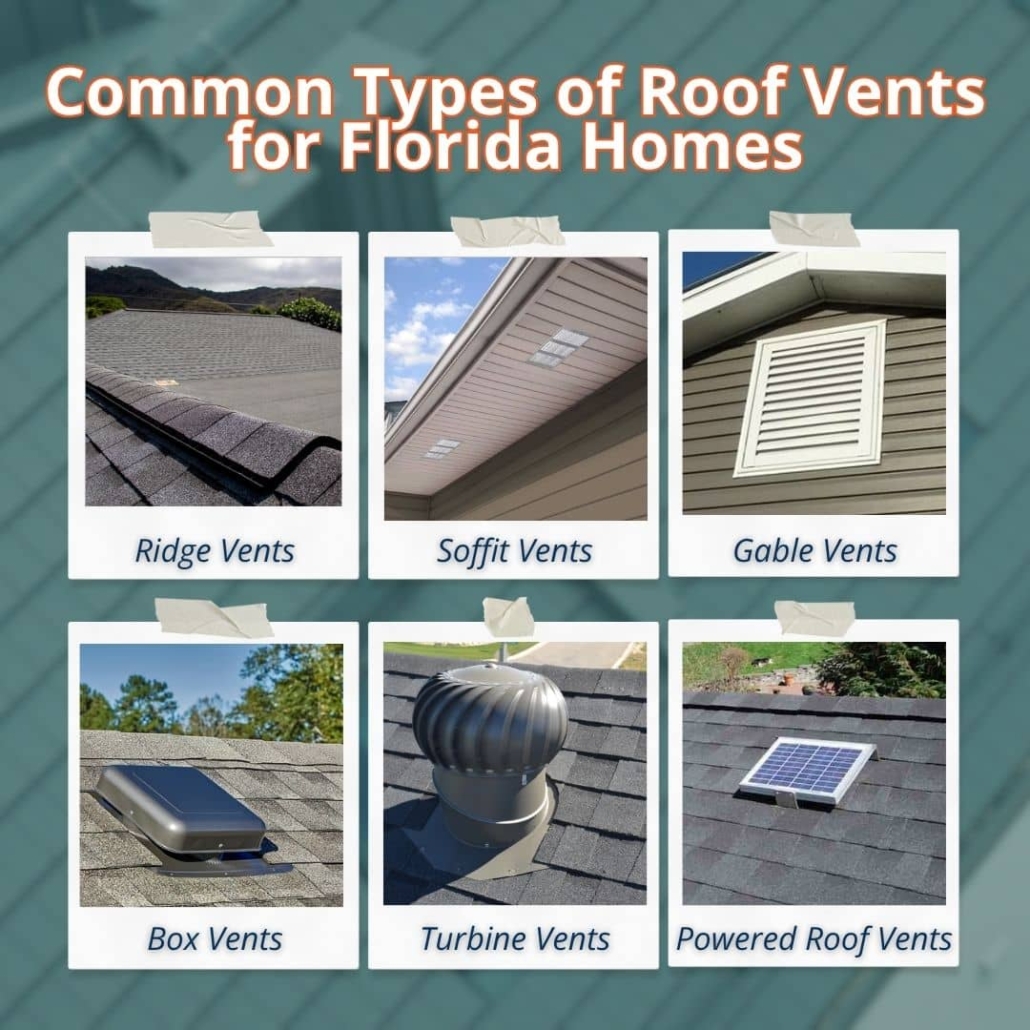
Ridge Vents
Ridge vents run along the full length of the roof’s ridge and rank among the most effective exhaust vents available. They span the entire peak, providing uniform exhaust ventilation across the attic rather than venting from a single point.
Ridge vents are common on newer construction in Florida. They are low-profile, support natural airflow effectively, and perform well in high-wind conditions when properly installed. Wind mitigation inspectors evaluate them for insurance purposes.
Soffit Vents
Soffit vents are roof intake vents on the underside of the roof overhang along the eaves. They form the intake side of the ventilation system and work directly with ridge or other exhaust vents above to create a balanced attic ventilation system.
When soffit vents are blocked, the entire ventilation cycle suffers. This holds true regardless of how many exhaust vents are present. Inspectors flag this issue consistently across Jacksonville, St. Johns, and Clay counties.
Gable Vents
Gable vents sit in the triangular wall section at each end of a gable roof. They are common on older homes throughout Northeast Florida and can serve as both intake and exhaust vents depending on wind direction and speed.
Gable vents work reasonably well on their own but are less efficient than a balanced ridge and soffit setup. Combining them with ridge vents on the same roof can disrupt proper ventilation by short-circuiting airflow horizontally.
There is also a storm concern worth noting: gable end vents are one of the more common points of water intrusion during high-wind events and driving rain, which matters for any home in Northeast Florida heading into hurricane season.
Box Vents and Roof Louvers
Box vents, also called roof louvers or static roof vents, are square or rectangular passive vents near the ridge line. They allow hot air to escape naturally with no moving parts, relying on natural airflow and wind to ventilate the attic space.
Most larger roofs need multiple units to ventilate adequately. Static vents are common on both older and newer homes in Northeast Florida. They are also a reliable solution for managing moisture buildup in attics on gable roof designs.
Hip Vents
Hip vents work like ridge vents but serve homes with hip roofs. Hip roofs have sloped sides on all four faces and limited or no traditional ridge area. Hip vents run along the hip lines and provide exhaust ventilation where a standard ridge vent cannot go.
Hip roofs are common in Florida for their wind resistance. That makes hip vents a relevant option for many Jacksonville-area homes. Wind mitigation inspectors assess their performance and condition the same way they assess ridge vents.
Turbine Vents
Turbine vents use wind energy to actively pull hot air out of the attic. When spinning freely, they move significantly more air than a static vent of the same size. They perform well in the coastal and breezy conditions common across Northeast Florida.
A turbine that is not spinning freely or has a seized bearing provides almost no benefit, and inspectors note this during roof assessments. It is also worth knowing that turbine vents sit higher off the roof surface than most other vent types, making them more vulnerable to storm debris and high winds.
In a hurricane-prone area like Northeast Florida, that is a practical consideration when evaluating or replacing them.
Powered Roof Vents
Powered roof vents, including electric attic fans and solar-powered vents, use mechanical ventilation to actively pull air out of the attic. A thermostat or humidistat controls the cycle. Solar-powered vents deliver the same active ventilation without adding to energy costs, making them a smart option in Florida’s sun-heavy climate.
One important consideration: a powered vent in an attic with insufficient intake vents can depressurize the attic. It then pulls conditioned air up from the living space through ceiling penetrations, increasing cooling costs rather than reducing them. Proper airflow balance between intake and exhaust is essential before installing or evaluating any powered solution.
What Do Inspectors Evaluate Here?
Roof ventilation comes up across multiple inspection types. What inspectors assess depends on the scope.
- Standard home inspection: Inspectors assess overall attic ventilation adequacy, intake and exhaust balance, soffit blockage, and signs of heat or moisture damage to the roof deck, insulation, and framing. Inside & Out Property Inspectors has a Level II Certified Thermographer on staff who identifies heat and moisture patterns that a standard visual inspection may miss.
- Wind mitigation inspection: This inspection evaluates the roof’s ability to resist wind-driven damage, including vent type and condition. In Florida, wind mitigation reports feed directly into homeowners’ insurance premiums.
- 4-point inspection: This covers the four major systems, including the roof, assessing condition, and remaining useful life. Poorly ventilated roofs show accelerated wear. That affects how inspectors rate the roof and whether an insurer will issue or renew a policy.
Other Related Questions
What is the difference between a wind mitigation inspection and a 4-point inspection?
A wind mitigation inspection evaluates features that reduce wind damage risk, including roof covering, deck attachment, and roof-to-wall connections. A 4-point inspection evaluates the four major systems: roof, HVAC, electrical, and plumbing. Florida insurers commonly require both, but they serve different purposes and produce separate reports.
How does attic moisture connect to mold risk in Florida homes?
Poor ventilation allows moisture to accumulate on roof decking and framing, creating conditions where mold thrives year-round in Florida’s humidity. A mold inspection identifies whether growth is present in the attic. Thermographic inspection detects moisture patterns before they become visible to the naked eye.
What should buyers know about roof inspections when purchasing a home in Northeast Florida?
Roof condition ranks among the most consequential findings in any Florida home inspection report. It directly affects insurance eligibility and premiums. Knowing the roof type, maintenance history, and estimated remaining life before closing can significantly influence negotiation and long-term ownership costs.
When to Call a Professional
Roof ventilation issues are not always visible from the ground or a quick attic look. Schedule a professional inspection when:
- You are buying or selling a home and want a complete picture of the roof system
- Cooling costs are unusually high, and the attic has not been assessed recently
- You notice staining, moisture, or mold growth on attic framing or decking
- Your roof is aging, and you are approaching an insurance renewal or a 4-point inspection
- You are unsure whether your home’s intake and exhaust vents are balanced or functioning correctly
Conclusion
Roof vents do important work that most homeowners never think about until there is a problem. A well-designed ventilation system extends the life of your roof, reduces cooling costs, improves indoor air quality, and prevents moisture damage and wood rot from showing up in inspection reports at the worst possible time.
In Northeast Florida, heat, humidity, and storm exposure make proper attic ventilation more consequential than in most parts of the country. If you have questions about your roof system or want to schedule an inspection, contact Inside & Out Property Inspectors today.