What’s Hiding Behind Your Vinyl Siding?
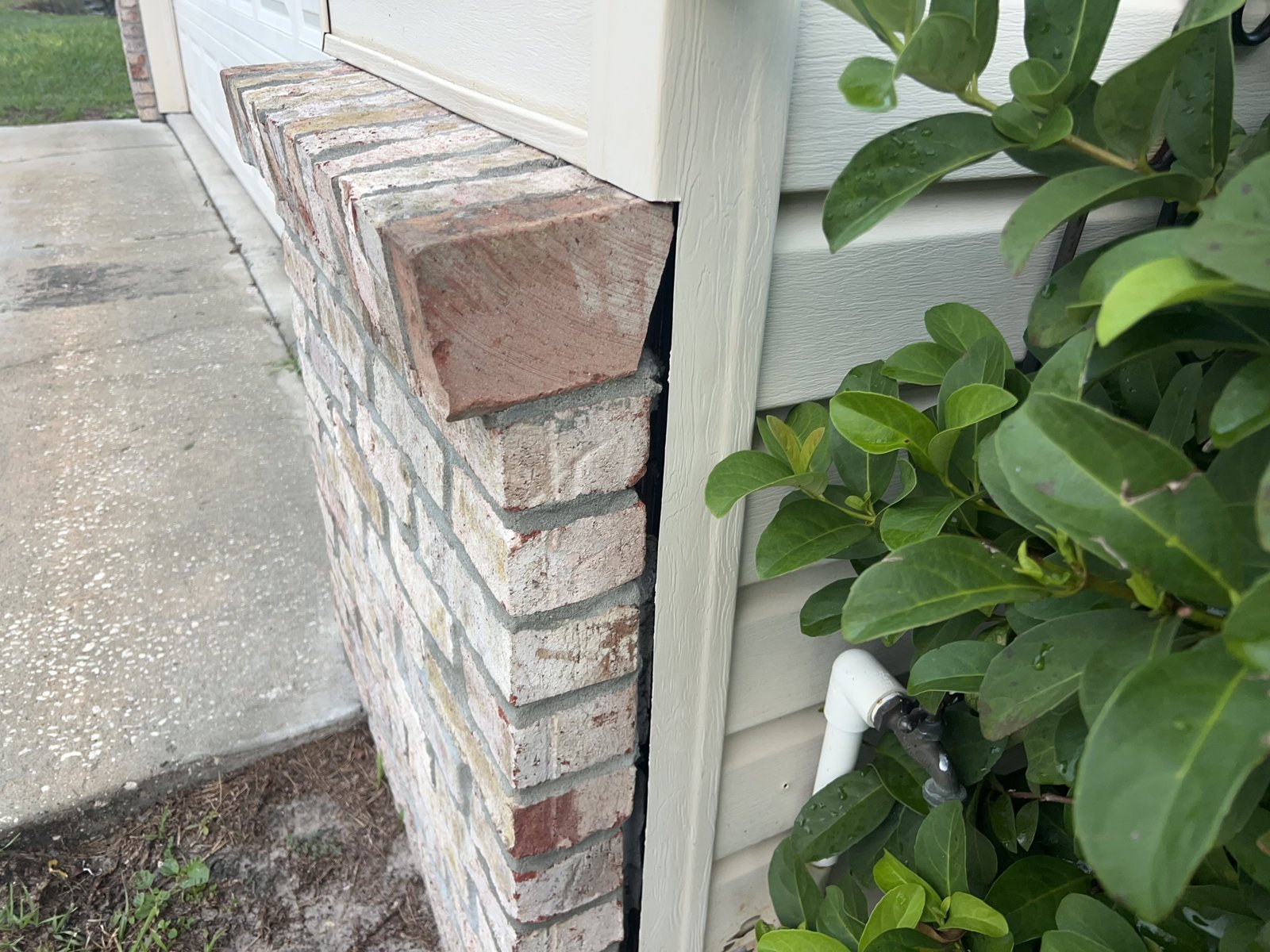
From the street, the house looked fine. The vinyl siding was straight, the color was even, and nothing jumped out. Then Inspector Will got down low at the garage corner, where the brick meets the siding, and started looking closer.
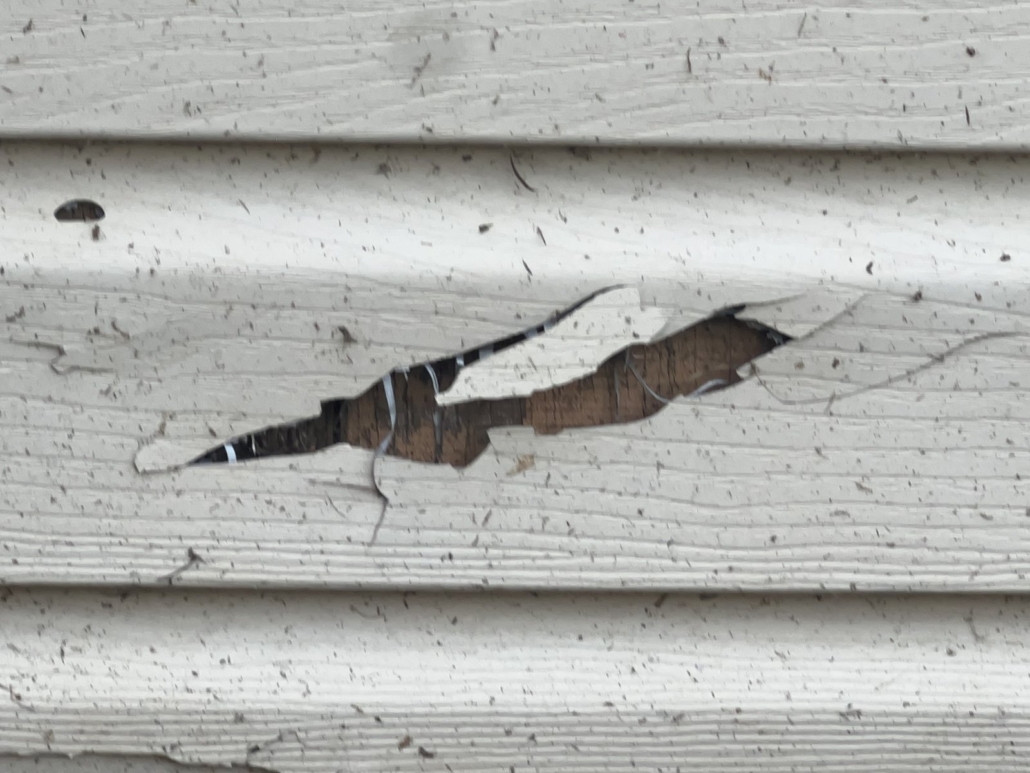
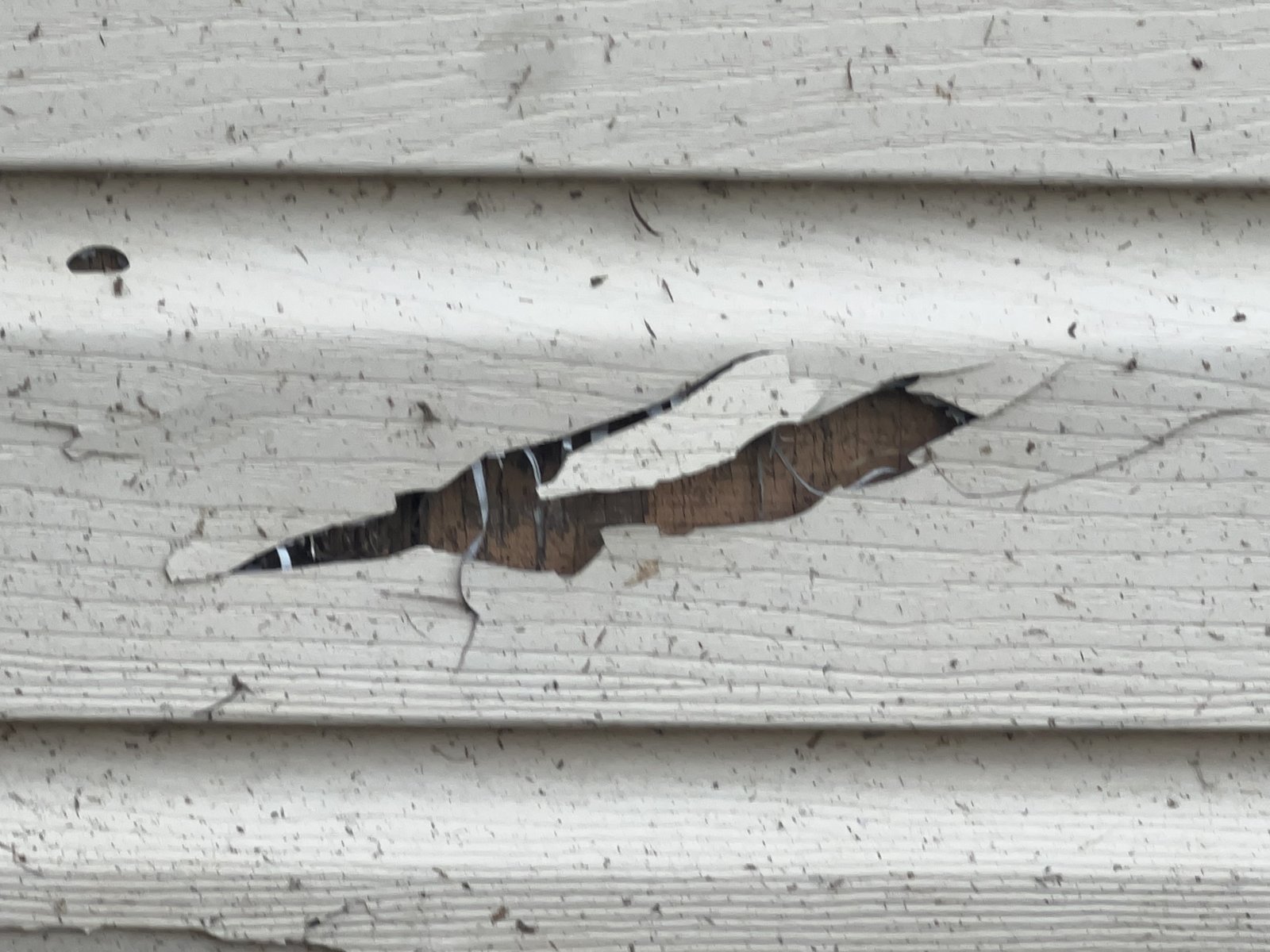
What he found was a torn spot in the siding. Behind it, the house wrap that’s supposed to protect the wall was torn and missing, and the wood sheathing underneath was dark and decayed. That’s the kind of damage that rarely stops where you can see it, so it went in the report as likely hidden damage that needs a closer look.
Vinyl siding is not waterproof
A lot of buyers assume the siding is what keeps water out of the wall. It’s only the first layer. The vinyl siding industry’s own installation manual says vinyl siding is an exterior cladding, not a water-resistive barrier. It’s designed to let the wall behind it breathe, and it must be installed over a water-resistive barrier that stops the water that gets past the siding from going further into the wall (Vinyl Siding Institute installation manual). If you’re curious how long siding holds up in general, see How Long Does Vinyl Siding Last?
In other words, some water behind vinyl siding is expected. The house wrap and the flashing are what handle it. When the wrap is torn or missing, that water lands right on the sheathing.
Why it matters more in Northeast Florida
Around Jacksonville and St. Johns County, walls get a lot of wind-driven rain, plus sprinklers that hit the same low section of wall day after day. Water that sneaks behind the siding has time to soak into the sheathing and framing, and it can stay damp in our humidity. Wood that stays wet decays, and the siding hides it the whole time. Learn more about what water intrusion is. (Have a stucco home instead? Read about common concerns with stucco for an exterior wall.)
By the time you notice something from the outside, like a soft spot, a stain inside, or a musty smell in that room, the damage is usually bigger than it looks.
Where water gets in
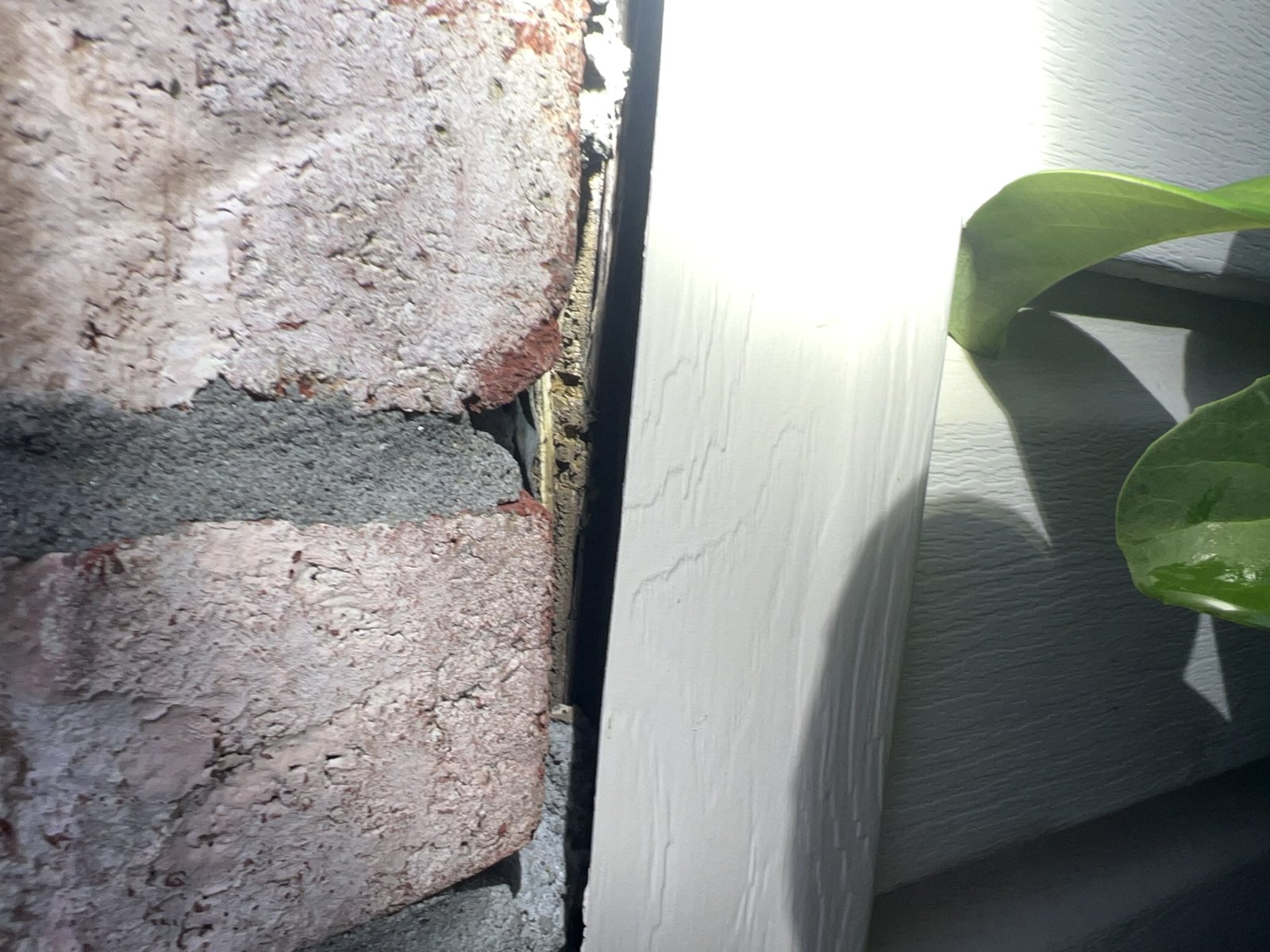
On this house, the trouble spot was the gap where the brick and the siding meet at the garage corner. Transitions like that are common places for water to get behind the cladding. The installation manual calls for flashing that ties into the water-resistive barrier around windows, doors, corners, other openings and roof lines for exactly this reason (Polymeric Exteriors, getting started).
Here’s what we look at on the outside walls during a home inspection:
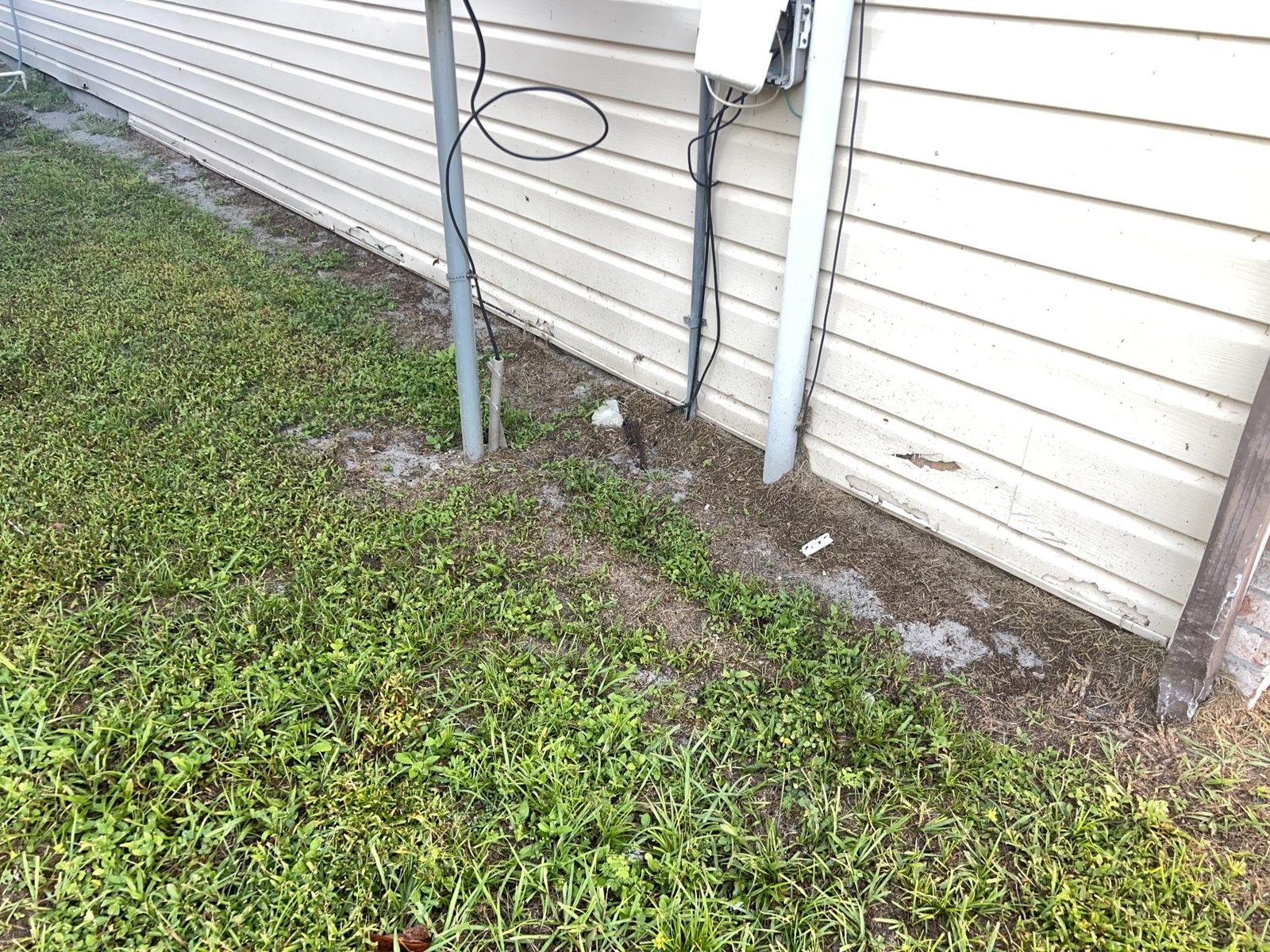
- Gaps and holes at brick-to-siding transitions, around windows and doors, and where pipes, wires and vents pass through the wall.
- Torn, cracked or loose siding, especially low on the wall where mowers, trimmers and pets do damage.
- Siding that runs down to the dirt or mulch, which keeps the bottom edge wet.
- Missing or poorly done flashing at roof-to-wall lines and above windows and doors.
- Signs on the inside of the same wall, like stains, swollen baseboards or high moisture readings.
What to do if your inspector finds it
A torn spot in the siding is a cheap fix. Rotted sheathing behind it isn’t something you want to find after closing. If your report flags damage like this, it’s worth having a qualified siding or general contractor open the wall in that area to see how far it goes before your inspection period ends. That gives you the facts you need to talk repairs with the seller.
If you already own the home, don’t just snap a new piece of siding over the hole. Find out what’s behind it first.
Why we look closer
Anyone can walk past siding that looks fine from six feet away. Our inspectors get down at the corners, the transitions and the bottom edge, because that’s where these problems start. Will’s find on this house is a good example of why a thorough home inspection pays for itself before you buy.
Buying in Jacksonville, St. Augustine or anywhere in St. Johns County? Call Inside & Out Property Inspectors at 904-395-1900 or book online. See our home inspection services in St. Johns County.