How Often Should You Get a Deck Inspection?
Inspect your deck at least once a year, ideally in spring before the summer entertaining season starts, and again after any major storm. Florida’s humidity, heavy rain, and intense sun put more stress on a deck each year than most homeowners realize, and small problems like a loosening railing or a soft board rarely announce themselves until someone’s standing on top of them. At
Inside & Out Property Inspectors, we see decks every week where a five-minute self-check months earlier would have caught the issue while it was still cheap to fix. Below is the walkthrough we’d recommend running yourself, the specific warning signs that mean stop using the deck today, and where a self-check ends and a professional inspection should start.
How Often You Should Inspect Your Deck
Quick answer: Inspect your deck yourself at least once a year, ideally in early spring, plus after any major storm, before a big gathering, or before buying/selling a home with a deck. Sagging, movement at the house connection, or spongy wood mean stop using it and call a pro.
Run a full self-check once a year at minimum, in early spring before deck season ramps up. That timing works well because winter freeze-thaw cycles (even Northeast Florida’s mild version) and months of rain are the conditions most likely to have loosened fasteners or softened wood since your last look.
Beyond the annual check, a few specific triggers should send you back out for another look regardless of the calendar:
| Trigger | Why it matters |
| Hurricane, tropical storm, or sustained heavy wind | Wind load stresses railings and the ledger connection |
| Standing water or flooding near the footings | Saturated soil can shift or settle footings |
| Before hosting a large gathering | More people means more load than the deck sees day to day |
| Before buying or selling a home with a deck | Confirms condition before it becomes your (or the buyer’s) problem |
| Deck holds a hot tub or heavy furniture | Sustained load well above typical residential design specs |
Quick DIY Deck Inspection Checklist
Walk the deck slowly first, listening and feeling rather than just looking. Cross the entire surface at a normal pace and note any spot that flexes, bounces, or feels softer than the rest. A spongy spot underfoot almost always means rot or moisture damage below the surface, even if the board looks fine from the top.
Work through these five checks in order:
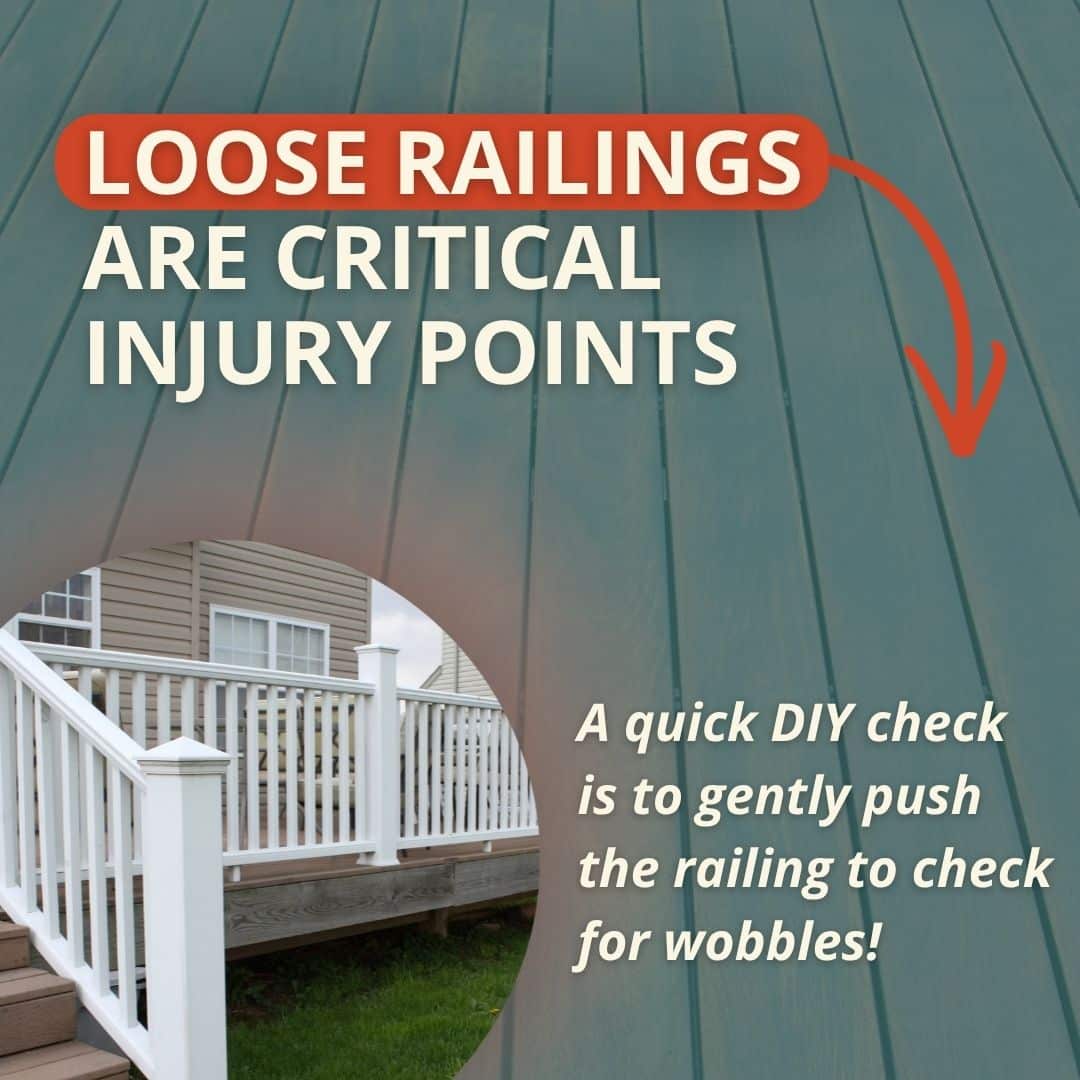
- Railings: Grab every railing section and push side to side firmly. It shouldn’t wobble or shift. A loose railing is one of the most common injury points on a deck, since people lean on them constantly.
- Decking boards: Look for cupping, splintering, popped nails, or discoloration. Press a finger or a screwdriver tip into any board that looks suspicious; solid wood resists, rotten wood gives.
- Fasteners and connectors: Get underneath if you can and check the metal hardware holding joists and beams together. Rust on fasteners is a sign the connection is weakening, even if the wood around it still looks solid.
- The ledger connection: This is where the deck attaches to your house, and it’s worth extra attention since ledger failure is one of the most common causes of deck collapse. Look for gaps between the ledger and the house, visible water staining, or debris buildup where the two meet.
- Posts and footings: Check that posts are still plumb (not leaning) and that concrete footings haven’t cracked, shifted, or sunk into the soil.
Warning Signs of Deck Instability
Keep everyone off the deck immediately if you notice any of the following, and call a professional before using it again:
- Visible sagging anywhere in the deck surface or framing
- A large crack running the length of any structural board, wider than about a quarter inch
- Any movement at all where the deck attaches to the house
- Wood that feels spongy or gives way under a screwdriver in more than one spot
- A post that’s visibly leaning or a footing that’s cracked or shifted
None of these are DIY fixes. The North American Deck and Railing Association has noted that the large majority of deck collapses trace back to a failure at the ledger connection specifically, which is exactly why that single spot gets its own line item on every inspection, DIY or professional.
According to the U.S. Consumer Product Safety Commission, roughly 2,900 injuries and two deaths were tied to deck, balcony, and porch collapses over a recent multi-year stretch it tracked. A wobble you’ve been meaning to look at isn’t a cosmetic issue.
DIY Check vs. Professional Inspection
| DIY self-check | Professional inspection | |
| Catches | Wobbly railings, soft/spongy boards, visible rust, surface cracks | Everything above, plus below-grade footing issues and code compliance |
| Ledger connection | Visual check for gaps/staining | Tests the connection itself, not just what’s visible |
| Documentation | None | Written report, useful for sales, insurance, or disputes |
| Best for | Catching early warning signs between professional visits | Annual baseline, pre-purchase, or after any “stop using it” sign above |
Related Questions to Explore
- What’s the difference between a DIY deck check and a professional deck inspection? See the comparison above. The short version: a professional inspection, including what a full home inspection covers for decks, goes below grade and tests load-bearing connections in ways a self-check can’t.
- How much does a professional deck inspection cost? Cost varies by deck size, accessibility, and whether it’s a standalone inspection or bundled into a broader home inspection. Ask whether it’s already included in your home inspection scope.
- Can a deck collapse without warning? Not usually, though it can feel that way. Most collapses follow a period of hidden deterioration, often at the ledger connection or in a rotted post, that simply wasn’t caught before it reached a breaking point.
- Does a deck inspection happen automatically during a home inspection? At Inside & Out Property Inspectors, a deck inspection is included either individually or as an add-on to our standard home inspection services in Jacksonville, St. Augustine, and the surrounding area, but coverage varies by inspector and company.
- How long does a deck usually last? Lifespan depends heavily on material, climate, and maintenance. Wood decks in humid climates like Northeast Florida tend to need closer attention than composite decking, though composite isn’t maintenance-free either.
- What’s the most common cause of deck failure? Ledger connection failure. When the board bolting the deck to the house loosens, rots, or was improperly flashed, the deck can pull away from the structure.
When to Call a Professional
Call a professional immediately if you find any of the “stop using it now” signs above, since those indicate a structural issue that needs hands-on evaluation, not a DIY fix. It’s also worth scheduling a professional inspection before buying a home with an existing deck, before a major addition or renovation, or simply if it’s been more than a year since anyone experienced took a close look.
Inside & Out Property Inspectors includes deck inspection as part of our home inspection services across Jacksonville, St. Augustine, Orange Park, and the surrounding Northeast Florida area, and we’re happy to answer quick questions through our contact page even before you book.
Conclusion
Check your deck yourself once a year (plus after storms or before big gatherings), and treat any sagging, movement at the house connection, or spongy wood as a “stop using it” sign rather than something to patch later.
- The ledger connection, where the deck meets the house, causes most structural failures and deserves the closest look
- A DIY check is genuinely useful for catching early warning signs, but it can’t replace what a professional sees underneath and at the footings
- When in doubt, a short professional visit is far cheaper than waiting for a small problem to become a structural one
If it’s been a while since your deck had a proper look, schedule a home inspection with Inside & Out Property Inspectors and get a clear, documented answer on where things stand.