
When and Why Did Lead Paint Stop Being Used?
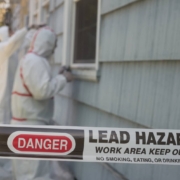
Lead paint stopped being used in U.S. residential homes in 1978, when the Consumer Product Safety Commission banned its sale for use in houses, childcare facilities, and schools. The ban came after decades of research confirming that lead is a serious neurotoxin with no safe exposure level, especially for young children.
But the 1978 ban did not make lead paint disappear. It only stopped new lead paint from being sold. Every home built before that year should be treated as a potential lead hazard until tested. At Inside & Out Property Inspectors, we see this come up regularly during home inspections across Jacksonville, St. Augustine, and Northeast Florida, and many buyers are caught off guard by what it means for older homes. This post covers the full story: when and why lead paint was banned, where it still exists, and what your rights and options are as a buyer or homeowner.
When Did Lead Paint Stop Being Used in the U.S.?
Lead paint for residential use was officially banned in the United States in 1978. The Consumer Product Safety Commission issued the ban, prohibiting the manufacture and sale of lead-based paint for use in homes, schools, and childcare facilities.
The federal ban was the end of a long process, not a sudden decision. Some states and cities acted earlier. New York City banned lead paint for indoor residential use as far back as 1960. The state of New York followed with a statewide ban in 1970.
Federal action came in two stages:
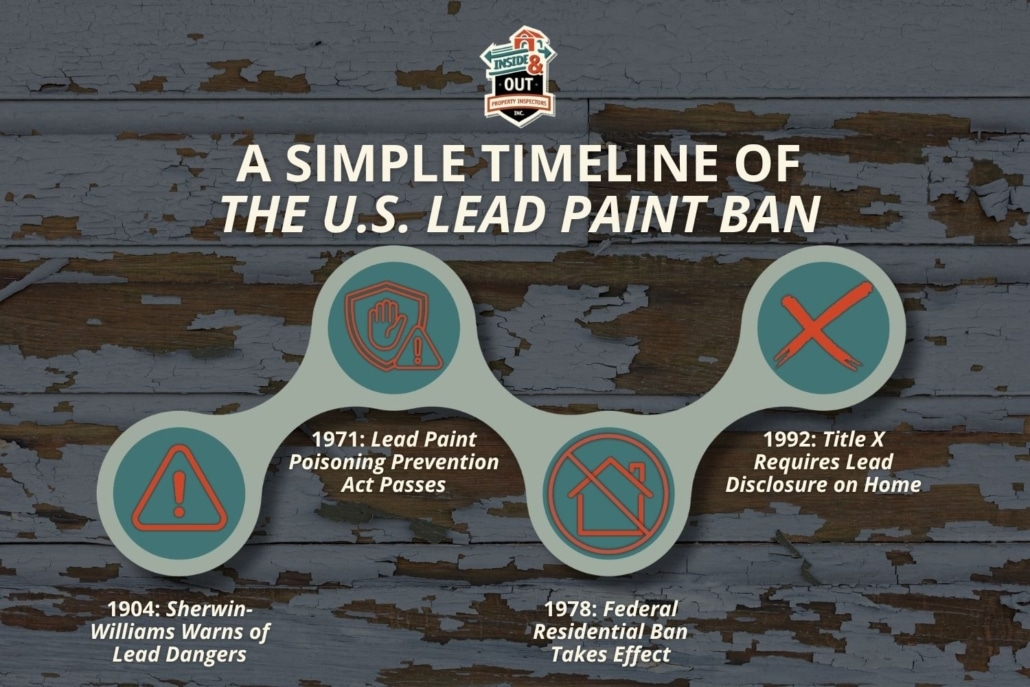
- Lead-Based Paint Poisoning Prevention Act of 1971
- Full residential ban in 1978
The cutoff year of 1978 is the one every home buyer, seller, and inspector needs to know. Any home built before 1978 is potentially subject to lead paint rules, disclosure requirements, and inspection considerations.
Why Was Lead Paint Banned?
Lead had been used in paint for thousands of years. It made paint more durable, helped it dry faster, and produced vivid pigmentation. By the early 20th century, it was in nearly every can of house paint on the shelf.
The problem is that lead is a neurotoxin. By the 1940s, medical research in the U.S. had confirmed that lead caused physical and neurological damage in children. The evidence continued to build over the following decades, making the public health case for a ban impossible to ignore.
What Lead Does to the Body
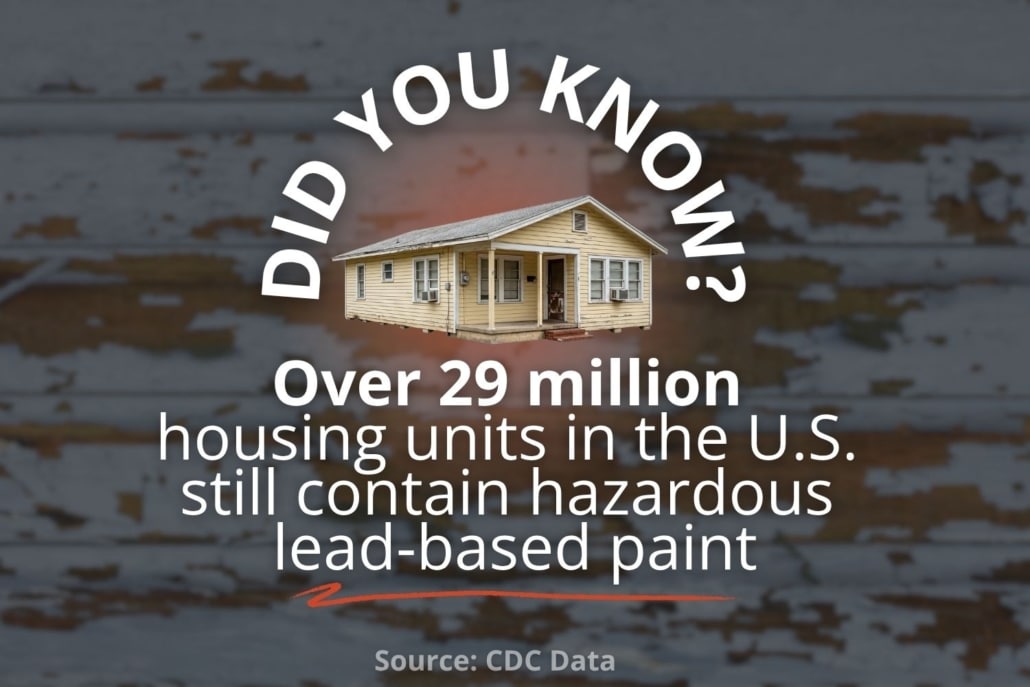
Lead exposure is harmful through ingestion or inhalation of lead dust or paint chips. According to the CDC, approximately 29 million housing units in the U.S. still have lead-based paint hazards, with about 2.6 million of those homes having children living in them.
In children, lead exposure can cause:
- Learning disabilities and developmental delays
- Lower IQ
- Behavioral problems
- Damage to the brain, kidneys, and nervous system
Adults are not immune. High lead levels have been linked to high blood pressure, kidney damage, and reproductive problems. There is no established safe level for children.
The Legislative Timeline:
|
Year |
Event |
|
1960 |
New York City bans lead paint for indoor residential use |
|
1970 |
New York State bans lead paint statewide |
|
1971 |
The Lead-Based Paint Poisoning Prevention Act was passed federally |
|
1978 |
Consumer Product Safety Commission bans lead paint for residential use nationwide |
|
1992 |
The Residential Lead-Based Paint Hazard Reduction Act (Title X) was passed, creating disclosure requirements |
|
1996 |
EPA and HUD Lead-Based Paint Disclosure Rule takes effect |
The Disclosure Rule, which came out of Title X, is the one that affects most home sales today. It requires sellers, landlords, and real estate agents to disclose any known information about lead-based paint before the sale or lease of most housing built before 1978. Buyers have a 10-day window to conduct a lead inspection before committing to a contract.
Lead Paint Is Still in Millions of Homes
The 1978 ban stopped new lead paint from being applied. It did not require anyone to remove existing lead paint. That distinction matters a lot.
Homes built before 1978 are still coated in layers of paint that may include lead. The older the home, the more likely it is, and the higher the concentration may be. Homes built before 1940 are considered especially high-risk.
Where Lead Paint Hides in Older Homes
Lead paint tends to concentrate in certain areas and on certain surfaces:
- Windows and doors: friction and impact surfaces where lead dust is constantly generated as paint wears
- Door frames and trim: common application points in older construction
- Baseboards and stair railings: painted surfaces with high traffic and wear
- Exterior siding: particularly on older wood-frame homes
- Interior walls: often under multiple layers of newer paint
In many cases, lead paint that is covered by layers of newer paint and is in good condition poses a lower immediate risk. The danger increases when the paint peels, chips, cracks, or gets disturbed.
When Lead Paint Becomes a Hazard
Lead paint that is intact and undisturbed is generally less dangerous than deteriorating paint. The key risk scenarios are:
- Peeling, chipping, or chalking paint: creates lead chips and fine dust
- Renovation, sanding, or demolition: disturbing lead paint generates airborne particles that can be inhaled or swallowed
- Friction surfaces: windows, doors, and floors that rub generate continuous lead dust even without visible damage
- Young children in the home: children are more likely to ingest dust or chips through hand-to-mouth contact, and their developing systems are far more vulnerable
If your older Jacksonville or St. Augustine home has peeling paint and you have young children, the risk is not theoretical. It warrants an inspection before any work is done. For a broader look at what home inspectors evaluate in older homes, see our home inspection service page.
What the Lead Paint Disclosure Rule Means for Home Buyers
If you are buying a home built before 1978 in Florida or anywhere in the U.S., federal law gives you specific protections. The EPA and HUD Lead-Based Paint Disclosure Rule requires:
- The seller is to disclose any known information about lead-based paint or lead hazards in the home
- The seller is to provide buyers with the EPA pamphlet “Protect Your Family from Lead in Your Home”
- A 10-day inspection period for the buyer to conduct a lead inspection or risk assessment (buyers can waive this)
Note that “known” is the operative word. The seller is not required to test for lead, only to disclose what they already know. If a seller claims no knowledge of lead paint, that does not mean the home is lead-free. It means the seller has not tested.
As a buyer of any pre-1978 home in Northeast Florida, you have the right to request a lead inspection during your due diligence period. If you plan to renovate or have young children in the home, it is worth exercising that right. You can also ask your home inspector about whether they offer lead testing or can refer you to a certified risk assessor.
This comes up in the same category as other things worth knowing about older homes. A related issue we cover in our blog about common stucco concerns for exterior walls: older Florida homes using stucco and lead paint together can create compounding risks during any renovation work.
Related Questions to Explore
Is lead paint dangerous if it’s covered by new paint? Not necessarily. Intact lead paint under newer layers poses a lower immediate risk. The danger rises when paint deteriorates, gets disturbed during renovation, or sits on a high-friction surface like a window or door that constantly grinds the layers together. Simply painting over lead does not neutralize it. Any future sanding, scraping, or demolition will expose it again.
How do I know if my home has lead paint? The only way to know for certain is to test. A certified lead inspector uses X-ray fluorescence (XRF) equipment or collects paint chip samples for lab analysis. Visual identification is not reliable: lead paint looks the same as paint without it. If your home was built before 1978, treat it as a potential lead hazard until you have the test results in hand.
Does lead paint have to be removed when selling a house? No. Federal law requires sellers to disclose known lead hazards but does not require removal. If a lead inspection turns up hazards, the parties can negotiate price reductions, repairs, or remediation as part of the sale contract. In many cases, buyers accept the home as-is and plan to manage the lead safely or address it over time.
Can I live in a home with lead paint? Yes, millions of Americans do. Lead paint that is in good condition and not on a friction or impact surface is generally manageable. The EPA guidance is to keep painted surfaces in good condition, clean frequently to reduce dust, and avoid disturbing painted surfaces. The risk level rises significantly if you have children under 6, are pregnant, plan to renovate, or if the paint is already deteriorating. In those cases, professional assessment and possible remediation are worth prioritizing.
When to Call a Professional
Lead paint is manageable in many situations, but it is not something to evaluate on your own. Here is when to bring in a professional:
- Before buying a pre-1978 home, especially if you have or plan to have young children, or if renovation is on your agenda. Request a lead inspection during your 10-day due diligence window. Your right to do so is federally protected.
- Before any renovation, sanding, or demolition, disturbing lead paint without proper precautions can spread lead dust throughout a home. The EPA’s Renovation, Repair, and Painting (RRP) Rule requires contractors working in pre-1978 homes to be certified in lead-safe work practices. Make sure anyone you hire is certified.
- If paint is visibly deteriorating: peeling, chipping, or chalking paint on any surface in a pre-1978 home warrants professional assessment, even if you are not planning to renovate.
- If a child in the home has elevated blood lead levels, contact your local health department and a certified risk assessor immediately.
BJ Johnson and the team at Inside & Out Property Inspectors serve Jacksonville, St. Augustine, Ponte Vedra, and surrounding communities. During a standard home inspection, we note visible paint deterioration and flag surfaces of concern in pre-1978 homes. We can also refer you to a certified lead inspector or risk assessor for further testing.
Conclusion
Lead paint was banned for residential use in 1978 after decades of research confirming its serious health risks, particularly for children. But the ban only stopped new lead paint from being sold. It did not remove what was already on the walls of millions of homes.
Key takeaways:
- Any home built before 1978 should be treated as a potential lead hazard until tested.
- Lead paint that is intact and undisturbed poses a lower immediate risk than deteriorating or disturbed paint.
- Federal law requires sellers to disclose known lead hazards in pre-1978 homes and gives buyers a 10-day inspection window.
If you are buying or already own a pre-1978 home in Northeast Florida and have questions about lead paint, start with a thorough home inspection from a certified local inspector.