The Complete Florida Rental Inspection Checklist
A rental inspection checklist is the single most important document in any tenancy. Without it, landlords cannot prove tenant-caused damage, and tenants cannot protect their security deposit from unfair deductions. This guide explains what a thorough rental inspection checklist covers, when to use it, and how a professional property inspection fits into the process.
Why a Rental Inspection Checklist?
A rental inspection checklist is a written record of a property’s condition that is completed before a tenant moves in and again when they move out. Both parties complete the walkthrough together, note the condition of every room and system, and sign the document. Each party keeps a copy.
The checklist serves two primary purposes.
- It protects tenants from being charged for damage that existed before they moved in.
- It protects landlords by providing documented proof of any new damage that occurs during the tenancy, which supports security deposit deductions or billing for repairs.
Without a signed move-in checklist, security deposit disputes frequently favor tenants because landlords cannot prove the pre-tenancy condition of the property.
When to Conduct Rental Inspections
Most landlords conduct inspections at three points in a tenancy:
- Move-in inspection: Conducted after cleaning and before the tenant brings belongings in. Both landlord and tenant walk through the entire property together, note any pre-existing damage or wear, and sign the form. This typically takes 30 to 60 minutes for an average rental unit.
- Periodic or mid-lease inspection: Some landlords conduct one or more inspections during the lease term, typically with 24 to 48 hours of written notice to the tenant (check local landlord-tenant law for your jurisdiction’s requirements). The purpose is to identify maintenance issues before they worsen and confirm that the property is being maintained appropriately.
- Move-out inspection: Conducted after the tenant vacates. The landlord compares current conditions to the move-in checklist. Damage that was not present at move-in and exceeds normal wear and tear can be charged against the security deposit.
The timing of move-out inspections varies by state. Some jurisdictions allow landlords to inspect before move-out to give tenants a chance to make repairs themselves. Check your state’s landlord-tenant statutes before scheduling.
What the Checklist Should Cover Room by Room
A thorough rental inspection checklist goes through every room and documents the condition of every surface and component. Here is the standard scope:
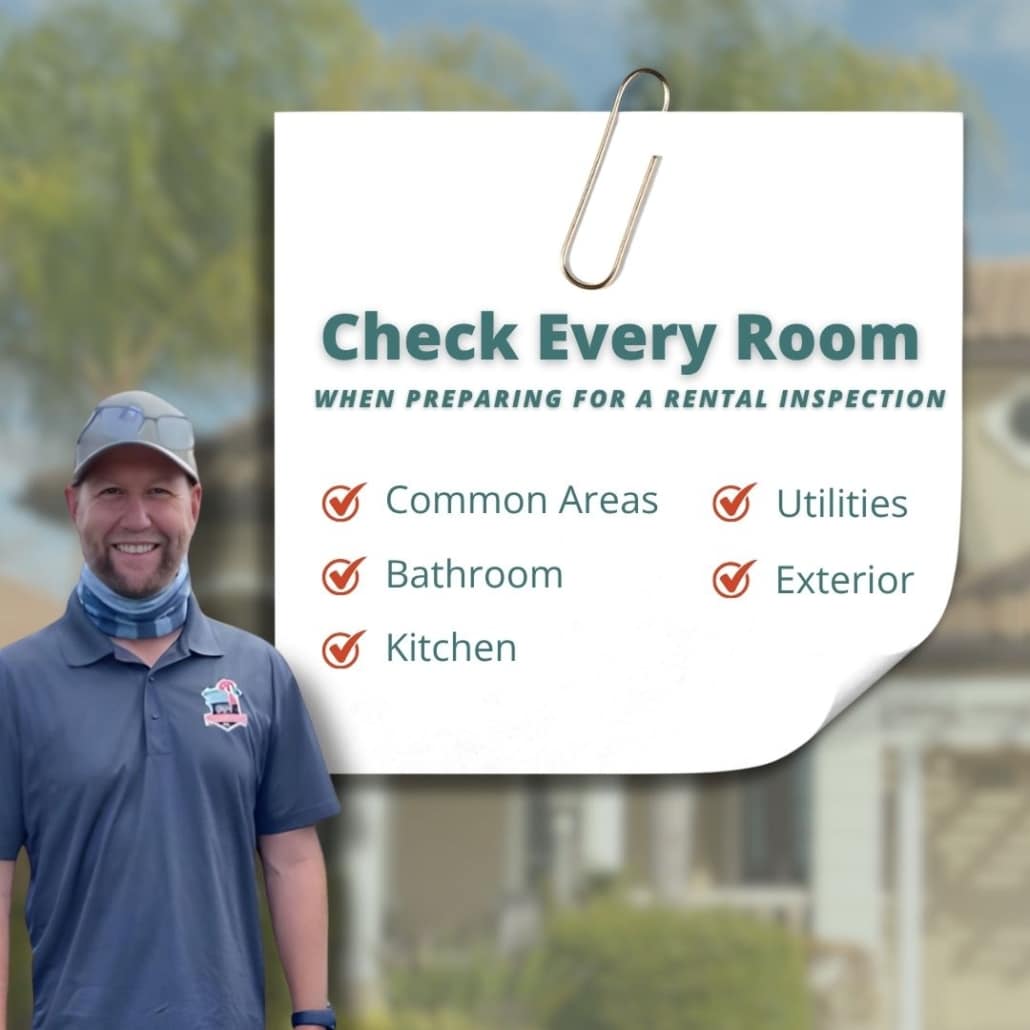
Every Room and Common Areas
Before focusing on specific rooms, walk through every shared space and bedroom to evaluate the structural surfaces and basic fixtures.
| Feature to Inspect | What to Document and Check |
| Walls | Holes, stains, scuffs, unauthorized paint colors, or water damage |
| Ceilings | Stains, cracks, mold, or water rings |
| Floors | Scratches, stains, tears, or loose tiles and planks |
| Doors | General operation, hardware function, and the condition of the surface |
| Windows | Smooth operation, screen condition, broken glass, and working hardware |
| Light Fixtures and Switches | Proper function and overall physical condition |
| Outlets | Electrical function and intact cover plates |
| Closets | Shelving stability and closet door operation |
Kitchen
The kitchen requires a close look at heavy-use appliances and plumbing connections to ensure everything is functional and clean.
| Feature to Inspect | What to Document and Check |
| Appliances | Function and condition of the range, oven, refrigerator, dishwasher, and microwave |
| Cabinets and Drawers | Working hardware and clean interior condition |
| Countertops | Visible chips, stains, or surface burns |
| Sink and Plumbing | Active leaks, drain speed, and the garbage disposal function |
| Exhaust Fan | Proper operation and fan speed |
Bathrooms
Pay extra attention to moisture levels and structural sealing in the bathroom to catch hidden leaks or water damage early.
| Feature to Inspect | What to Document and Check |
| Fixtures | Toilet function, tub and shower condition, plus the status of caulk and grout |
| Vanity and Sink | Condition of the vanity cabinet, sink basin, and faucet operation |
| Exhaust Fan | Working fan function and ventilation |
| Water and Drains | Steady water supply pressure and proper drainage function |
| Mold or Mildew | Check carefully for any structural presence of mold or mildew |
Utilities and Systems
Testing safety alarms and confirming the status of major mechanical systems protects both your daily safety and your budget.
| Feature to Inspect | What to Document and Check |
| HVAC | Thermostat function, air filter cleanliness, and the condition of supply and return vents |
| Water Heater | Overall physical condition and estimated age |
| Smoke Detectors | Tested and confirmed working with both parties, witnessing the test |
| Carbon Monoxide Detectors | Tested and confirmed working with both parties, witnessing the test |
| Electrical Panel | Easily accessible, clearly labeled, and completely free of visible issues |
Exterior
Documenting the outdoor spaces and entry points ensures the entire perimeter of the property is secure and well-maintained.
| Feature to Inspect | What to Document and Check |
| Entry Doors | Secure locks, functional weatherstripping, and overall door condition |
| Patio or Balcony | Overall structural integrity and surface condition |
| Parking | Assigned parking space condition and accessibility |
For each item, the checklist should include a space to rate the condition (Good, Fair, Poor) and a notes field for any specific damage. Photographs should supplement the written record.
What Counts as Normal Wear and Tear vs. Damage
This distinction determines what can be legally charged against a security deposit. Most states define normal wear and tear as deterioration that results from ordinary use of the premises, not from misuse or negligence.
- Normal wear and tear typically includes minor scuffs on walls from furniture, small nail holes from picture hanging, carpet wear in traffic areas, faded paint from sunlight, and minor scratches on hardwood floors.
- Tenant-caused damage typically includes large holes in walls, unauthorized paint colors, broken fixtures or hardware, pet stains or odors, missing blinds or curtain rods, burn marks, and significant carpet stains.
The checklist does not create the legal distinction, but it provides the evidence needed to apply it. Without a signed checklist documenting the starting condition, disputes become much harder to resolve.
Photographing the Property
Written descriptions alone are often insufficient. Supplement the checklist with timestamped photographs of every room, focusing on any areas of existing wear or damage. Take photos of all four walls, the floor, the ceiling, and any fixtures or appliances. Email the photos to yourself or the tenant immediately after the inspection to create a time-stamped record.
At move-out, repeat the same photographic documentation for direct comparison.
The Role of a Professional Property Inspection
A rental inspection checklist is a tool for condition tracking for tenants or landlords. It is separate from, and not a substitute for, a professional home inspection. If you are purchasing a rental property, managing multiple units with aging systems, or dealing with a tenant dispute involving concealed damage, a professional inspection provides a level of expertise and documentation that goes beyond what either party can capture in a walkthrough.
A professional inspector evaluates structural conditions, plumbing system integrity, electrical safety, HVAC function, and roofing condition. These systems affect long-term property value and carry liability that a self-conducted inspection cannot address.
Related Questions to Explore
-
Is a rental inspection checklist legally required? Requirements vary by state. Some states mandate written move-in inspection reports, and failure to provide one may limit a landlord’s ability to make security deposit deductions. Even in states where it is not required, using one is strongly recommended for both parties. Check your state’s landlord-tenant statutes for specific rules.
-
Who should be present during a rental inspection? Ideally, both the landlord and the tenant should complete the walkthrough together. This allows them to agree on condition descriptions in real time, reducing the likelihood of disputes later. If the tenant cannot attend, they should be given 24 to 72 hours to return the checklist with their own notes.
-
What happens if the landlord and tenant disagree about the condition at move-out? The signed move-in checklist is the reference point. Items documented as damaged at move-in cannot be charged as new damage. If parties still disagree, small claims court is the typical resolution mechanism. Detailed checklists, timestamped photos, and communication records all become essential evidence.
-
Can a landlord charge for cleaning the rental at move-out? Only if the cleaning needed exceeds what would be required to restore normal wear and tear. If a tenant leaves the property in the same basic state of cleanliness as at move-in, a deduction is not appropriate. However, costs for professional cleaning due to heavy soiling or pet odors can typically be charged.
-
How long should a landlord keep rental inspection records? At a minimum, keep them through the full statute of limitations for potential claims, which varies by state but is typically two to five years. Maintaining these records for as long as you own the rental property is an even better practice, as condition questions can arise years into a tenancy.
Get a Professional Inspection Before Disputes Start
If you have acquired a rental property or are converting a home to a rental, a professional inspection gives you a documented baseline of every system and structural element before any tenant moves in. That documented baseline is significantly more defensible than a landlord’s self-conducted checklist when disputes arise.
Inside and Out Property Inspections provides rental property inspections that cover structural, mechanical, and safety systems in detail. Whether you are purchasing a rental property, establishing condition records before a new lease, or evaluating damage after a difficult tenancy, our inspectors deliver clear, actionable reports.
Conclusion
The U.S. Department of Housing and Urban Development maintains tenant resources and landlord guidance that includes model condition report forms applicable to federally assisted housing programs.
See our full inspection services or call to schedule. For buyers considering a property with tenants already in place, our standard purchase inspections evaluate all the same systems.
Call us, schedule online, or get a free quote with us today!