
Mold Behind the Cabinets: Tracing an AC Leak to Its Source
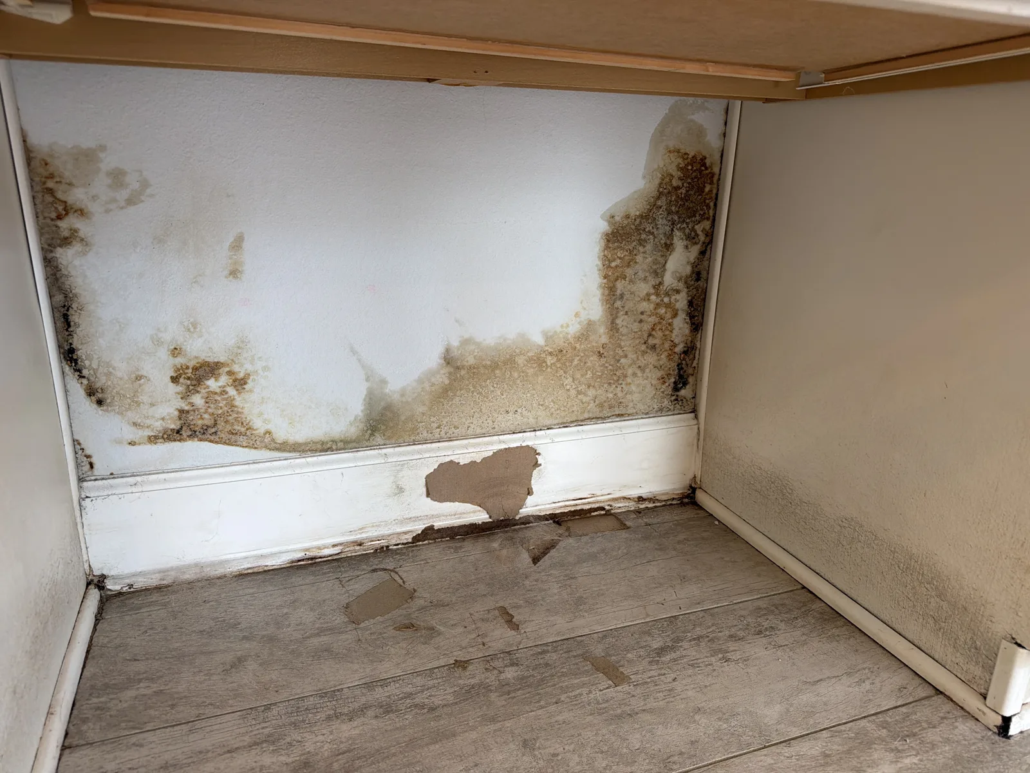
The kitchen looked fine. Clean cabinets, clean walls, nothing that would make you think twice on a walk-through. Then we got down on the floor and looked into the knee space between two cabinets.
This is what one of our recent mold assessments in Nocatee turned up, and why the most important part of the job wasn’t the mold itself. It was finding the water that fed it and how far that water had gone.
What we found
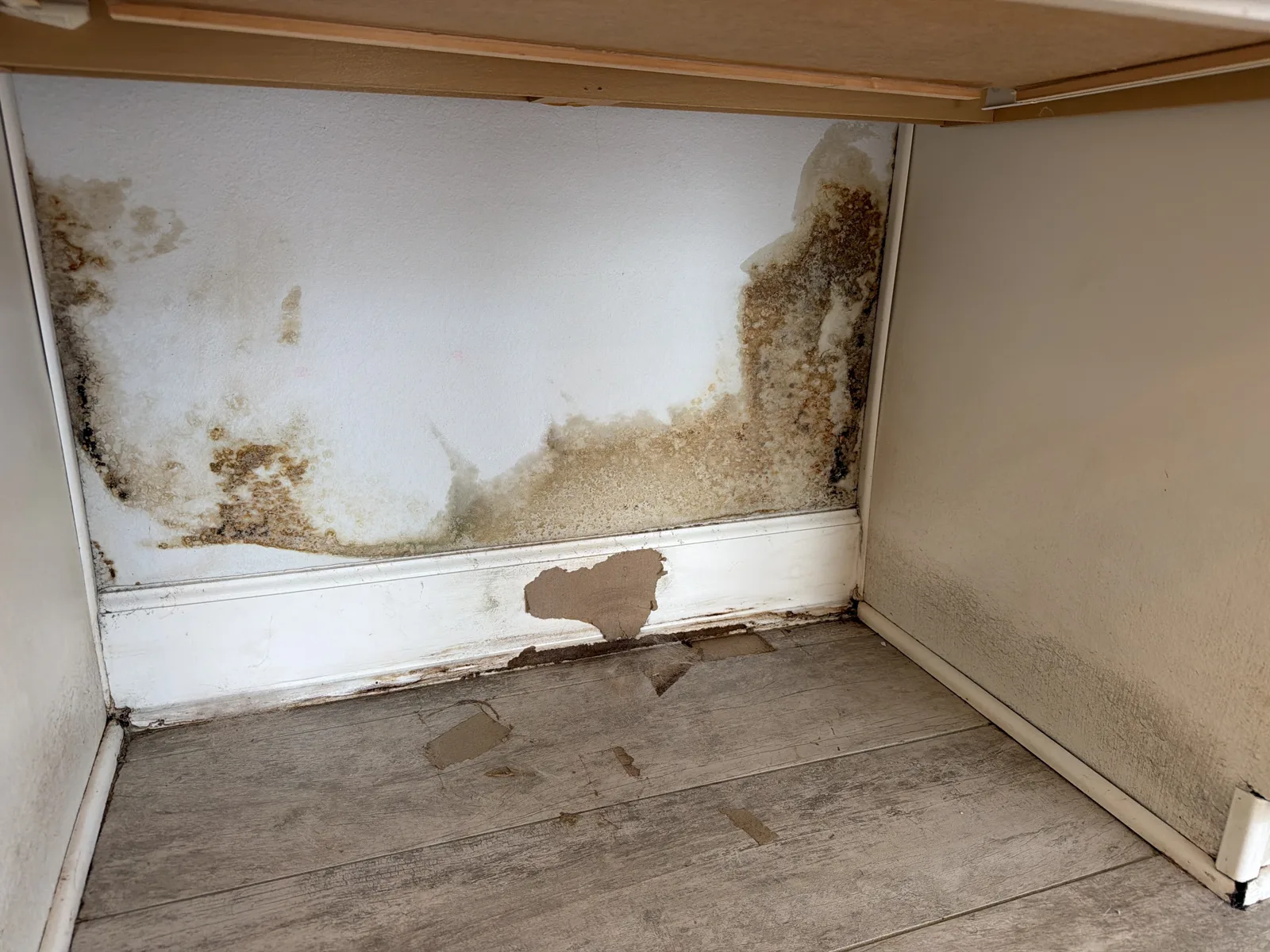
Inside the alcove, the drywall was covered in heavy, dark suspected mold growth. The baseboard was soft and crumbling, and the side of the cabinet next to it was water stained. None of that was visible standing up in the room.
Mold needs moisture to grow, so the real question was where the water was coming from. The EPA puts it plainly: if you clean up mold but don’t fix the water problem, the mold will come back (EPA, A Brief Guide to Mold, Moisture and Your Home). In this home the source was a leaking air handler. Water had been getting out of the system and running into the wall and floor around the cabinets.
How far did the water go?
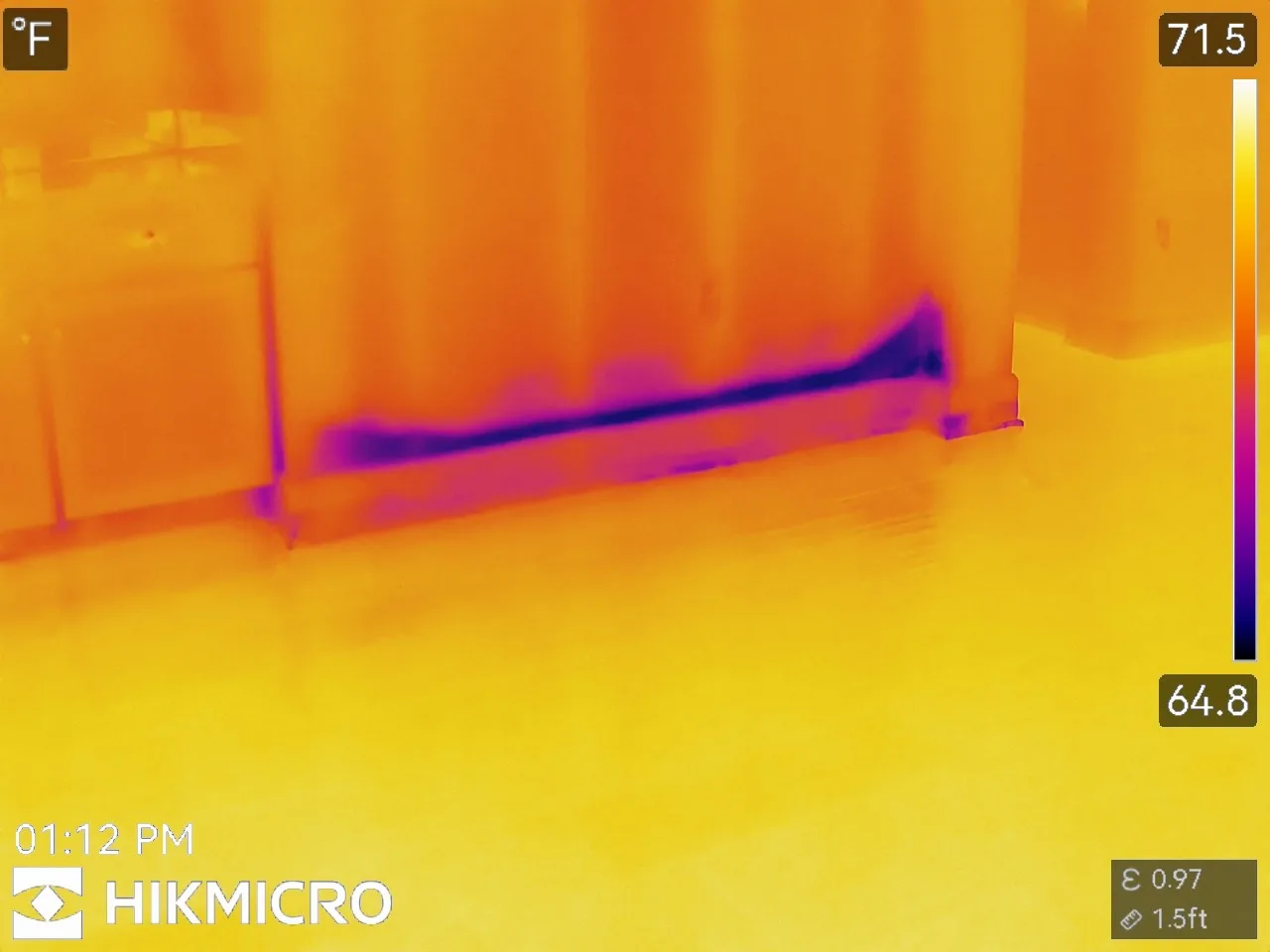
This is where the thermal camera earns its place. Wet building materials usually read cooler than dry ones, and in this house the camera showed a cold line running along the baseboards well beyond the alcove. The coldest readings, about 65°F, were right along the base of the cabinets.
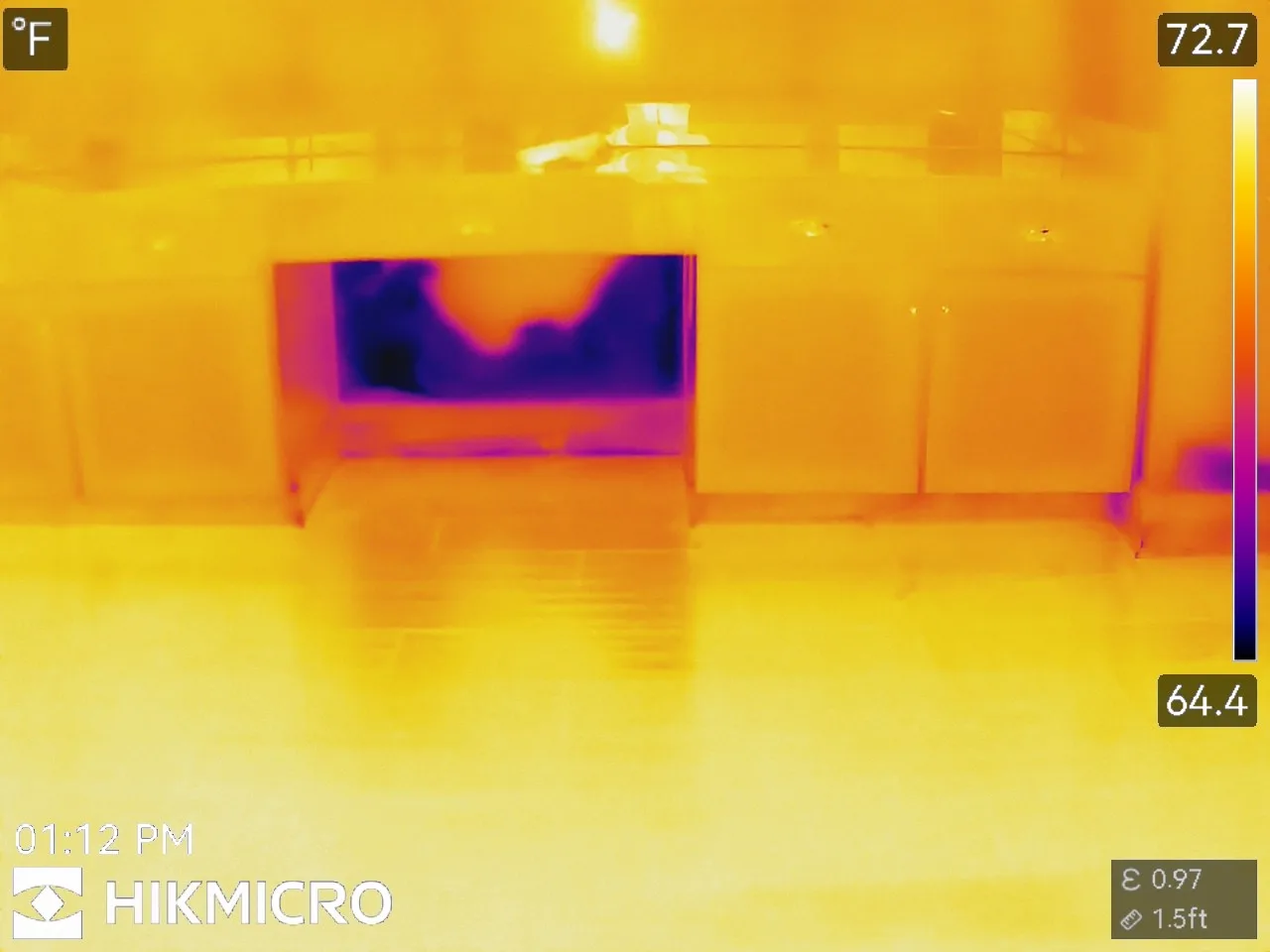
A thermal camera doesn’t see water, though. It sees temperature differences, and those can have other causes. That’s why InterNACHI and the camera makers themselves say thermal images should be confirmed with a moisture meter before anyone calls an area wet (InterNACHI, IR Cameras: Inspecting for Moisture Intrusion; FLIR, How to Detect a Water Leak with Thermal Imaging). We use the camera to map where to look, then the meter to confirm it.
Mapping the wet area matters because it decides what a remediator has to open up. If only the visible spot gets cut out, wet material just past it can keep growing mold.
Why it matters that we know buildings
Plenty of people can point at mold. What you’re really paying for is someone who can tell you why it’s there. Our team has extensive experience with how homes are built in Northeast Florida, and we have licensed mold assessors on staff. On an assessment like this one, we:
- Find the moisture source. Here it was the air handler. Other times it’s a roof leak, plumbing, a window, or condensation.
- Map how far the moisture spread with thermal imaging and confirm it with a moisture meter.
- Take samples when they’re needed and interpret the lab results.
- Write a clear protocol so the remediator knows what to remove and what has to be fixed first.
What you can watch for at home
In our humid climate the AC runs most of the year, and the air handler makes a lot of water while it’s cooling. A few things are worth a look:
- A musty smell near the air handler closet, a hallway return or the kitchen
- Water stains, soft spots or swelling on baseboards and the bottom of cabinets
- Water in or around the air handler’s drain pan, or a drain line that keeps backing up
- Flooring that feels damp or is lifting near an interior closet
If you find a leak, the EPA says drying wet materials within 24 to 48 hours usually keeps mold from growing (EPA). If it’s been going on longer than that, or you can smell it but can’t see it, it’s time for an assessment.
Related reading
- Do I Need a Mold Inspection?
- What Are the Signs and Symptoms of Having Mold in Your House?
- Buying a House with Mold
- Water Stain on Ceiling
- Do Air Conditioners Dehumidify?
Smell something musty or had an AC leak?
We inspect homes in communities throughout the area, including Nocatee, SilverLeaf, RiverTown, Shearwater, Trailmark and Beachwalk.
Our licensed mold assessors on staff handle mold inspections across Northeast Florida, including Nocatee, Jacksonville, Ponte Vedra Beach and St. Augustine. We also offer infrared thermography inspections. Get a Quote or call 904-395-1900.