
Your Ground Wire Looks Connected. Is It?
On the outside wall of most Northeast Florida homes, near the electric meter, there’s a bare copper wire running down toward the ground. Most people never give it a second look. From a few feet away it usually looks fine.
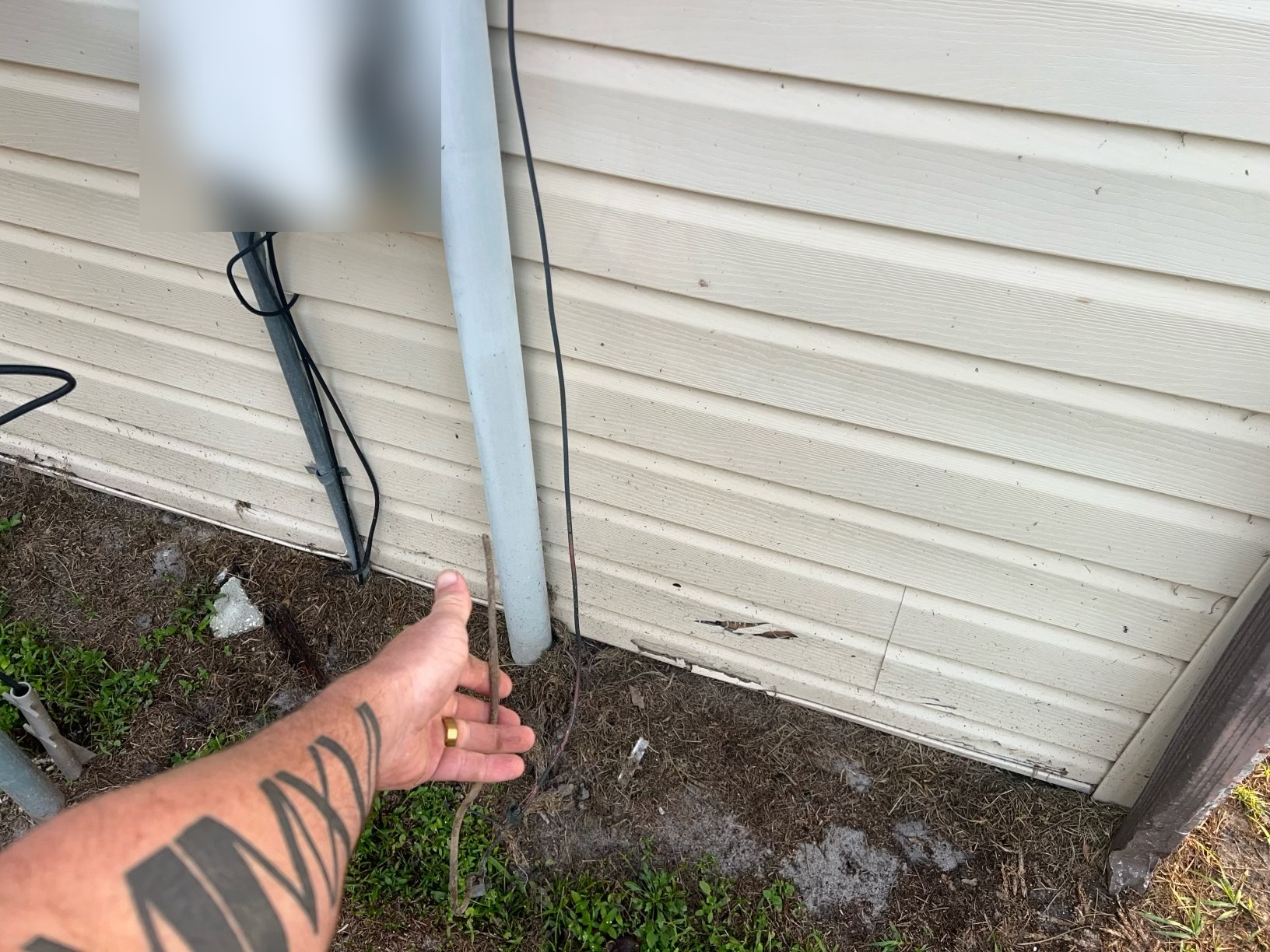
That’s exactly what Inspector Will saw at a recent home inspection. The ground wire was right where it should be and looked attached. It wasn’t until he gave it a gentle tug that it came loose in his hand. The home’s electrical system was not actually grounded.
What the ground wire does
That copper wire is the grounding electrode conductor. It connects your home’s electrical service to a ground rod or other grounding electrode in the earth. Its job is to give dangerous electrical energy, like a lightning strike nearby or a surge on the power lines, a path into the ground instead of through your wiring, your electronics, or you (InterNACHI).
The American Society of Home Inspectors explains that a main purpose of grounding is to limit voltage from lightning and power surges and send that energy to the earth, while bonding gives fault current a path back to the panel so a breaker can trip. The two have to work together; one without the other defeats the purpose (ASHI Reporter).
In a part of the country with as many summer thunderstorms as ours, that path to the ground isn’t a technicality.
Why “looks connected” isn’t good enough
A ground wire can lose its connection without looking any different from the yard. Common reasons include:
- Clamps that were never tightened or have loosened over time.
- Landscaping and lawn work. Edgers, trimmers and shovels hit the wire and clamp where they meet the ground.
- Corrosion at the clamp or rod in damp, sandy soil.
- Work done after the original install, like siding, a new meter base or a panel swap, where the ground wasn’t reattached properly.
There’s no warning light for this. The lights still turn on, the AC still runs and the outlets still work. You’d only find out the system wasn’t grounded when it needed to be.
What we check during a home inspection
During a home inspection, we look at the service ground wire from the meter and service equipment down to where it meets the electrode, including the clamp and connection. If something looks wrong, we report it. In this case Will confirmed by hand that the wire wasn’t connected and wrote it up so the buyer could have a licensed electrician correct it before closing.
A home inspection is a visual, non-invasive look at the system. We don’t take panels apart or make repairs; when we find a grounding problem, the next step is always a licensed electrician.
Grounding also matters for insurance. Electrical condition is part of a 4-point inspection, and some electrical defects can affect whether a home is insurable. Our post on non-insurable electrical panels covers the panels Florida insurers commonly flag.
What you can check yourself
You don’t need to touch anything to take a quick look:
- Find the bare copper wire near your meter or main panel outside.
- Follow it down to the ground. You should see it held by a clamp on a rod, not just pushed into the dirt or lying loose.
- Look for a cut, broken or green-crusted wire, or a clamp that’s missing.
If anything looks off, don’t pull on it or try to fix it yourself. Call a licensed electrician.
Related reading
- What Causes Power Surges in Florida Homes?
- 13 Electrical Terms Worth Knowing as a Homeowner
- What’s Hiding Behind Vinyl Siding? (another hidden problem Will found the same month)
Buying or selling a home in Northeast Florida?
Small things like a loose ground wire are easy to miss on a walk-through and easy to fix once someone finds them. Our inspectors serve Jacksonville, St. Johns County and the surrounding area, including St. Johns. Call us at 904-395-1900.