
What Does a Water Stain on the Ceiling Mean?
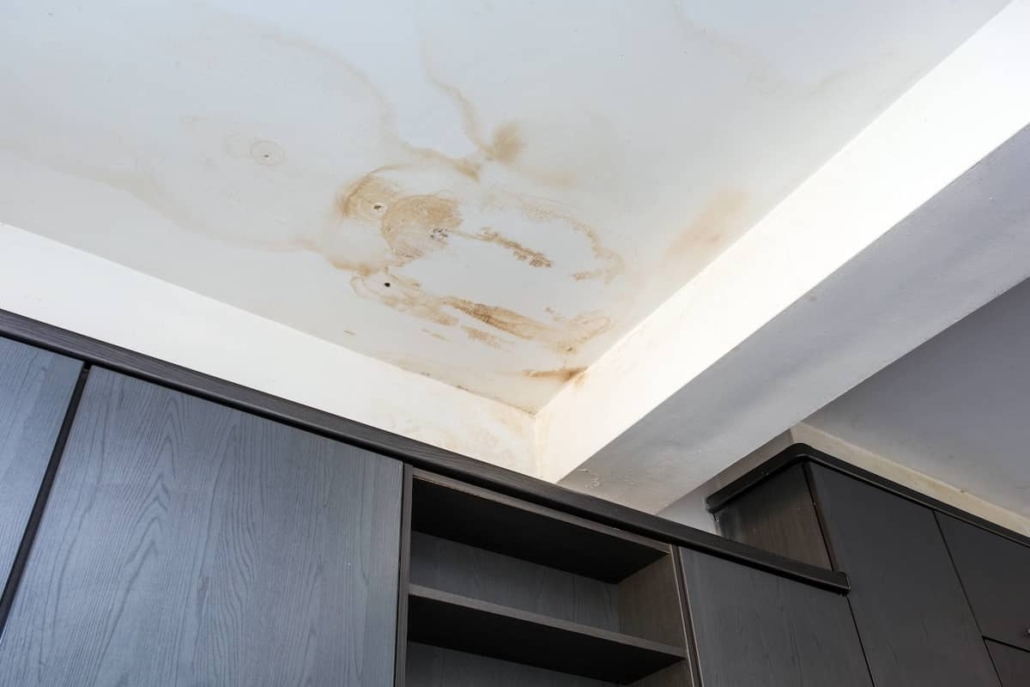
A water stain on your ceiling means water soaked into the drywall from above and dried there, leaving a yellow or brown ring. The cause is usually a roof leak, an AC air handler or drain line, a plumbing leak, or condensation in the attic. The stain itself is harmless, but the water behind it is not. Left alone, it can rot drywall, feed mold, and cause trouble with your homeowners insurance.
At Inside & Out Property Inspectors, we find these stains in Northeast Florida homes every week. Below, you’ll learn what causes them, how to tell if the leak is still active, how infrared cameras find hidden moisture, and how to fix the stain for good.
What Causes a Water Stain on the Ceiling?
Most ceiling water stains come from one of four places: the roof, the AC system, the plumbing, or moist air in the attic. Where the stain sits is your first clue. Keep in mind that water often runs along rafters, pipes, and ducts before it drips, so the leak can be several feet away from the stain.
Roof Leaks
A stain on a top-floor ceiling that shows up or grows after rain usually points to the roof. Common causes include:
- Lifted, cracked, or missing shingles or tiles
- Worn flashing around chimneys, skylights, and walls
- Cracked rubber boots around plumbing vent pipes
- Clogged gutters that push water under the roof edge
In Florida, wind-driven rain during storms and hurricane season can force water past roofing that holds up fine in a normal shower. Some roof leaks are easy to miss from the ground, so it helps to know the subtle signs of a hidden roof leak.
AC Air Handlers and Condensate Lines
In many Florida homes, the air handler sits in the attic or in a second-floor closet. Your AC pulls a lot of water out of humid air, and that water drains through a condensate line from a drain pan. When algae or debris clogs the line, the pan can overflow and soak the ceiling below.
Stains near the air handler, around supply vents, or in a straight line along a duct often trace back to the AC. Most air handlers have a float switch that shuts the system off when water backs up. Check the switch, the pan, and the drain line once a month during cooling season.
Plumbing Leaks and Bathrooms Above
A stain under an upstairs bathroom, kitchen, or laundry room usually comes from plumbing. Look for a worn toilet wax ring, a cracked supply line, a leaking shower pan, or failed caulk and grout around the tub.
To check for a hidden supply leak, try the water meter test:
- Turn off every faucet and water appliance in the house.
- Write down the reading on your water meter.
- Wait about three hours without using any water.
- Check the meter again. If the number moved, water is escaping somewhere.
For more ways to track down plumbing leaks, see our guide on how to find a water leak inside a wall.
Condensation and Humidity
Sometimes you see a stain but can’t find a leak at all. In a hot, humid attic, cold AC ducts can sweat like a glass of iced tea, and that moisture drips onto the drywall. Missing duct insulation, loose duct connections, and poor attic ventilation all make it worse. These stains often grow in summer and stop changing in winter.
What the Stain’s Color and Shape Tell You
|
What you see |
Likely cause |
What to do next |
|---|---|---|
|
Dry yellow or brown ring that isn’t changing |
Old leak that has dried out |
Confirm it’s dry, then prime and paint |
|
Brown stain that grows or darkens after rain |
Active roof leak |
Get the roof inspected and repaired |
|
Several rings inside each other |
A leak that keeps coming back |
Find the source before you paint |
|
Straight lines along ducts or vents |
AC condensation or sweating ducts |
Check the drain line, pan, and duct insulation |
|
Stain under a bathroom |
Toilet, shower, or supply line leak |
Run the water meter test |
|
Gray, green, or black spots |
Possible mold growth |
Schedule a mold inspection |
|
Dry gray lines that follow the ceiling framing |
“Ghosting” from dust and temperature differences, not water |
Clean it and check attic insulation |
How to Tell if a Ceiling Water Stain Is Old or Still Active
A dry stain does not prove the problem is fixed. Many leaks only show up during heavy rain or when someone uses the shower upstairs. These checks help you tell an old stain from an active leak:
- Touch it gently. Damp, cool, or soft drywall means water is still there.
- Trace the edge with a pencil. Look again after the next rain or a few days of normal use. If the stain spreads past the line, the leak is active.
- Watch the color. Fresh stains often look lighter and blotchy. Old stains usually have a crisp, darker ring.
- Use a moisture meter. Compare the stained spot to a dry part of the same ceiling. A higher reading means moisture is still present.
- Look above it. If you can safely reach the attic, check for wet insulation, water trails on the wood, or rusty nails.
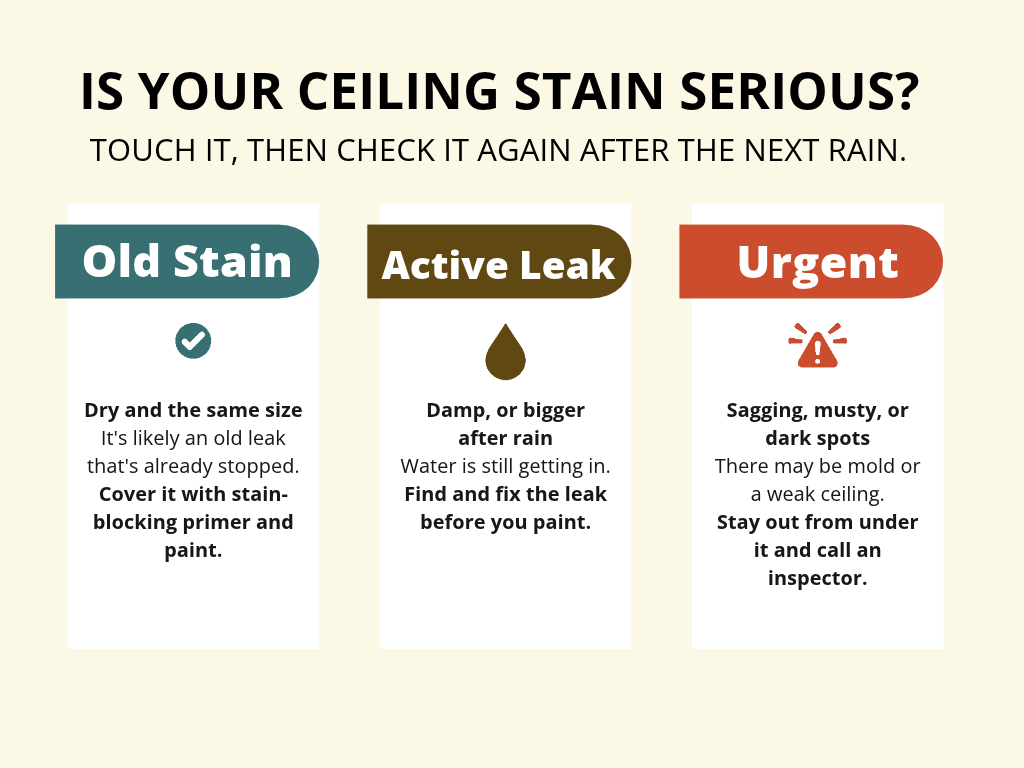
Safety first: If the ceiling sags or bulges, keep people and pets away from that spot. Turn off lights and ceiling fans in that area at the breaker, and set a bucket underneath. Never poke a bulging ceiling while standing under it, because it can give way all at once.
How Infrared Thermography Finds Hidden Moisture
Infrared thermography uses a thermal camera to show temperature differences across a ceiling, which helps an inspector map where water is spreading without cutting into drywall. Wet drywall usually reads cooler than dry drywall because evaporation pulls heat away. On the screen, damp areas show up as cool patches, often in a shape that points back toward the source.
A thermal camera does not see water directly. Cold air from a vent, a gap in attic insulation, or a shaded spot can look similar. That’s why a trained inspector confirms every suspect area with a moisture meter before calling it wet.
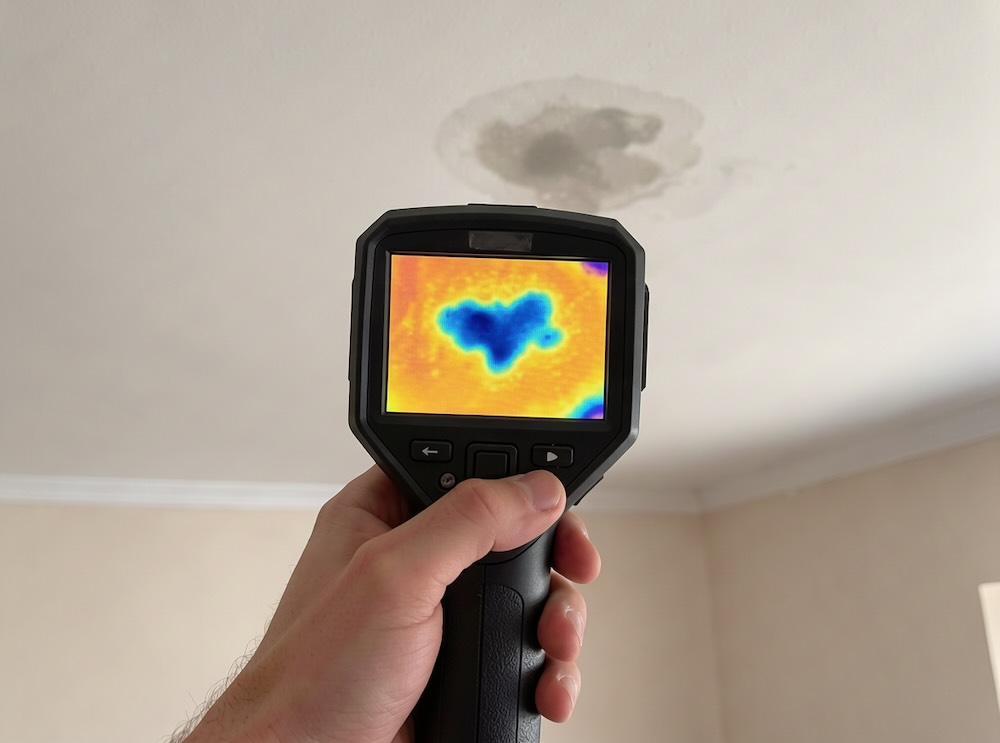 Thermal scans work best when the leak is active or recently wet. If your stain only changes after storms, schedule the scan soon after a heavy rain. Our team uses infrared thermography inspections to trace hidden roof, plumbing, and AC leaks behind finished ceilings and walls. To see the kinds of problems a scan can reveal, read about using IR to find hidden damage and moisture.
Can a Water Stain on the Ceiling Mean Mold?
Yes. Any ceiling that stayed wet for more than a day or two can grow mold, even if you can’t see it from below. The EPA’s guide to mold and moisture advises drying water-damaged materials within 24 to 48 hours to prevent mold growth. In Florida’s humidity, the drywall paper, wood, and insulation above a stain can stay damp long after the surface looks dry.
Watch for these signs:
- A musty or earthy smell in the room
- Gray, green, or black spots on or around the stain
- Peeling paint or bubbling ceiling texture
- Allergy symptoms that get worse indoors
The EPA says a moldy area smaller than about 10 square feet is usually a job a homeowner can handle, while larger areas need more care. It also recommends keeping indoor humidity below 60 percent. If the drywall itself is affected, this guide on why mold on drywall is tricky to remove explains your options.
A professional mold inspection goes further than a visual check. Inspectors can take air samples and surface swabs and send them to a lab, which tells you whether mold is growing and how far it has spread. Hidden moisture that keeps coming back is a form of water intrusion, and it’s worth finding before it grows into a bigger repair.
Ceiling Water Stains, Roof Inspections, and Florida Insurance
In Florida, a ceiling stain can affect your insurance as much as your house. A 4-point inspection reviews four systems in an older home: the roof, electrical, plumbing, and HVAC.
During a 4-point inspection, the inspector notes signs of active or past leaks. A ceiling stain from a roof or plumbing leak that hasn’t been fixed can delay coverage or lead to extra questions from the insurer. Citizens also has roof age rules. Older shingle roofs, and much older tile or metal roofs, need proof of remaining useful life or proof of replacement.
Florida law also limits how insurers treat roof age. Insurers can’t refuse to issue or renew a policy only because a roof is less than 15 years old. For roofs 15 years or older, you have the right to request an inspection, and if it shows at least five years of useful life left, the insurer can’t refuse coverage based on age alone.
A few tips if you have a stain and an insurance inspection coming up:
- Fix the source first. Repair the leak and dry the area before the inspection.
- Keep records. Save dated photos, repair invoices, and receipts.
- Don’t wait. Many policies exclude damage from long-term or repeated seepage, so a stain left alone for months can weaken a claim.
- Ask about wind mitigation. A wind mitigation inspection documents roof features that may lower your premium.
How to Fix and Cover a Water Stain on the Ceiling
Fix the leak before you touch the stain. Painting over an active leak just hides it until it comes back bigger. Once the source is repaired, follow these steps:
- Dry the area completely. Run fans and a dehumidifier, and confirm with a moisture meter that the drywall reads dry.
- Check the drywall. If it’s soft, sagging, or crumbling, cut out that section and replace it instead of painting.
- Deal with any mold. Clean small areas safely, or get a mold inspection for larger ones, before you prime.
- Prep the room. Lay a drop cloth, wear eye protection, and gently clean the stain with mild soap and water. Let it dry.
- Prime with a stain-blocking primer. Use an oil-based or shellac-based stain-blocking primer. Regular latex paint lets water stains bleed back through.
- Paint. Finish with flat ceiling paint and follow the drying time on the can. Older ceilings may have faded, so you might need to paint the whole ceiling for an even match.
If your home has a textured “popcorn” ceiling and was built before the 1980s, have the texture tested for asbestos before you scrape or sand it.
How to Prevent Ceiling Water Stains
A little routine maintenance stops most ceiling stains before they start:
- Clean gutters and downspouts, especially before storm season.
- Have your roof checked after major storms and every few years as it ages.
- Flush the AC condensate line and check the float switch and drain pan monthly in summer.
- Reseal cracked caulk and grout around tubs, showers, and sinks.
- Run bathroom exhaust fans during and after showers.
- Keep indoor humidity below 60 percent.
- Make sure attic ducts are insulated and connected.
Related Questions to Explore
- Is a water stain on a ceiling serious? It can be. An old, dry stain from a leak that’s already been fixed is a cosmetic problem. A stain that grows, feels damp, or keeps coming back means water is still getting in, which can lead to rot, mold, or a ceiling collapse. Treat every new stain as active until you confirm it’s dry.
- Why is there a water mark on my ceiling but no leak? The most common reason is condensation. Cold AC ducts or an overflowing air handler pan can drip water without any roof or plumbing leak. Intermittent leaks that only show during heavy, wind-driven rain can also look like “no leak” on a dry day. An infrared thermography inspection can find moisture you can’t see.
-
Can I paint over the water stains? Yes, but only after the leak is fixed and the area is fully dry. Use a stain-blocking primer first. Regular paint alone won’t cover a water stain for long.
-
Why does my ceiling stain keep coming back after painting? Either the leak is still active, or the stain was painted without a stain-blocking primer. Water-soluble minerals and tannins in the stain bleed through latex paint. Check for moisture first, then prime and repaint.
-
Should I cut into my ceiling to investigate a stain? Try non-invasive options first. A moisture meter and a thermal scan can show how far moisture has spread without damaging the ceiling. If the drywall is soft or sagging, cutting out and replacing that section is often the right repair anyway.
-
Does homeowners insurance cover a water stain on the ceiling? It depends on the cause. Many policies cover sudden damage, like a burst pipe or storm damage to the roof, but exclude long-term or repeated leaks and wear and tear. Read your policy and talk with your agent. Acting fast and keeping records gives you the best chance with a claim.
When to Call a Professional
You can handle a small, dry, old stain yourself. Call a professional when:
- The stain is growing, damp, or changes after rain
- The ceiling sags, bulges, or feels soft
- You smell something musty or see dark spots
- You can’t find the source after checking the attic and running the water meter test
- You have a 4-point or insurance inspection coming up
- You’re buying or selling a home with ceiling stains
Inside & Out Property Inspectors serves homeowners and buyers across Northeast Florida, including Jacksonville, St. Augustine, Orange Park, Fleming Island, and Ponte Vedra Beach. Our inspectors combine infrared thermography, moisture meters, and mold testing to find where the water is coming from, and every inspection includes a same-day report. Call 904-395-1900 with questions.
Conclusion
- A water stain on your ceiling is a sign of water above it, usually from the roof, AC, plumbing, or condensation.
- Confirm whether the leak is still active, fix the source, and dry everything before you prime and paint.
- In Florida, unresolved stains can lead to mold and complicate 4-point inspections and insurance coverage.
If you’re not sure where the water is coming from, schedule an inspection, and we’ll help you find the source before it turns into a bigger repair.











Comments are closed.