
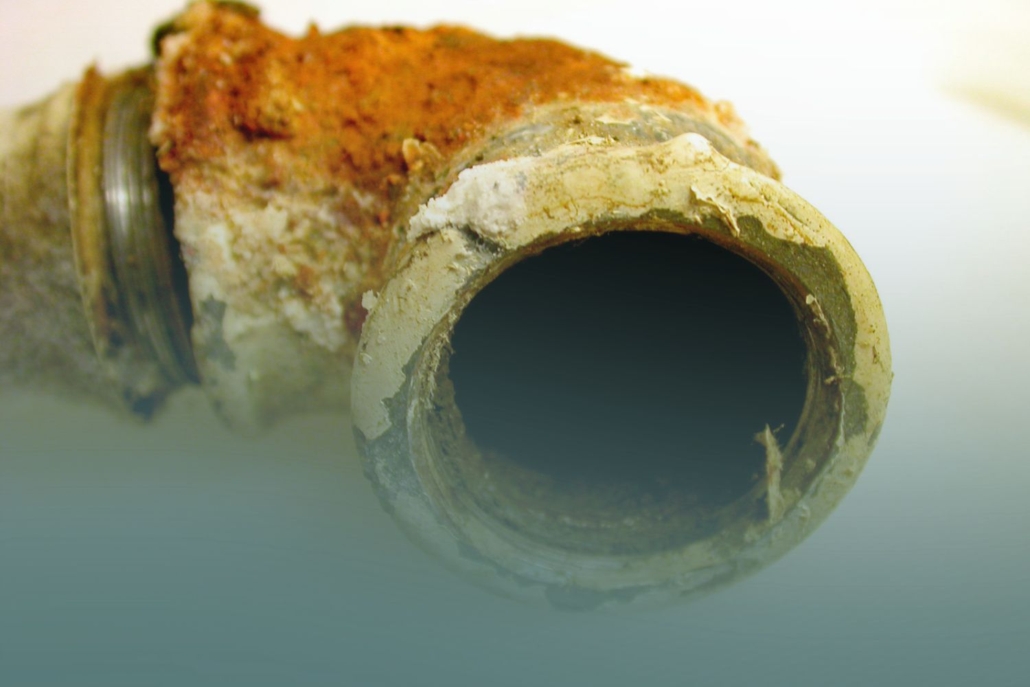
What Is Orangeburg Pipe? Signs, Risks & What to Do
Orangeburg pipe is a sewer line made from layers of wood pulp pressed together with tar, and builders buried it under many homes from the 1940s to the early 1970s. It was cheap and easy to install, but it softens, flattens, and can collapse with age. If your Jacksonville or St. Augustine home was built in that window, the line under your yard could be one of them.
At Inside & Out Property Inspectors, we scope sewer lines and see how aging pipe fails. This guide covers what Orangeburg is, how to spot trouble, and what replacement involves.
What Is Orangeburg Pipe?
Orangeburg pipe is a lightweight sewer pipe made of wood pulp layers soaked in tar. Its trade name is bituminous fiber pipe.
It was used for the sewer lateral, which is the line that carries waste from your house out to the city main. Most of it went in between the 1940s and the early 1970s. Plumbing code allowed it from 1955 to 1982, and plastic pipes such as PVC and ABS entered the code in the early 1970s.
| Pipe material | Why builders used it | Common weak point |
|---|---|---|
| Clay | Long used for sewers | Brittle, with joints that often leaked |
| Cast iron | Strong | Heavy and costly to install |
| Orangeburg | Cheap, light, easy to cut | Softens and flattens as it ages |
| PVC and ABS plastic | Became the standard in the early 1970s | Can crack or leak if damaged |
What Makes Orangeburg Pipe Fail
Orangeburg fails because soil, water, and roots slowly crush a line that was never built to last. It starts out round. Over the years, the weight of the soil and constant moisture soften the tar-soaked fiber. The line flattens into an oval and can no longer carry waste freely. PHCP Pros reports that it can last up to 50 years, but it often starts to warp around 30.
Several things speed up the damage:
- Shifting soil. When the bedding under the line moves, joints pull apart. This is a common way it breaks.
- Tree roots. Roots slip into joints and break sections apart. Mature trees are common across Duval, Clay, and St. Johns counties, so roots are a real concern here.
- Drain-cleaning tools. Tempe notes that router tools only clear a blockage for a while and can damage it.
- Harsh chemicals. Ann Arbor says solvents, paint thinner, and mineral spirits can weaken the tar.
Signs Your Sewer Line May Be Orangeburg
Repeat backups, slow drains, and soggy yard spots are the top warning signs. Watch for these:
- Your home was built between the 1940s and the early 1970s and still has its original sewer line
- Drains back up again and again, even after a drain cleaning
- Several fixtures drain slowly or gurgle at the same time
- A sewage smell near the cleanout or in the yard
- Wet, sunken, or extra green patches over the line
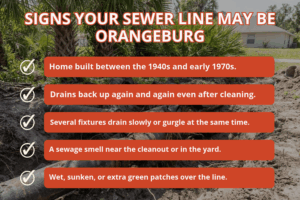
None of these prove you have Orangeburg. They do tell you it is time to look. You cannot tell the material from the yard. Ann Arbor says a plumber confirms it by running a camera, snaking the line (which can bring back fragments), or digging up the pipe.
How to Find Out If You Have Orangeburg Pipe
A camera inspection is the safest way to know what is under your yard. Here is the usual path:
- Check the home’s age. Homes from the 1940s to the early 1970s are the most likely to have it.
- Ask for records. Past owners, repair invoices, and permits can help, but Tempe says it keeps no records for individual houses, so do not count on a quick lookup.
- Book a sewer scope. An inspector feeds a flexible camera through the drain and watches the line from the inside. Our sewer scope inspection usually takes less than an hour, and you get an interactive report the same day. Boggs Inspection Services in Washington explains what a sewer scope inspection involves if you want the full picture.
- Get a plumber’s opinion. If the scope shows trouble, a licensed plumber can confirm the material and quote the fix.

A standard home inspection covers the visible plumbing, but it cannot see the line under your yard. That is why we suggest a sewer scope for older homes. Not sure what is under yours? Schedule a sewer scope and find out before a backup finds you.
Repair or Replace? Your Options
Clearing the line may bring short-term relief, but replacement is often the only lasting fix for a failing Orangeburg line. Ann Arbor says replacement is often the only workable option when the damage is widespread. Here are the main choices:
- Clearing the line. Cutting roots or water jetting costs less, but the relief may not last, and the tools can damage weak lines.
- Dig and replace. A crew digs a trench, removes the old line, and lays new pipe. It is the traditional method, and it can tear up lawns, drives, and landscaping.
- Pipe bursting. A crew pulls new pipe through the old line and breaks the old line apart as it goes. It needs access holes at each end instead of a full trench.
- Pipe lining. A new lining is built inside the old line. Whether it works depends on how badly the old line has flattened, so a plumber has to judge it.
Tempe says the price depends on line length, depth, paving, site access, and landscaping, and it suggests getting at least three bids from licensed contractors. Many cities also require a plumbing permit and an inspection before the trench is covered, so ask your local building department before work starts.
Buying or Selling a Home With Orangeburg Pipe
A sewer scope before closing turns a hidden problem into something you can plan for or negotiate. We tell buyers that sewer repairs can land in the $3,000 to $6,000 range, and a full replacement of a failed line can run higher.
If you are buying, order the scope during your inspection period. Use the report to ask for a repair credit or a price change. If you are selling, scoping the line first lets you share the findings and fix it on your own schedule.
Related Questions to Explore
- What is Orangeburg pipe made of? It is made of layers of wood pulp pressed together with tar.
- How long does Orangeburg pipe last? PHCP Pros reports up to 50 years, with warping often starting around 30. Most Orangeburg went in by the early 1970s, so a line that is still in the ground is well past 50 years old.
- Is Orangeburg pipe still used today? No. Plastic pipe such as PVC and ABS replaced it as plumbing codes changed in the early 1970s.
- How much does it cost to replace Orangeburg pipe? The price depends on length, depth, paving, access, and landscaping. Get at least three bids from licensed contractors.
- Will a home inspection find Orangeburg pipe? A standard home inspection looks at visible plumbing, not the buried line. A sewer scope inspection adds a camera view of the line itself.
- Who pays if the problem is in the city’s line? It depends on where the failure sits. Read when the city is responsible for sewer lines to see how that is decided.
- What is the difference between septic and sewer? A septic system treats waste on your property, while a sewer system sends it to a city plant.
When to Call a Professional
Do it yourself stops working once you suspect the line itself is failing. Call a pro if any of these are true:
- Backups keep coming back after cleaning
- Your home was built between the 1940s and the early 1970s and the sewer line was never replaced
- You are buying an older home and want to know the line’s condition
- Roots return again and again
Inside & Out Property Inspectors is a Florida-licensed home inspection company (License HI8005) with in-house inspectors and no subcontracting. We scope the line, document its condition, and deliver an interactive report the same day. If the scope shows a failing line, you will need a licensed plumber or sewer contractor.
Our approved contractors page is a good place to start. We serve Greater Jacksonville and St. Augustine, including Duval, Clay, St. Johns, Nassau, and Flagler counties.
Conclusion
- Orangeburg is a tar and wood pulp sewer pipe used mostly from the 1940s to the early 1970s.
- It flattens, cracks, and can collapse with age, and a camera is the only sure way to know what you have.
- Replacement is usually the lasting fix, so get three bids and ask about permits.
Want to know what is under your yard? Schedule a sewer scope with Inside & Out Property Inspectors and get your report the same day.