Coffee for many is a morning staple. It is the smell many want in the morning and the taste to start their day off right. When we run coffee in our machines, grounds are left over. What do we do with them? Some people think putting them down the sink makes it smell better. Can coffee grounds go down the sink? Unfortunately, no, as they don’t dissolve in water and can cause clogs in the drainage system.
Let’s take a look.
What Happens With the Coffee Grounds in The Sink?
As mentioned above, they don’t dissolve in water and can accumulate in pipes, leading to blockages. This can result in slow-draining sinks or even complete backups, requiring expensive repairs.
What Else Should Not Go In The Sink?
Apart from coffee grounds, there are several other items that you should never dispose of in the sink. These include:
Grease or cooking oil: These substances can solidify in pipes, causing major blockages.
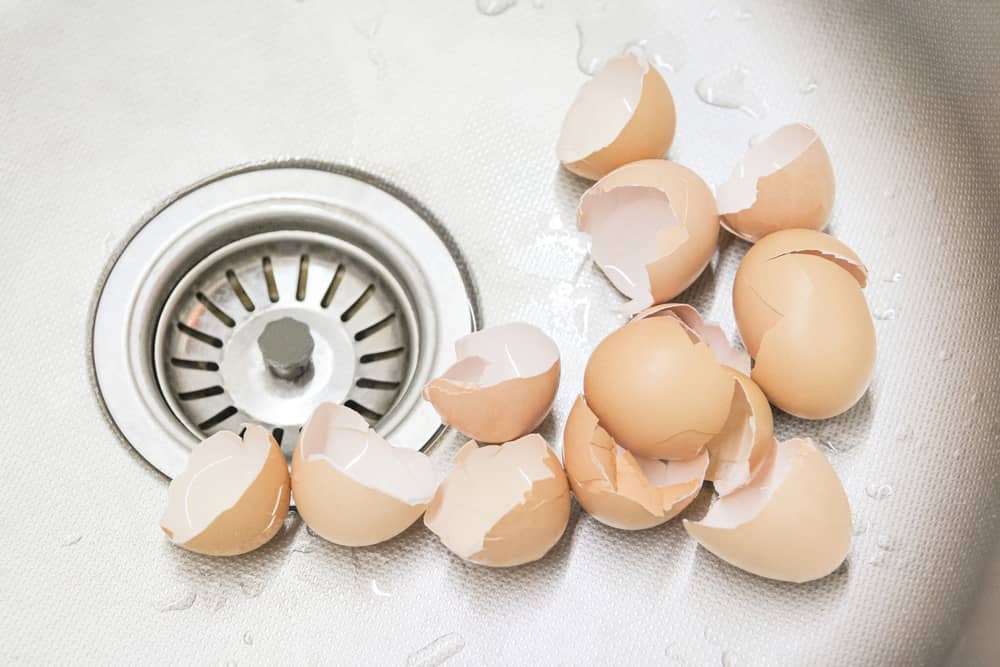
Eggshells: The thin membrane lining inside eggshells can stick to pipes and create obstructions.
Rice, pasta, and bread: These starchy foods can absorb water and expand, leading to pipe blockages over time.
Fibrous vegetables, such as celery and potato peels: The long, stringy fibers can wrap around pipes and impede drainage.
Putting the wrong things down the sink can have serious consequences for your plumbing system. Clogs can develop, resulting in slow drainage, foul odors, and even sewage backups. In some cases, the pipes may burst or leak due to increased pressure caused by blockages. This can lead to extensive water damage and costly repairs.
Other Ideas For The Coffee Grounds
Instead of disposing of coffee grounds down the sink, there are several eco-friendly alternatives you can consider:
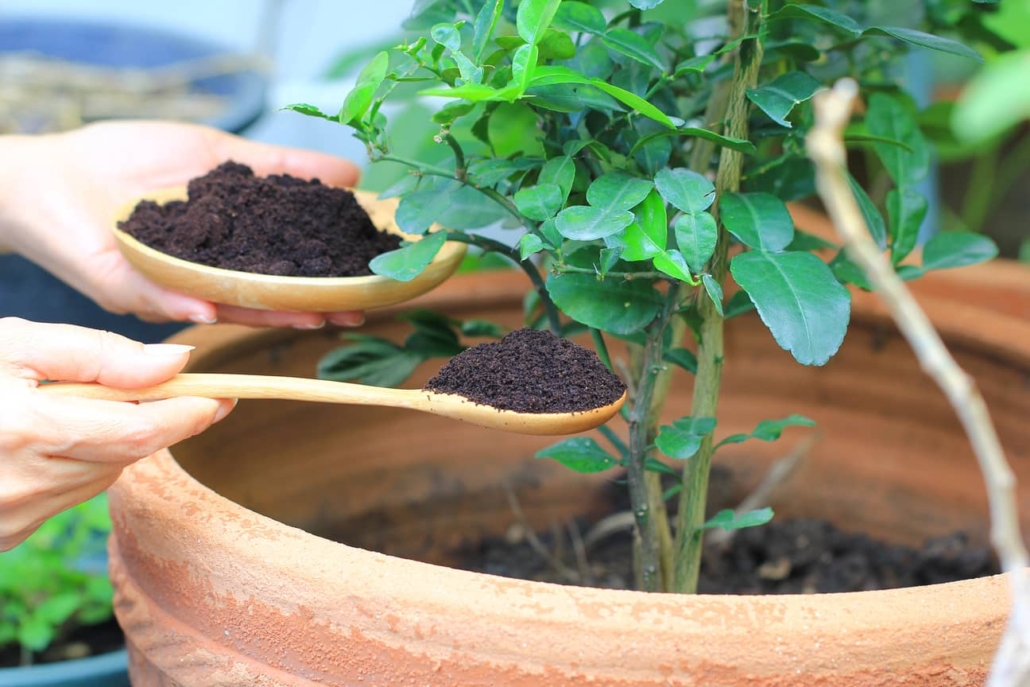
Composting: Coffee grounds make an excellent addition to compost piles or bins. They can enrich the soil with organic matter, improve drainage, and act as a natural fertilizer.
Gardening: Coffee grounds can be sprinkled around acid-loving plants like azaleas, rhododendrons, and blueberries. They provide essential nutrients and help maintain the desired pH level in the soil.
Cleaning: Coffee grounds can be used as an abrasive cleaner for pots, pans, and even as a natural scrub for exfoliating your skin.
Other Recommended Maintenance
Now that you know why you don’t put coffee grounds down the sink, let’s take a look at a few other areas of maintenance. One of those is drain cleaner in the garbage disposal. Some people say that drain cleaner is okay, but the problem is there are harsh chemicals used to make it. Thus, it can eat away at the pipes and cause major damage.
Lastly, garbage disposals don’t need a GFCI. They only need a dedicated circuit that is 15 or 20 amp and it should be a circuit that is separate from the dishwasher. This is so the dishwasher circuit is not on overload.
When to Call Inside and Out Property Inspectors?
If you have accidentally put the wrong things down the sink and are experiencing persistent plumbing issues, it is advisable to call Inside and Out Property Inspectors so we can recommend a master plumber. They have the expertise and proper tools to clear stubborn blockages safely and efficiently, preventing further damage to your plumbing system.
Conclusion
To maintain a healthy plumbing system and avoid costly repairs, it is crucial not to put coffee grounds and other inappropriate items down the sink. Also, by responsibly disposing of coffee grounds and using eco-friendly alternatives, you can protect your pipes and contribute to a more sustainable environment. If in doubt or facing severe plumbing problems, always consult a professional for assistance. Contact Inside and Out Property Inspectors in Jacksonville, FL, and surrounding areas to get your home inspection done today.
https://insideandoutpropertyinspectors.com/wp-content/uploads/2023/08/coffee_grounds_25.jpeg9361404BJ Johnsonhttps://d39oyu4lp7snwz.cloudfront.net/wp-content/uploads/sites/54/2019/08/31171419/io-favicon-300x300.pngBJ Johnson2023-08-15 01:02:012023-08-15 01:02:02Can Coffee Grounds Go Down The Sink?
When it comes to owning a home, there are a variety of maintenance and cleaning needs. Additionally, you will want to ensure that everything in your home is working properly. Make sure that you have an understanding of how every system in your home functions. This will save you time and money as you work through your maintenance checklist. Also, ensure that the conditions in your home are conducive to keeping the home safe and free from mold. Humidity will promote mold growth, so ensure your air conditioner is working to dehumidify your home as it runs. Do air conditioners dehumidify? Yes, it will remove moisture from the air that gets sucked into the AC unit as it cools the air down.
Let’s take a look below at some more details regarding dehumidifying and cooling your home.
What Does It Mean To Dehumidify?
Dehumidifying your home means removing moisture from the air. The air conditioner will act as a dehumidifier while it runs in your home. The air conditioner will not completely remove all moisture from your home, but it will remove some. If your home shows a high moisture reading, then you will want to invest in an additional dehumidifier. Run your air conditioner at a temperature that is consistent with the outdoor air. Consequently, this allows the unit to reduce the moisture from the air as it sucks it into the unit and blows the warm air out.
How Does It Work In An Air Conditioner?
Let’s take a look at how the air conditioning system works to remove excess moisture from your home.
Liquid refrigerant – When the ac unit kicks on it will push refrigerant through the pipes within the unit. Excess heat is then removed.
Evaporator – The cold air will then be pushed through to each room by the evaporator in the system.
Liquid refrigerant – The liquid refrigerant is then converted to gas once it passes through the expansion valve.
Evaporator coils – The evaporator coils cool the refrigerant once the refrigerant is pushed through the evaporator coils.
AC fans – The internal fans in the AC unit then push the cool air from the evaporator coils through the air ducts in the home.
Liquid refrigerant – The refrigerant then absorbs the hot air from the home and converts it to a hot gas.
Compressor – Next, the refrigerant is pushed into the compressor where it becomes a high-temperature and high-pressure gas.
Condenser coils – The gas is then pushed through the condenser coils and the heat that was absorbed is released through the outside unit.
When Should I Purchase A Dehumidifier?
If you aren’t sure when you will need to purchase a dehumidifier to dehumidify the air, it should be considered under the following circumstances. Also, read up on how a dehumidifier works with your central air conditioners.
Personal preference – If the environment in your home does not feel like the humidity levels are where they need to be, you will want to purchase a dehumidifier. Consider determining the type of environment that you want the rooms that you spend your time in to feel like.
Budget – An AC unit’s cost is expensive compared to a dehumidifier. Purchasing a dehumidifier will go a long way toward reducing the humidity in the home. Dehumidifiers are portable and inexpensive.
Location – If you live near water, then the moisture levels in your home will be exponentially high. Installing a dehumidifier will help keep the moisture levels in your home from getting out of hand.
Other Recommended Maintenance
Now that you are aware of how an air conditioner dehumidifies your home, you can read up on whether or not your ceiling fans help the ac unit. Placing your ceiling fans on the correct rotation allows you to assist your ac unit with maintaining the airflow and moisture control in your home.
Next, read up on what you need to consider when you replace your HVAC unit. Homeowners should not rush into replacing their HVAC unit without researching how long the new one could last. Also, research the size of the HVAC unit to ensure that it fits your home’s needs.
Lastly, as you install your new ac unit or work to repair your current unit, keep in mind that carbon monoxide should be a non-issue. Any electrical system like an HVAC unit will not emit carbon monoxide.
L
When Do I Call A Professional?
When it comes to your HVAC unit, you will want to make sure that it is working properly. Keeping the humidity levels in your home at a stable level will allow you to keep mold and mildew from growing in your air ducts and home. Call on your local home inspection team to inspect your HVAC unit and determine that everything is working properly. Also, your home inspection team can recommend a reputable HVAC system service technician to test your system.
Conclusion
Hiring the right professional HVAC service technician is necessary to determine that your system is set to remove excess moisture from your home. Not only is the goal of the HVAC unit to provide your home with the right air temperatures, but it also wants to maintain indoor air quality. Dehumidifying your home will need assistance. The air conditioning unit will not be able to remove all of the moisture on its own. Call on your local home inspection team to determine where additional dehumidifiers could be used. Reach out to Inside and Out Property Inspectors in Jacksonville, FL, and surrounding areas to get your home inspection done today.
https://insideandoutpropertyinspectors.com/wp-content/uploads/2023/06/air_conditioner_25.jpeg11351702BJ Johnsonhttps://d39oyu4lp7snwz.cloudfront.net/wp-content/uploads/sites/54/2019/08/31171419/io-favicon-300x300.pngBJ Johnson2023-06-26 15:45:172023-06-26 15:53:01Do Air Conditioners Dehumidify?
Buying an older home can come with a lot of questions. There were building materials and building codes that are completely different in today’s home market. As a home buyer, you should be very thorough with your home inspection. Ensure that everything in the home is up to building code, and there are no harmful materials in the home. Keep in mind that materials like asbestos and lead paint could have been used many years ago. When did lead paint stop being used? Lead paint was used all the way up to 1978. After 1978 it was phased out due to its toxicity.
Let’s take a look below at some more details regarding lead paint in the home.
What Is Lead Paint?
Lead-based house paint is a highly toxic material that was created before the 1980s. Lead is a metal that can cause major health issues in young children and adults. If lead is absorbed in the body, it can break down organs such as the kidneys, brain, nerves, and your blood. This toxic metal can create some major damage to the body.
It is estimated that 29 million houses in the United States have lead-based paint in them. This leads to a contaminated home with lead paint that can create damaging lead dust. If you ever suspect that your home has lead paint in it, call for a lead paint inspection. Once you have the lead paint inspection done, you can get a risk assessment to see how hazardous the paint in your home is.
How Can I Reduce My Exposure To Lead Paint?
To protect you and your family from lead exposure and lead hazards you will want to consider the following things below to reduce your exposure to lead paint. If the home was built before 1978 it is likely to have levels of lead that could result in lead poisoning. Let’s take a look at the ways we can reduce lead paint exposure.
Check-in – Reach out to your local health department and schedule a test for lead paint in your home.
Keep it clean – Inspect the entire home for any areas of paint that are peeling from the walls or other painted structures. Keeping your child from accessing any paint chips is important.
Safely renovate – If you begin to renovate the home, sanding, cutting, replacing windows, and other activities could create lead dust in the air and reduce the air quality. Also, this can expose you and your family to significant health damage. Be sure to review the Environmental Protection Agency (EPA) guidelines for lead paint removal.
Removal – Hire a professional lead-based paint removal company to get all lead paint chips and peeling paint off their surfaces. This kind of work should be done with proper safety precautions and tools and equipment to protect all involved.
Mop regularly – It is recommended that you use a wet mop on your floors and dust the window sills and wells with a wet rag. Keeping all surfaces free from any dust is important for maintaining your health and safety.
Wash regularly – If you suspect that your home has contaminated dust or soil, you will want to wash your child’s hands on a regular basis.
Create a barrier – Use contact paper and duct tape to cover holes and walls that are contaminated. Consequently, this should be done as you await the proper removal of the contaminated areas. Also, keep children away from contaminated soils.
Keep away – Be sure to keep pregnant women and children from accessing the home during renovations. While a renovation is being done, dust is flying around and paint debris is in the area. Once the work is done and all areas are cleaned up, the pregnant women and children can re-enter the home.
Keep in mind that in the 20th century, the EPA banned the use of lead in paint and homes. Public health is the biggest concern. Lead creates health problems for property owners who purchase a home with lead-based paint.
Other Recommended Maintenance
Now that you know when lead paint was stopped being used you can read up on how to negotiate after the home inspection. If your initial inspection finds that you have lead paint in or on the surfaces of the home, you will want to negotiate the sale price as you look to remove all toxic lead materials from the home.
Next, be sure to read up on who the best home inspection companies are in your local area. It is vital that you not just hire the cheapest home inspector. Hire the most reputable home inspection team to assist with determining if the home you live in has toxic materials in or on it.
Lastly, keeping your home inspection report is important for having a point of reference during the risk assessment portion of the home. Finding out if the paint does have lead in it will be necessary for any home buyer to know before a purchase is made. The home inspection report is a great start in the process.
When Do I Call A Professional?
Dealing with lead paint is not ideal for any family. It can cause some major health issues for you and your family. Be sure to reach out to your local home inspection team. They will determine if the paint in your older home is lead-based. Protecting you and your family should be a priority before worrying about any home purchase. Additionally, your local home inspection team can recommend a local risk assessment company. They will determine how toxic the paint in your home might be.
https://insideandoutpropertyinspectors.com/wp-content/uploads/2023/06/hazard_warning_25.jpeg10041504BJ Johnsonhttps://d39oyu4lp7snwz.cloudfront.net/wp-content/uploads/sites/54/2019/08/31171419/io-favicon-300x300.pngBJ Johnson2023-06-09 17:38:462023-06-09 17:38:47When Did Lead Paint Stop Being Used?
Buying a house comes with a lot of expenses and to-do lists, in addition to finding the house you want. You probably have ideas of what you want in it and the non-negotiables with the home and neighborhood. Though not required for the purchase of a home, it is highly recommended. There are several reasons for having a home inspection done, as well as why you should keep the report. Who pays for a home inspection? It is usually the buyer who can find out the ins and outs of the home and an unbiased evaluation. Also, keeping the report is important to show to contractors and repairpeople so they know what repairs need to be made. Let’s take a look.
Why A Home Inspection?
When looking to buy a home, a potential buyer should pay to have a home inspection done as soon as they can after the offer is accepted by the seller. This is because it is important to give the seller time to fix any issues (if they choose to) that the inspector finds. It also allows you and the seller to come to an agreement on the repairs and a final price.
A home inspection is necessary, whether it is on an older home, new build, or condo. You may wonder about having an inspection on a new home, but they do have defects and sometimes the house is built so quickly that things are overlooked or not done correctly. Paying for the inspection gives you peace of mind that you aren’t getting into a “money pit” or a home with major issues that aren’t seen from the outside.
Never assume a house that looks great on the outside has everything functioning properly on the inside. Spending the money to hire a home inspector is worth it.
Types of Home Inspections
There are different types of home inspections. A standard home inspection is what is normally conducted. This covers the structure, electrical system, construction, mechanical systems, and plumbing of the home. There are also other home inspections that are specialized, especially here in Florida. Also, there are ones that are for health and safety concerns.
Some of these are:
Sewer Scope
A sewer scope inspection uses a camera to see if there are any issues in the sewer lines of the home.
Mold Inspection
A mold inspection is done to see if there is any pre-existing mold in the home. It is also to see if there are areas that are water damage prone or have high humidity.
Wind Mitigation
A wind mitigation inspection is using certain building techniques to limit the damage caused by intense wind, such as hurricanes. This type of inspection can lower the homeowner’s insurance.
4-Point Inspection
A 4-point inspection covers the roof, plumbing, electrical, and HVAC. Most home insurance companies don’t like to cover homes that are over 25 years old. Thus they require this inspection to make sure the home meets the standards.
Cost
The average home inspection fee in Florida is over $300 for an average-sized home. For a smaller home, it may be less while a large home will be more.
How Buyers Use the Home Inspection Report
The amount of money spent on a home inspection is peanuts to have peace of mind and know what you are getting into for a home. The report helps the buyer and real estate agent with negotiating with the seller. It is also a great idea to have this report so you remember the ages of important elements in your home such as the water heater, HVAC, etc.
If by chance the home you are looking at buying is an “as-is” this inspection can allow you to cancel the purchase of the home, or negotiate the price with the seller. A home inspection report also allows you to use it as a checklist if you are doing a loan for renovations. This can help the buyer with financing.
Keep in mind that a lot of the information you get in the report is not for negotiating, but is for maintenance information. Lastly, the report is needed for contractors. This is because it will show the contractors where the repairs are.
What Happens If Problems Are Discovered?
An inspection that is thorough will list items that should be looked at around the home. The report may come up with minor issues or major issues. Let’s look at some of the common findings.
Structural damage
When looking at the structure of a home, they will be checking for cracks that are in the foundation. Also, in states that have basements, a home inspector will look for drainage issues. The crawl space will also be looked at for issues in drainage, as well as masonry or bricks that are failing.
Roof damage
Roof damage is also another common area. Here in Florida, we have hail storms, hurricanes, tornados, and also just bad summer storms. In other states, snow can also cause damage to the roof. The inspector will look for tilting, and shingles that are broken or missing and check the gutters for clogging.
Chimney issues
The inspector will also look at the chimney and any damage to the flue, bricks, or mortar. They will also look to see if there are any blockages in the interior. Lastly, sometimes the fixes are easy things like a chimney sweep or could end up being structural repairs.
Pest Infestation and Wildlife Issues
Inspectors will also keep an eye out for any pest problems they may come across in an inspection and give recommendations for pest control service or to contact a professional.
Trees That Are Dead
If the inspector finds large trees that appear dead near the home, they will give recommendations as to what to do. Having dead trees near the home can cause problems if they fall on the house or knock down power lines.
Issues with Plumbing and Septic
An inspector will look for pipes that are corroded, broken, or rusted. They will also look at any that have the wrong type of pipe that has been used too. Looking for water damage near the plumbing fixtures will also be another thing that they do as well as stains on the ceiling from water. Mold and mildew will also be signs of water damage. If the home doesn’t have sewer and instead has septic, this will be inspected for leaks, as well as drainage issues. They will also look to see the level of solids that are in the tank. A company that has septic inspections as a service will be needed to do this.
HVAC issues
The HVAC system will be looked at to make sure it is working properly, it has the correct wiring, as well as the air conditioner is working properly. An air conditioner lasts about 10-15 years and is expensive to replace. You will want to know about these expenses before purchasing a home.
Electrical hazards
An inspector will check to see if the house has GFCI outlets, the grounding of three-pronged outlets as well as the circuit panel doesn’t have any illegal modifications. If there are some issues or suspicion of issues, the buyer may hire an electrician to take a look and make sure everything is up to code.
Fire Issues In The Home
Many issues in a home that are fire hazards are due to electrical issues. There are also fire hazards with fireplaces and the inspector will also check that smoke detectors and carbon monoxide detectors are working. Lastly, they will check that windows and doors are working properly, especially in case of a fire.
Appliances
An inspector will take a look at major appliances such as the oven and the hood, dishwasher, refrigerator and freezer, and garbage disposal. This is to make sure they are all working properly.
Here is a great video about home inspections for first-time buyers.
https://www.youtube.com/watch?v=j-SJ9G1K8bo
Recommended Maintenance
Now that you know about having a home inspection and who to share your report with, let’s take a look at a few other areas. One of those is negotiating after a home inspection. This is important as you will know what the necessary repairs are after the home inspection is completed. You as the buyer may also want to have your own contractor fix the issues so you may want to negotiate the price of the home.
Another area is walking away after a home inspection. You may find that the home inspection report shows there are structural issues in the foundation or termites to name a few. These types of findings allow you to walk away from purchasing a home if you choose to do so.
Lastly, if you own a house in the great state of Florida, there are other inspections you the home buyer want to think about doing. Those are wind mitigation and 4-point inspections. The wind mitigation inspection gives homeowners insurance discounts based on certain building attributes while the 4-point inspection tells insurance companies how well the home has been maintained.
https://insideandoutpropertyinspectors.com/wp-content/uploads/2023/05/home_inspection_25.jpeg9171375BJ Johnsonhttps://d39oyu4lp7snwz.cloudfront.net/wp-content/uploads/sites/54/2019/08/31171419/io-favicon-300x300.pngBJ Johnson2023-05-16 23:14:142024-12-24 19:41:04Importance of Keeping Your Home Inspection Report
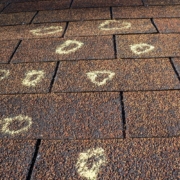
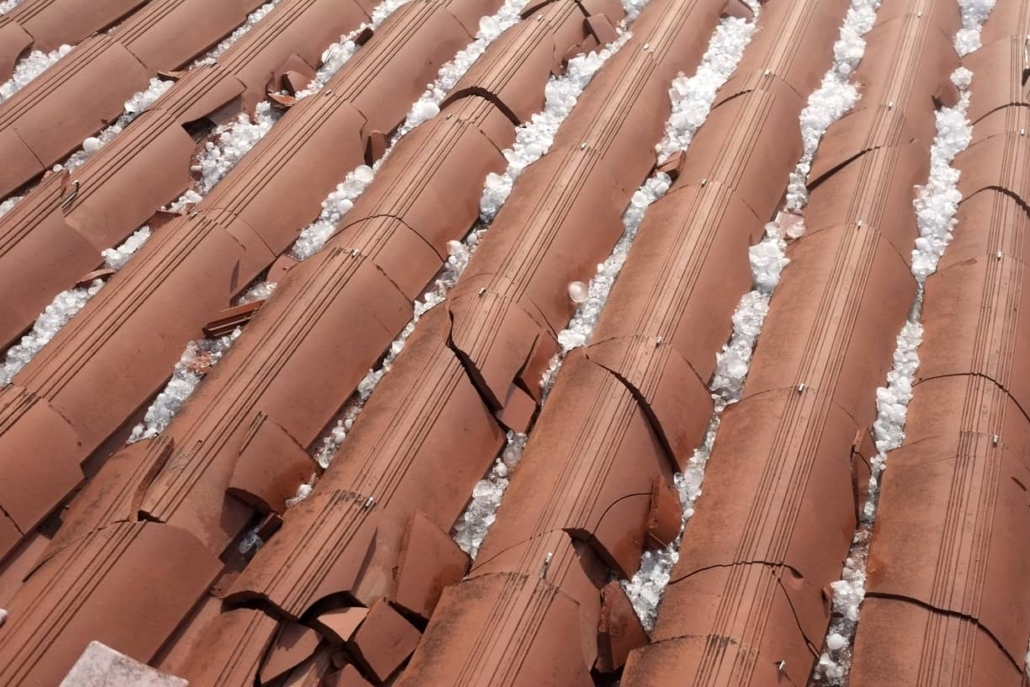
Imagine coming home from a long day at work and the skies start looking very threatening. You rush to pull your car into the garage and get inside where it is safe. As you get settled in your home you start hearing loud bangs. You look outside the window and there are large pieces of ice jumping around on your driveway. Immediately you realize it is a hail storm. Homeowners’ worst nightmares are acts of mother nature that cannot be predicted or changed. Once the storm is over you head outside to inspect the damages to your roof and the rest of the home. What does hail damage on a roof look like? Dents, dings, damaged shingles, bruising to your roof, and loose roof materials are all signs.
Let’s take a look below at some more specifics regarding hail damage on a roof.
How Does Hail Damage The Roof?
Believe it or not, hail can damage a roof in a variety of ways. Let’s take a look below at what those are.
Roof slope – Depending on how the roof is sloped on your home will determine the types of hail damage that it might incur.
Roof age – The older the roof, the less likely it will survive major damage caused by a hail storm.
Roofing materials – Hail can dent, ding, and even cause roofing materials to become loose and out of place.
Wind speed – The speed of the wind during a hail storm can cause substantial damage to the roof materials.
Wind direction – Depending on how your roof is situated and the direction in which the wind is coming from will determine how damaged the roofing materials will become.
Size of the hail – The size of the hail will also determine how bad the damage is. The larger the hail typically means the larger the damage.
Keep in mind that damage to your roof is generally cosmetic. You will want to hire a professional to take a closer look. If the hail is large, you will notice a loss of shingles, loss of granules, bruising to the shingle and even notice other structural changes.
What Does Hail Damage Look Like?
There will be some noticeable damages to your roof as a result of a hail storm. Let’s take a look below at what some of those damages look like.
Fiberglass mat exposure – The force of hail falling from the sky can loosen any shingle and make it slide away which will expose the fiberglass mat underneath.
Granule loss – As the hail dings the shingle, the granule material on the shingle will begin to disconnect and fall off the shingle.
Damage to the fiberglass mat – If the fiberglass mat is exposed you will notice damage to this protective layer. Damage to the mat could also cause damage to the roof sheathing underneath it.
Cracks in the shingle – Hail that causes cracks in the shingle is not good. Cracks and crevices in a roof allow water to get into the roof structure and attic space. This will promote mold growth and other damage to the roof.
Damage to the seal – If the hail damages the seal strip or weakens it at all, the shingles will be capable of blowing off the roof during the wind storm. Check for any loose shingles when the storm is over.
https://youtu.be/TZreBlAUU1U
Other Recommended Maintenance
Now that you understand what hail damage to a roof looks like, you can proceed with a roof inspection checklist. This allows you to look for any exposed nails, missing tiles, or flashing to name a few. If there are damaged shingles, they should be repaired or replaced immediately.
Next, check the ceilings to make sure there are no wet spots. Any wet spots are a sign that you have a roof leak. Check to see if there is damage to your shingles, flashing, or roof vent seals. You will need to call a professional to check for you.
Lastly, if you really want to know what kind of damage could occur to your roof after a hail storm, get to know what shingles are made of.
l
When Do I Call A Professional?
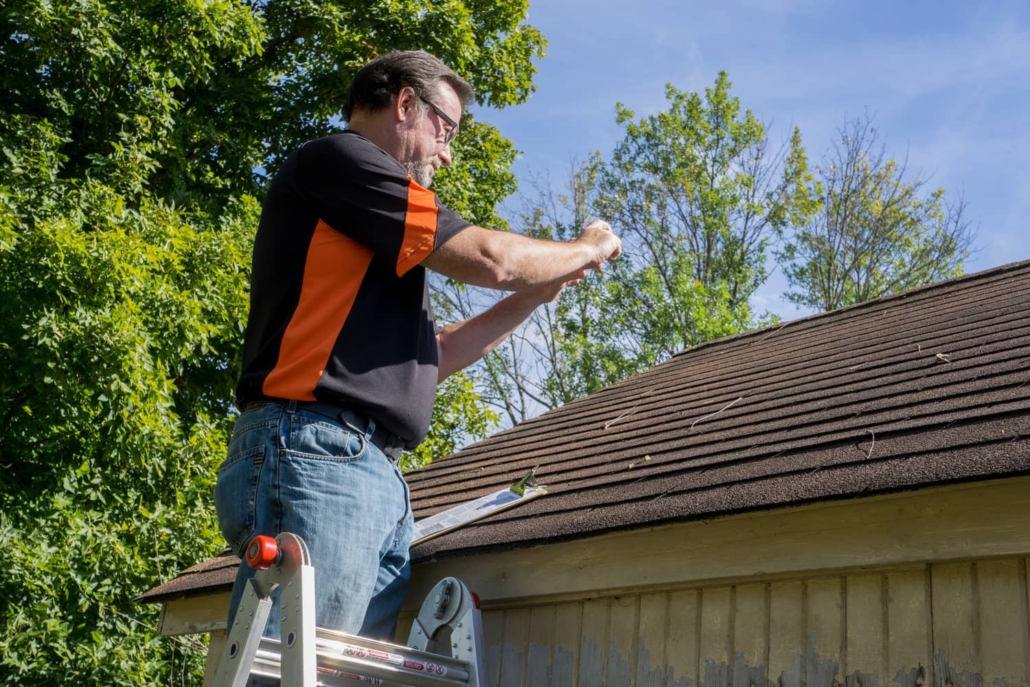
To get your roof inspected after a hail storm you should reach out to your local home inspection team. Also, consider hiring a local professionally licensed roofing contractor that understands the specifics regarding your roofing material. Together these professionals can come up with a solution and some reports for your insurance company. Keep in mind that your insurance company will want multiple estimates for roof repairs.
https://insideandoutpropertyinspectors.com/wp-content/uploads/2023/04/hail_damage_markings_25.jpeg10001500BJ Johnsonhttps://d39oyu4lp7snwz.cloudfront.net/wp-content/uploads/sites/54/2019/08/31171419/io-favicon-300x300.pngBJ Johnson2023-04-25 15:37:152024-12-24 19:47:06What Does Hail Damage On A Roof Look Like?
When you make the big decision of purchasing a home, you want to remind yourself that this investment requires upkeep and maintenance. Having pets that wander your carpet or spills that occur on the carpet could cause a few concerns. In most cases, homeowners do not think of the overuse of their carpets. Some homeowners will hire a carpet cleaning company once a year to clean the carpets. However, this doesn’t necessarily solve all of the issues. Luckily, if your carpet smells, a carpet cleaning company might help. Wondering how to get the smell out of carpet? There are a variety of ways to get this done, baking soda, and vinegar are always an option.
Let’s take a look below at how you can keep your carpet smelling fresh.
What Are The Steps?
Every home project requires a particular level of instructions or directions. Let’s take a look at how we can get the foul odors out of the carpet.
Sprinkle the Baking Soda – Baking soda has many uses in your home. As a natural odor absorber, it can be used in your closet, garbage, garbage disposal, or on your carpets. Spread the baking soda around your carpet.
Spread the Baking Soda – With your shoes on, walk around the carpet to spread the baking soda around the carpet. It is important to spread the baking soda around.
Let it settle in – Allow the baking soda to settle into the carpet for roughly 30 minutes. You want the baking soda to seep down to the base of the carpet. Not only will it soak up odors, but it will also grab excess moisture.
Suck it up – Grab your vacuum cleaner and vacuum up the baking soda.
Still smells – Repeat these steps until you no longer have a smell.
How Can I Keep My Home Smelling Fresh?
Luckily, if the baking soda trick doesn’t work, there are a few other tricks that you can pull off. Let’s take a look below at what those other options might be.
Essential oils – Masking the smells in your home with essential oils is a great way to naturally eliminate odors. If you don’t have an oil diffuser, just mix the correct amount of oil drops with water into a spray bottle. Then spray the mixture onto your carpet.
Fruit peels – Cut up the fruit peels for oranges, limes, or lemons, and grind them into your garbage disposal. This will create a fruity smell in your kitchen that can mask other odors in your home.
Crockpot – With the lid off and the crockpot on the “low” setting, mix baking soda and water and let the heat from the crockpot do the trick.
Vinegar and water – If you have a mildew smell coming from your carpet, mix 2 cups of warm water with 1 cup of distilled white vinegar. Gently spray the vinegar solution onto your carpet. Once the carpet dries, you will no longer smell the vinegar scent.
Keep in mind that you can also look to cleaning products such as hydrogen peroxide or carpet shampoo. You will want the area dry and if not, use a fan to air dry the carpet.
Other Recommended Maintenance
Now that you have an idea of how to get a smell out of your carpet, you can begin reading up on how to remove mold from your carpets. Mold is a likely proponent of your smelly carpet. Understanding how to remove the mold will determine if you need to replace the carpet or simply get it cleaned.
Next, while using a carpet cleaner or scrubbing away mold and stains, soap is likely to settle on the carpet. Removing the soap from the carpet is important. You will want to read up on how to clean soap out of your carpets. This will ensure that the carpet gets properly dried.
Lastly, the moment that you start cleaning your carpet, you will want to know how long it takes the carpet to dry. If you do not dry the carpet promptly, then you risk the carpet breeding mold and mildew. Consequently, if this occurs, you will be back to square one about getting smells out of your carpet.
When Do I Call A Professional?
Carpet cleaning services are fairly prevalent in most communities. If you do not have a local carpet cleaning service, it is possible that you could rent a carpet cleaning machine from your local hardware store. Once you have completed the recommended cleaning steps above, determine how effective they were. If you aren’t satisfied, reach out to your local home inspection team. They can inspect your carpet and other floors. Also, they can refer a reputable carpet cleaning company.
Conclusion
After you have attempted to get the smells out of your carpet keep a record of how many times this maintenance occurs. Consequently, this might be a situation where it is time to replace your carpet. In some cases, the padding underneath the carpet can get moldy and soggy and creates a constant smell. This would be a good time to get a home inspection. They can conduct a thorough inspection of your carpet and flooring. Reach out to Inside and Out Property Inspectors in Jacksonville, FL, and surrounding areas to get your home inspection done today.
https://insideandoutpropertyinspectors.com/wp-content/uploads/2023/03/baking_soda_and_fruit_peels_25.jpeg9601440BJ Johnsonhttps://d39oyu4lp7snwz.cloudfront.net/wp-content/uploads/sites/54/2019/08/31171419/io-favicon-300x300.pngBJ Johnson2023-03-16 15:23:382023-03-16 15:23:38How To Get Smell Out Of Carpet
Owning a home requires you to complete a lot of maintenance and projects. One of those rare projects deals with clearing your sink drain and keeping the P-trap free and clear. If you don’t want your bathroom sink drain to clog, you will want to ensure that it is cleaned out on a regular basis. Ever wonder how to remove a drain from a bathroom sink? Believe it or not, there is a simple nine-step process to remove your sink drain.
Let’s take a look below at how to remove the drain from your bathroom sink.
Recommended Equipment?
If you need to remove the drain of your bathroom sink you will want specific tools. Let’s take a look at what those tools are.
Believe it or not, the steps to removing your bathroom sink drain are fairly easy. If you don’t have the tools or the patience to complete this project, reach out to your local professionally licensed master plumber. Let’s take a look below at what those steps are.
Place your bucket under the P-trap that is located under your sink.
Turn off the water for both of your hot and cold faucet lines.
Pull the stopper and then remove the spring clip attached to the pivot rod and then unscrew the pivot nut from the connected drain pipe under the sink.
Then remove the drain stop from the drain pipe.
Unclog the drain with your hair removal tool.
Now unscrew each section of the P-trap from the main drain pipe.
Use hot water and vinegar to rinse the drain pipe and clean it from any gunk that is remaining.
Pop the drain pipe from the sink to remove the drain pipe.
Clean the drain pipe and the sink.
Use a plumber’s putty and replace the drain pipe in the sink so that you have a tight seal.
Re-attach the plumbing below the sink and clean all areas that are still dirty.
Following these steps allows you to pop the drain stopper and remove the sink stopper to clean the stopper. If you want to remove the bathroom sink drain assembly, then unscrew the nut and take out the bathroom sink stopper so that the drain opens are keys.
How Much Does It Cost?
The good thing about removing a drain from your bathroom sink is that it is fairly simple to do. However, if you don’t have the tools or the energy to get this project done, you can call on a local master plumber. The average labor charge for a project like this is between $40 and $50 per hour.
Other Recommended Maintenance
Now that you know how to remove the drain from your bathroom sink, you can check on why the sink drain pipes might be leaking. Once you determine the issue, you can use a patch and clamp with some epoxy putty to stop the leak.
Next, while you are checking your plumbing, you can work on your kitchen sink. Make sure that the kitchen faucet is tight so that there are no leaks. Use the wrench that you used to remove the drain from your bathroom sink to tighten the kitchen faucet.
Lastly, if you have a clog in your sink drain and cannot remove the drain from your bathroom sink, consider pouring salt down the drain. Pouring salt down the drain and rinsing it with hot water allows the salt to emulsify and work to remove the clog in your bathroom sink drain.
When Do I Call A Professional?
If removing the drain from your bathroom sink becomes an issue, call on a local master plumber. Not only can they replace your bathroom sink drain, but they can also clean it and check all of the plumbing in your bathroom. Keep in mind, calling on your local home inspection team is also a great idea. Additionally, they can inspect your entire plumbing system. Also, they can refer a reputable Master Plumber.
Conclusion
When it comes to removing your bathroom sink drain, can be a fairly simple project. However, if you don’t have the tools or the strength to remove the drain, you will want to call a professional. Consequently, using a master plumber can allow you the opportunity to have all of your sink drains removed for cleaning. Also, call on your local home inspection team to inspect your entire plumbing system checked. Contact Inside and Out Property Inspectors in Jacksonville, FL, and surrounding areas to get your sewer scope inspection done today.
https://insideandoutpropertyinspectors.com/wp-content/uploads/2023/02/bathroom_sink_25.jpeg10081512BJ Johnsonhttps://d39oyu4lp7snwz.cloudfront.net/wp-content/uploads/sites/54/2019/08/31171419/io-favicon-300x300.pngBJ Johnson2023-02-23 20:03:422023-02-23 20:03:43How To Remove A Drain From Bathroom Sink
One of the few frustrating maintenance items in a home involves your toilet. When the fill valve in your toilet begins to malfunction, it could cause the water levels in your toilet to be off. Once you flush the toilet, the fill valve will work to refill the toilet tank and bowl. Unfortunately, if the fill valve is not working in unison with the amount of water needed in your toilet bowl overflowing could occur. How do I adjust the water level in the toilet? In most cases, use your screwdriver to adjust the fill valve float in your toilet tank. let’s take a look below at what this means.
What Type Of Fill Valve Do I Have?
Before you decide how to adjust the water level in your toilet, you need to know the type of fill valve that you have. Take the lid off your toilet tank and look at the type of fill valve. Let’s take a look below at what type of fill valves could be in your toilet tank.
Cylinder style float – This style of fill valve looks like a plastic cylinder that has an opening going through the middle of the cylinder.
Ball and Arm float – This style of fill valve has a metal arm with a ball attached at the end of it.
How Do I Adjust Each Fill Valve?
Adjusting the water level in your toilet tank and toilet bowl should occur with the fill valve. Each type of fill valve can be adjusted so that your water levels can shift to meet your needs. Let’s take a look below at the steps to adjust each type of fill valve.
Ball and Arm Float
Remove the toilet tank lid.
Check the current water level in the tank so that you know how to adjust the float.
Check the height of the floating ball that is connected to a metal rod. You will see a plastic ball that is floating at the water level.
Turn off the water. Twist the water line feed into the off position. There is an oblong handle that you can turn clockwise until the handle is tight.
Flush the toilet to empty the water from the toilet tank.
Now, adjust the water level by turning the screw that is connected to the ball and arm float with a screwdriver.
Turning the screw clockwise will raise the water level.
Turning the plastic screw counterclockwise will decrease the water level.
Flush the toilet to test the water levels and determine if you need to make any other adjustments.
Cylinder style Float
Remove the toilet tank lid.
Check the current water level so that you know how to adjust it.
Find the cylinder float on the shaft of the fill valve.
Turn off the water. Twist the water line feed into the off position. There is an oblong handle that you can turn clockwise until the handle is tight.
Flush the toilet to empty the water from the toilet tank.
Look for the release clip that is connected to the change stem. Also, this connects the float to the stem.
Gently pinch the release clip to raise or lower the float.
If that doesn’t work, get your screwdriver and gently twist the plastic screw located on the cylinder arm.
Turn the plastic screw clockwise to lower the cylinder float.
Turn the plastic screw counterclockwise to raise the cylinder float.
Check your desired water level by flushing the toilet and testing out the level each time you twist the screw.
Make adjustments based on the water level.
Other Recommended Maintenance
Now that you learned about adjusting the water level in the toilet, let’s take a look at other areas of maintenance.
One of those areas is the toilet leaking. If you see water outside of the toilet on the floor near the base, you want to stop using it. This is because the water has bacteria in it and will ruin the floor. You will want to make sure the t-bolt is in place and check the wax ring.
The next area is a gurgling bathroom sink. If you have a gurgling bathroom sink, this can be due to a vent pipe clogged, a bathroom drain clogged, a clogged garbage disposal, a P-trap that is busted, or a clogged drain.
Lastly, if you see that you have low water pressure in the sink, it can be due to a few things. It can be the aerator, a blockage in the faucet, or pipes. Once you figure out what it is, you can also flush the water heater to increase the water pressure.
When Do I Call A Professional?
Dealing with the maintenance of your toilet bowl and toilet tank can be rather frustrating. In most cases, it is best to hire a local master plumber. Not only can they update the fill valve in your toilet tank, but they can also check for leaks. If you aren’t sure who to call, reach out to your local home inspection team. Consequently, they can inspect your entire plumbing system and recommend any plumbing repairs. Also, they can refer a reputable local master plumber to complete the project.
Conclusion
Having to mess with a plumbing project can be rather frustrating. Most homeowners don’t have the tools to loosen or disconnect parts involved with a toilet. Additionally, having the strength to disconnect the various parts could be troubling. Luckily, you can reach out to your local reputable master plumber. Before you do that, go ahead and reach out to your local home inspection team. They can inspect and assess your entire plumbing system. Contact Inside and Out Property Inspectors in Jacksonville, FL, and surrounding areas to get your sewer scope inspection done today.
https://insideandoutpropertyinspectors.com/wp-content/uploads/2023/01/toilet_fill_valve_25.jpeg10061512BJ Johnsonhttps://d39oyu4lp7snwz.cloudfront.net/wp-content/uploads/sites/54/2019/08/31171419/io-favicon-300x300.pngBJ Johnson2023-01-09 18:56:142024-04-05 14:00:29Adjust the Water Level in Your Toilet
Being a homeowner comes with many tasks and chores. The idea of maintenance is usually the last thing on a homeowner’s mind. Unfortunately, some things come up and you have to deal with them. For example, what do you do when something is gurgling in your pipes? In some cases, a toiler or even sink may be gurgling. How to fix a gurgling bathroom sink? Since there are a few reasons why this could occur, you will need to troubleshoot.
Let’s take a look at the best ways to determine what is causing a gurgling bathroom sink.
What Causes This
Dealing with a gurgling bathroom sink can be frustrating. Unfortunately, there are a lot of different reasons that could cause this to happen. Let’s take a look below at what those reasons might be.
Vent Pipe clogged – if your exterior vent pipe is blocked by debris like leaves and bird’s nests you will need to clear the line so that air can properly escape.
The bathtub drain is clogged – if your bathtub drain is clogged, a build-up of pressure can occur, creating a gurgling sound in other parts of your plumbing.
The garbage disposal is clogged – just like with your bathtub, if open areas of your plumbing get blocked, it can create trapping of air, which could cause gurgling.
A busted P-trap – when your P-trap is busted, this will cause your water to drain slowly due to a vacuum being created.
If any drain is clogged – the trapping of water and air in your plumbing will cause gurgling sounds to occur.
How Can I Fix It
Luckily there are a lot of ways to ensure that the gurgling goes away. Some of the obvious ways are simply clearing out any clogs. So, how can you best clean out a clogged pipe, let’s take a look.
Drain cleaner – do your best to use an environmentally friendly drain cleaner. Some drain cleaners can be harsh on your pipes. Consider using vinegar and baking soda with hot water to clear a clogged drain.
Use an auger or drain snake – purchase a drain snake or rent a drain auger from your local hardware store. This will allow you to get deeper access to your plumbing and see if you can remove the clog.
Consider a plunger – if the clog is small you can use a plunger with petroleum jelly to create a good suction seal. Push straight up and down on the plunger to suck out or loosen the clog in your pipes.
Replace the P-trap – replacing the P-trap could do the trick. In some cases, the P-trap can have a clog, and removing the P-trap to clean it or simply replacing it can solve the problem.
Flush out the main system – run hot water done your drain for 15 minutes and see if the clog gets loosened.
Air admittance valve or main vent blockage – when you flush the toilet and hear a gurgling sound in your sink, it is usually the case of a blocked main vent. The main vent or air admittance valve is typically on your roof and above the bathroom. Clear the blockage with an auger or try using a water hose to flush it through. If you don’t want to risk it, hire a master plumber to fix the clog.
Other Recommended Maintenance
Now that you are aware of how to fix a gurgling bathroom sink, this would be a great time to read up on how to get the hair out of your sink drain. This could be one of the reasons why your sink is gurgling.
Next, another item in your home that could be affected by a clog in your plumbing is the toilet. If you find that the toilet is overflowing, it could be due to a clogged drain, a blocked vent pipe, or a higher float.
Lastly, read up on the best way to keep sediment from building up in your water lines. This could be a big reason why your sinks are gurgling. Hire a professional master plumber to come out and clear your water lines from any debris or buildup.
When Do I Call A Professional
When it comes to any projects regarding plumbing you should read up on the best solutions to the issue. If you cannot find a solution that works for your issue, call on a master plumber. Also, reach out to your local home inspection team. They can inspect your entire plumber system by conducting a sewer scope of your pipes. This will create a list of concerns that a master plumber can then repair. Also, they can refer you to a reputable master plumber.
Conclusion
Whenever you are dealing with something regarding your plumbing, you should hire a master plumber. They can troubleshoot the entire reason why you are having an issue like a gurgling bathroom sink. If you want to learn more, call on your local home inspection team. They can inspect the plumbing system and determine what is wrong with your plumbing. Save money by getting the whole plumbing system inspected at one time. Contact Inside and Out Property Inspectors in Jacksonville, FL, and surrounding areas to get your sewer scope inspection done today.
https://insideandoutpropertyinspectors.com/wp-content/uploads/2022/12/unclog_your_bathroom_sink_25.jpeg9361404BJ Johnsonhttps://d39oyu4lp7snwz.cloudfront.net/wp-content/uploads/sites/54/2019/08/31171419/io-favicon-300x300.pngBJ Johnson2022-12-22 23:51:122022-12-22 23:51:12How To Fix Gurgling Bathroom Sink
Watching a house get built or remodeled can be rather exciting. As an outsider, you never really know how it is going to turn out. There are always a lot of questions such as, is the house going to be brick, wood shingles, vinyl siding, or stucco? Each style of the exterior gives each home a unique feel and look. Today, stucco appears to be the most popular choice for homeowners and builders. The material that is used is very strong and wind resistant. However, you will need to give it time to cure and settle. How long does stucco take to dry? Typically, it can take up to 90 days for all layers of stucco to finish drying.
Let’s take a look below to understand more about stucco.
What Is Stucco
Stucco is a very common exterior material used on homes in Florida, Texas, and most southern states. Also, it is seen in the Northwest on many homes. Stucco is a mixture of aggregates, binding material like concrete, and water. Stucco is a popular choice because it can be painted. Also, it provides a very decorative look to the home, which increases the aesthetics. Having a home that has great curb appeal increases its value.
What Are The Stucco Layers
Homes that are built using a stucco exterior will have three layers of stucco on them. Let’s take a look at what those layers are.
Scratch coat – the main layer of any stucco exterior.
Brown layer – this layer is the middle layer and goes on top of the scratch coat.
Stucco coat – the final layer of your stucco home. This layer can be painted or shaded to increase the home’s curb appeal. All layers must be dry before painting the stucco coat.
The magic number of days for a stucco job to dry is 90. After the 90 day mark, you can pressure wash and clean the stucco, and then paint it.
How Is The Drying Process Affected
Just like with any project, you need to keep an eye on the areas that could slow your project down. In some cases, environmental conditions can slow the drying process. Let’s take a look below at what those effects might be.
Humidity – the higher the humidity levels, the longer it takes for the stucco surface to dry. Too much moisture in the air is not a good thing.
Outside Conditions – if the air is dry, it will pull water from the stucco. This will dry the three layers the fastest, however, it could lead to cracking and make the curing stucco fragile. When the temperatures are cool, damp, and a little cloudy the stucco dries right. If the base coat of the stucco is too damp due to continued rain, the stucco will not dry properly.
Brown coat – if the brown coat is not mixed properly, it could slow the drying process. The brown coat must be mixed properly with a specific amount of water.
Temperature – the best range of temperatures for the stucco to dry is between 40-49 degrees Fahrenheit. If your home is built in the summer or fall, the stucco will usually have the best drying conditions. The brown coat must be applied at the same temperatures as the other two coats in order to dry properly.
Judging the right weather conditions is never an easy task. As stucco absorbs the water and becomes wet stucco it creates a chemical bond. Depending on the time of day, the drying time could take a little longer.
How Much Does It Cost
The cost of a stucco replacement will vary based on how much square footage the exterior of the home is. The national average for stucco is $8 to $12 per square foot. This typically includes labor and materials. Also, in some instances, the cost differential is simply based on where you live. If the conditions are right and the job is easier to complete, the price will be a little lower. You can expect to pay around $10,000 or more for a new stucco job.
Other Recommended Maintenance
Now that you are up to speed with how long it takes stucco to dry, you can determine your next steps when finding cracks in your stucco. If there is a crack in your stucco it is fairly easy to repair. Any crack less than 1/8 in. in size, can be fixed with Quikrete or a repair kit from a local hardware store.
Next, there might come a time where you are fed up with your stucco. Maybe there are too many cracks and the repairs would cost a lot. In this case you have decided to go with a rather inexpensive replacement called vinyl siding. Before you go and hire a vinyl siding installation company, consult your local home inspection team to see if you can install vinyl siding over the stucco.
Lastly, while you are looking into stucco repairs, the cracks are likely the cause of a shift in your foundation. Now is a great time to determine how severe those foundation repairs are. It might be possible to stay in the home during foundation repairs. However, consult your structural engineer to ensure that your family stays safe.
When Do I Call A Professional
Accomplishing a big project such as stuccoing your home is definitely something that should be left to the professionals. There are too many outlying factors that could slow down a do-it-yourself project. This could end up costing you a lot more money. If you aren’t sure who to call or if you need stucco replaced, call on your local home inspection team. They can come out and inspect the exterior of the home. Additionally, they can recommend a reputable stucco contractor.
https://insideandoutpropertyinspectors.com/wp-content/uploads/2022/12/Stucco_a_new_home_25.jpeg7451125BJ Johnsonhttps://d39oyu4lp7snwz.cloudfront.net/wp-content/uploads/sites/54/2019/08/31171419/io-favicon-300x300.pngBJ Johnson2022-12-07 14:32:162022-12-07 14:32:17How Long Does Stucco Take To Dry