What Are the Causes and Signs of Sediment in Water Lines?
Sediment in water lines is a common issue for homeowners, especially in areas with older plumbing, mineral-rich water, or heavy seasonal use. Homes in Jacksonville and surrounding Florida communities often deal with sediment because of aging pipes, municipal line disturbances, sandy soil, and naturally occurring minerals in the water.
While sediment may seem like a minor inconvenience at first, it can lead to clogged fixtures, reduced water pressure, appliance wear, and long-term plumbing damage if not addressed.
This guide explains what causes sediment buildup, how to spot the early signs, and why a professional inspection can help you understand what is happening inside your plumbing system. It also highlights how a sewer scope can catch deeper plumbing concerns that may be connected to sediment issues.
Why Does Sediment Build Up in Water Lines?
Sediment is made up of tiny particles that enter water lines from several sources. Over time, these particles collect inside pipes, faucets, water heaters, and appliances. Knowing the cause helps determine whether the issue is isolated or part of a larger plumbing concern.

Mineral-Rich Water
Many Florida neighborhoods have mineral-heavy water. As water moves through pipes, minerals settle and harden. Over time, this buildup becomes sediment that restricts flow.
Aging or Corroding Pipes
Older plumbing systems release rust flakes as the inside of the pipe breaks down. These flakes travel through the plumbing until they settle in narrow fixtures or bends.
Municipal Water Line Disturbances
Utility work can temporarily stir up sediment in city water lines. Homeowners often see cloudy water or discolored water after repairs, flushing, or pressure changes in the municipal system.
Water Heater Buildup
Sediment naturally settles at the bottom of a water heater tank. When it breaks loose, it travels into faucets, showerheads, and appliances. Older water heaters release more sediment than newer ones.
Soil and Sand Intrusion
Florida’s sandy soil can enter cracked underground pipes. Even a small break allows sand to flow into the system. When this happens, sediment appears suddenly and may cause rapid pressure loss.
Well Water Sources
Homes with wells often have more sediment due to natural minerals or pump disturbances. Without proper filtration, these particles travel into household plumbing.
Early Signs of Sediment in Water Lines
Sediment problems start small. Most homeowners first notice a change in how water looks or flows.
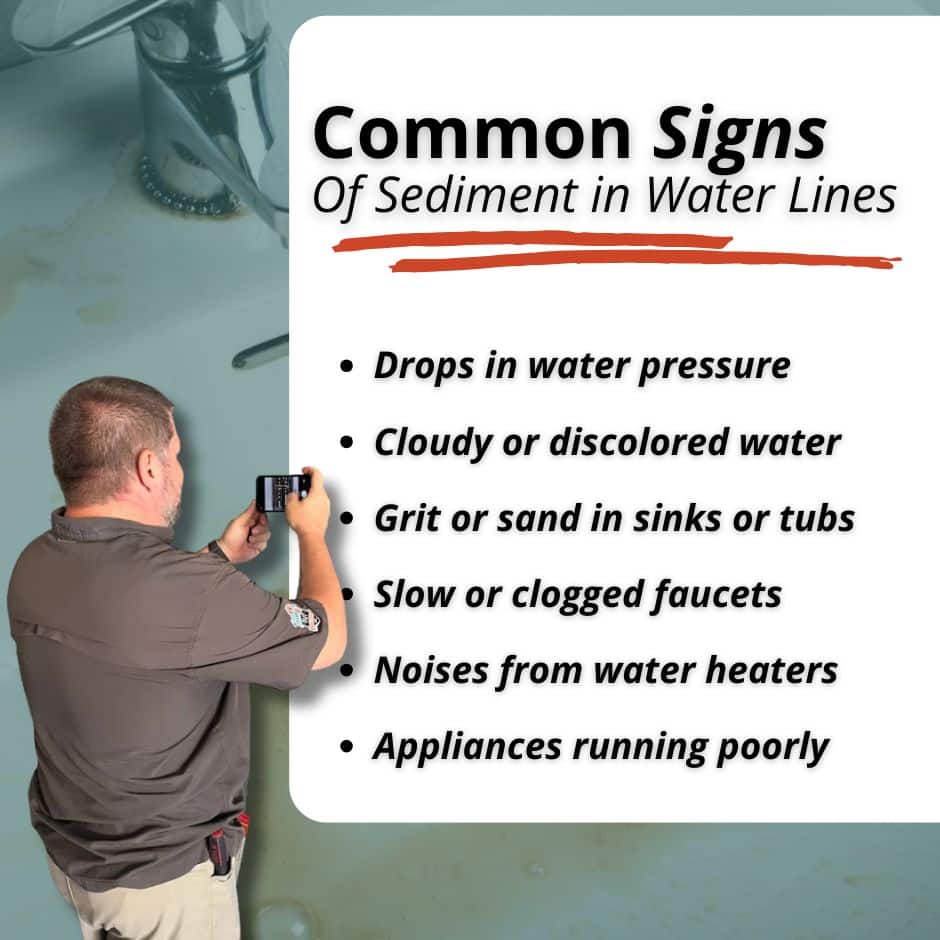
Reduced Water Pressure
Sediment builds up inside pipes and narrows the waterway. You may see weaker flow from:
- Showerheads
- Bathroom faucets
- Kitchen sprayers
- Hot water lines
Pressure problems on the hot water side are especially common, since water heaters collect sediment before it moves into the home.
Cloudy or Discolored Water
Cloudy, brown, or yellow water is a clear sign that sediment is traveling through the system. This often happens after the water has been sitting overnight or after utility repairs.
Grit or Particles in the Sink
Sediment looks like fine sand, mineral flakes, or small rust pieces. It may settle at the bottom of:
- Sinks
- Bathtubs
- Pots or cups filled with water
This is one of the most visible signs of a sediment issue.
Faucet or Showerhead Clogs
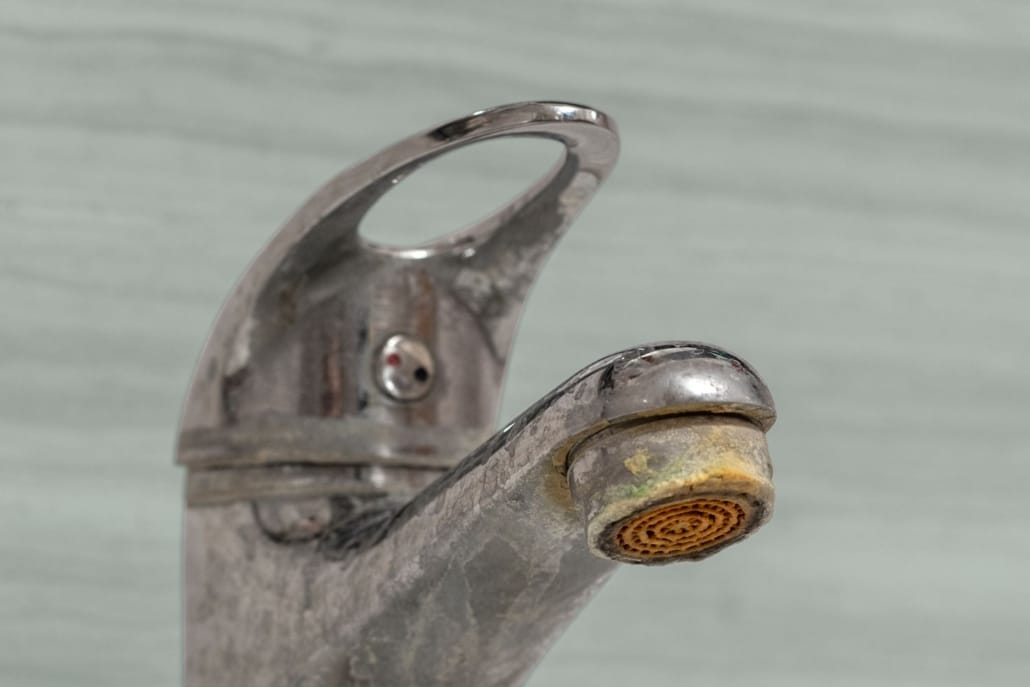
Sediment collects in aerators and small openings. Frequent clogging means debris is traveling through your plumbing on a regular basis.
Water Heater Noises
Crackling, popping, or rumbling noises from the water heater often mean sediment has built up inside the tank.
Appliances Not Working Properly
Dishwashers, washing machines, and refrigerator dispensers struggle to operate when sediment blocks the flow.
Larger Problems Caused by Ignoring Sediment
Sediment buildup does more than interrupt water flow. It can impact the health of your plumbing system long-term.
Pipe Damage
Sediment speeds up corrosion and can weaken pipes from the inside. This increases the risk of leaks or bursts, especially in older homes.
Premature Appliance Wear
Water heaters, dishwashers, and washing machines may wear down faster when sediment reduces efficiency.
Higher Water Bills
Low pressure or poor flow forces appliances to run longer. Even small clogs can increase water usage without homeowners noticing.
Deep Plumbing Blockages
Sediment collects in bends, joints, and narrow sections of pipe. Once the buildup becomes thick enough, the blockage may require professional cleaning or pipe replacement.
Reduced Water Quality
Sediment changes how water tastes, looks, and smells. Families with sensitive skin or infants usually notice the effects quickly.
How Sediment Moves Through the Home
Sediment does not stay in one place. It flows wherever water goes, which is why multiple fixtures may show symptoms.
Sediment can travel:
- Through the hot water lines after stirring in the heater
- Into faucets and showerheads
- Into appliance fill lines
- Through aging pipe sections
- Into washing machine hoses or fridge water dispensers
This movement pattern helps inspectors determine which part of the plumbing system needs closer evaluation.
How a Sewer Scope Inspection Can Help
While sediment in water supply lines is a different issue from problems in drain lines, many homeowners experience both at the same time when the plumbing system is aging or stressed.
A sewer scope inspection is valuable because it can:
- Show corrosion or buildup in the drain system
- Reveal root intrusion or pipe collapses that contribute to overall plumbing stress
- Identify cracks that may allow sand or soil into the drain line
- Help rule out deeper plumbing defects when supply-line issues are present
- Provide a clear view of the overall plumbing condition during a home purchase
Sediment in water lines often appears in homes where the drains are also wearing down. A sewer scope helps homeowners understand whether the sediment issue is part of a larger plumbing system problem.
This makes sewer scopes a smart next step when homeowners see recurring low pressure, discoloration, or aging plumbing symptoms during an inspection.
Preventing Sediment Buildup
Some sediment is unavoidable, but you can minimize it with simple habits.
Flush the Water Heater
Flushing once a year removes collected sediment and keeps the heater working efficiently.
Clean Aerators and Showerheads
Rinsing these parts helps maintain pressure, especially in homes with hard water.
Use Filters or Softeners
Whole-home filtration reduces minerals and debris. Hard water areas may benefit from a water softener.
Watch for Utility Notices
After utility work, sediment may temporarily increase. Running cold water helps flush the system.
Check for Underground Leaks
Cracked pipes can pull in sand or dirt. Professional inspections can identify where the leak might be.
Related Questions Homeowners Ask
Why does my water pressure change throughout the day?
Sediment can shift inside pipes and temporarily block the flow. Mineral buildup or rust flakes can cause pressure changes that come and go. These changes often lead homeowners to full plumbing inspections or deeper evaluations.
Can sediment damage my water heater?
Yes. Sediment at the bottom of the tank forces the heater to work harder. Over time, this reduces efficiency and lifespan.
Why do only some faucets have low pressure?
Small fixtures clog first. If only one or two faucets have weak flow, sediment may be clogging the aerator or the local pipe branch.
How can a sewer scope help if my issue is in supply lines?
A sewer scope helps evaluate the overall condition of the plumbing system. If drain lines show corrosion, cracks, or buildup, the home may also have aging pipes on the supply side. The scope helps document whether sediment problems are part of a bigger system issue and supports informed repairs.
When to Call a Professional
Contact a professional when you see repeated signs of sediment or when the problem affects multiple fixtures. Sediment may point to aging plumbing, corrosion, or hidden leaks.
A professional inspection is helpful if you notice:
- Cloudy or discolored water
- Sudden drops in water pressure
- Grit in sinks or tubs
- Frequent clogs in showerheads or faucets
- Noises from the water heater
- Rust flakes in the water
Inside & Out Property Inspectors can check visible plumbing components, identify signs of corrosion, and help you understand the scope of the issue. Their sewer scope inspections also reveal deeper drain-line conditions that may connect to aging or failing plumbing, giving a more complete picture of the system’s health.
Conclusion
Sediment in water lines affects water pressure, appliance performance, and long-term plumbing health. It often signals aging pipes or changes in the water supply. By understanding the causes and spotting early signs, you can protect your home from costly repairs.
If you are seeing cloudy water, reduced pressure, or recurring clogs, an inspection can help locate the source. Inside & Out Property Inspectors offer detailed evaluations and sewer scope inspections to identify plumbing concerns and help you plan the right next steps.