Can You Remove Mold From Carpet? Why Testing First Is Smart
Finding mold on carpet is unsettling. It often raises immediate questions about health, cleanliness, and whether the issue can be solved with basic cleaning. Many homeowners assume that if the visible mold is gone, the problem is gone too.
In Jacksonville and across North Florida, that assumption often leads to repeated issues. High humidity, frequent rain, and moisture intrusion create ideal conditions for mold to grow beneath carpet fibers, padding, and even the subfloor. Mold can remain active below the surface long after the carpet appears clean.
This guide explains whether mold can truly be removed from carpet, why surface cleaning alone often falls short, and why inspection and testing are smart first steps before deciding what to do next.
Can Mold Actually Be Removed From Carpet?
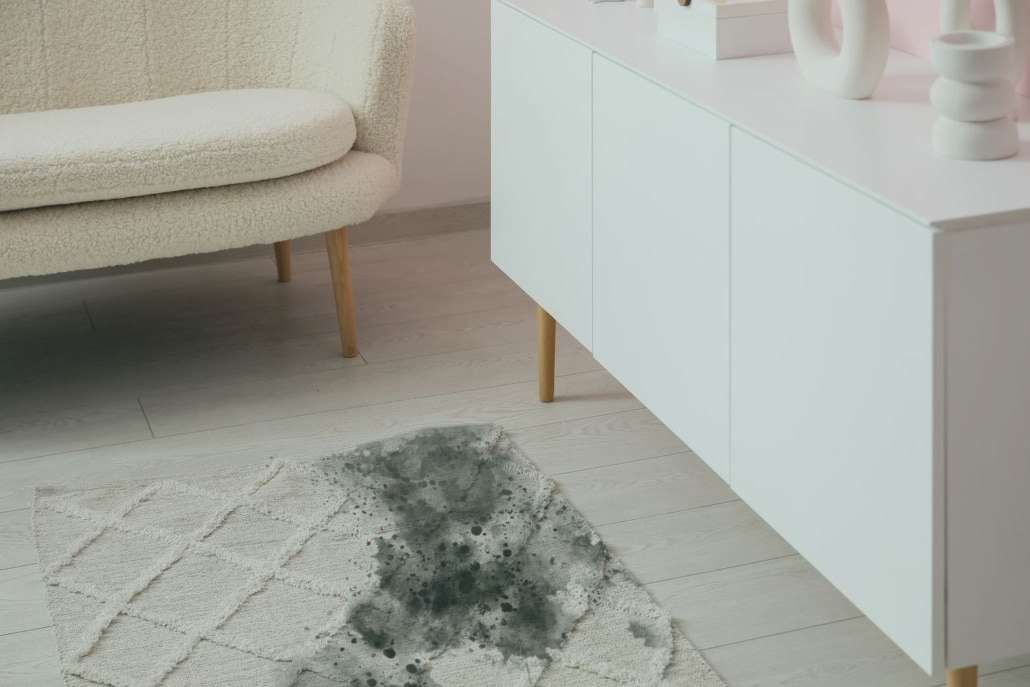
In limited cases, surface mold on carpet may appear to be removed, but that does not confirm the problem is resolved.
Carpet is not a single layer. It is a system made up of fibers, padding, and the surface beneath. When moisture reaches any of these layers, mold can grow below what is visible. Even if discoloration fades or odors improve, mold may still be present underneath.
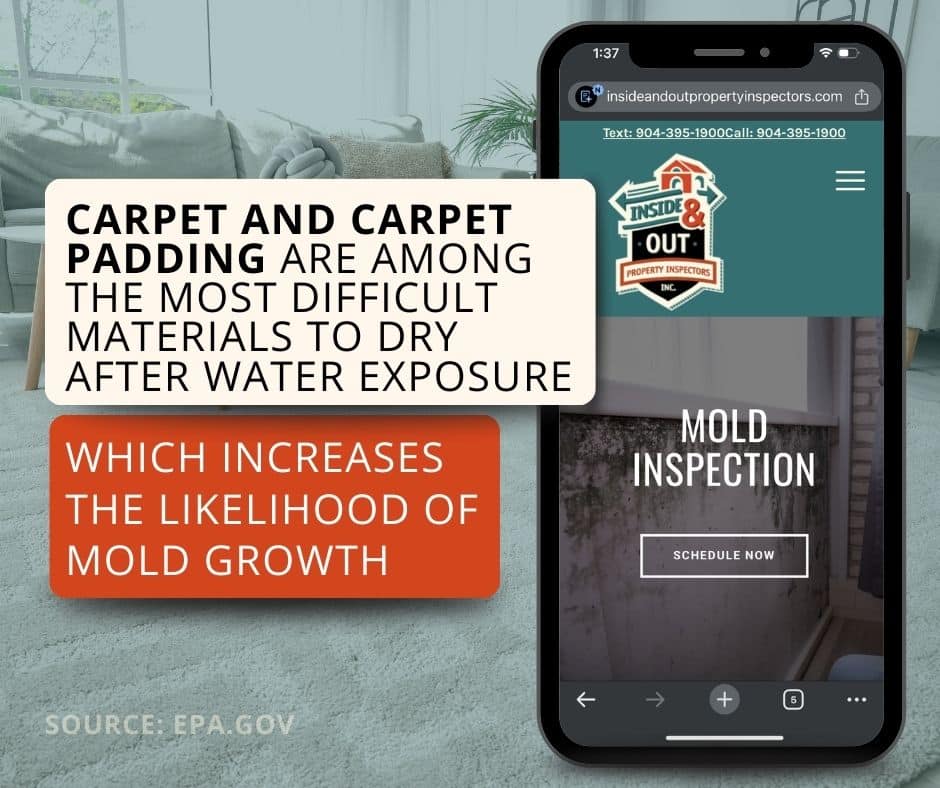
The EPA notes that porous materials like carpet are difficult to fully clean once mold growth occurs because spores can penetrate below the surface. This makes it impossible to confirm removal based on appearance alone.
What matters is not whether the carpet looks better, but whether the conditions that allowed mold to grow still exist.
Why Mold in Carpet Is Almost Always a Moisture Issue
Mold does not grow without moisture. Carpet mold is a moisture problem first, not a cleaning problem.
In Jacksonville homes, moisture often enters carpeted areas through leaks, flooding, condensation, or prolonged humidity. Even small amounts of moisture can linger in padding and subfloor materials long enough to support mold growth.
Common moisture sources include:
- Plumbing leaks near bathrooms, kitchens, or laundry rooms
- Roof leaks that travel down walls into the flooring
- Flooding or stormwater intrusion
- Condensation from HVAC systems or ductwork
- Poor ventilation in humid conditions
North Florida’s climate increases the risk because moisture dries more slowly. Carpet can remain damp long after surface water is gone, especially in rooms with limited airflow. Until moisture conditions are addressed, mold growth can continue or return.
Why Surface Cleaning Alone Often Falls Short
Surface cleaning can improve appearance, but it rarely answers the real question.
Mold spores are microscopic and can remain active in carpet padding, tack strips, or the subfloor. Most cleaning methods only affect the top layer of fibers. They do not confirm whether the mold is gone below the surface or whether moisture is still present.
This is why homeowners often experience recurring mold odors or staining weeks or months after cleaning. The visible issue was addressed, but the underlying conditions were not evaluated.
Cleaning changes what you can see. Inspection and testing help explain what you cannot.
Health Considerations Linked to Mold in Carpet
Mold exposure does not affect everyone the same way.
According to the CDC, mold exposure can irritate the eyes, skin, nose, throat, and lungs. Some people experience noticeable symptoms, while others may have none at all.
Carpeted areas are often located in bedrooms, living rooms, and offices. When mold is present in these spaces, exposure can be ongoing rather than occasional.
Because symptoms vary and may not appear immediately, health effects alone are not a reliable way to judge whether mold is present or resolved.
Why Carpet Makes Mold Harder to Detect
Carpet hides moisture and mold better than hard flooring.
Fibers absorb moisture, padding slows evaporation, and odors develop gradually. Mold may grow under furniture, along walls, or beneath padding long before anything is visible on the surface.
In many cases, visible mold is a late indicator. By the time it appears, moisture exposure may have been present for weeks or longer.
This delayed visibility is why carpet mold issues often feel sudden, even though the conditions have existed for some time.
Why Testing Matters Before Making Decisions
Testing provides clarity that visual checks cannot.
Mold testing helps determine whether mold is present beyond visible areas, whether moisture conditions are still supporting growth, and whether mold levels differ from what is typically found indoors.
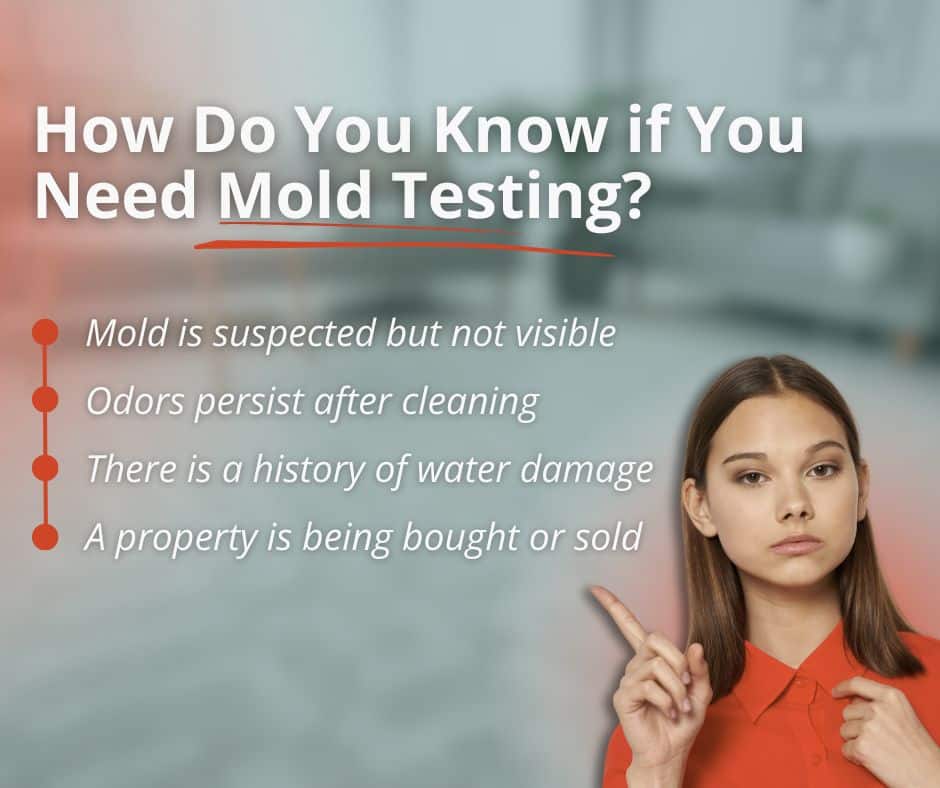
According to EPA guidance, testing is most useful when:
- Mold is suspected but not visible
- Odors persist after cleaning
- There is a known history of water damage
- A property is being bought or sold
Testing supports safer decisions. It helps homeowners understand whether an issue is isolated or widespread, whether moisture conditions are improving or ongoing, and whether further evaluation is needed.
Without testing, decisions are often based on assumptions. Homeowners may replace carpet, clean repeatedly, or ignore the issue without knowing whether the underlying problem has changed.
Testing does not dictate solutions, but it replaces guesswork with information.
What a Mold Inspection Looks For
A mold inspection evaluates conditions, not cleanup.
Inspectors focus on identifying moisture sources, building features that trap humidity, and signs that mold may be present beyond what is visible. The goal is to understand why mold may be occurring and whether conditions support continued growth.
A mold inspection typically includes:
- Visual evaluation of carpeted areas, walls, and baseboards
- Moisture readings in flooring and surrounding materials
- Assessment of ventilation and airflow
- Identification of past or current leaks
- Review of humidity conditions inside the home
When testing is performed, it adds measurable data that supports findings. Together, inspection and testing help determine whether mold is likely to return, spread, or remain hidden under carpeted areas.
How Carpet Mold Affects Home Buying and Selling
Mold concerns frequently surface during real estate transactions.
Buyers may worry about hidden growth underneath the carpet. Sellers may believe past cleaning resolved the issue. Without inspection data, uncertainty can delay negotiations or create disputes.
Inspection findings help clarify what is known and what still needs attention. Buyers gain information to assess risk. Sellers gain documentation that reduces surprises later in the process.
In humid regions like Jacksonville, carpeted areas often receive closer attention during inspections for this reason.
Why Guessing Creates Bigger Problems Later
Assuming mold has been handled without confirmation often leads to repeated issues.
If moisture remains or mold persists under the carpet, problems can resurface when humidity rises, furniture is moved, or flooring is disturbed. This can lead to additional costs, delays, and unexpected findings during future inspections.
Inspection reduces uncertainty and helps prevent repeated disruption.
Common Carpet Mold Scenarios and What They Often Indicate
|
Scenario Observed |
What It Often Suggests |
Why Inspection Helps |
|
Musty odor without visible mold |
Hidden moisture or growth |
Helps locate the source |
|
Staining near carpet edges |
Leak or condensation |
Confirms cause |
|
Mold after flooding |
Saturated padding or subfloor |
Assesses extent |
|
Recurring mold |
Ongoing moisture issue |
Identifies failure point |
|
Mold in vacant home |
Poor airflow and humidity |
Evaluates conditions |
This connection helps homeowners understand what symptoms usually mean.
Related Questions Homeowners Often Ask
Does mold always have a smell, or can it be hidden?
Hidden mold often produces no noticeable odor, especially under carpet or padding.
What causes moisture problems in carpeted rooms in North Florida?
High humidity, leaks, and condensation are common contributors.
How do inspectors check for moisture in flooring and walls?
Inspectors use visual evaluation and moisture readings to assess conditions beneath surfaces.
Are carpeted rooms riskier than rooms with hard flooring?
Yes. Carpet absorbs moisture and hides early signs of mold growth.
When to Call Inside & Out Property Inspectors
Inside & Out Property Inspectors should be called when mold is suspected, but the full extent or cause is unclear.
We perform home inspections, mold inspections, and mold testing to identify moisture conditions and determine whether mold may be present beneath carpet or other materials.
Call Inside & Out when:
-
Mold appears on carpeted areas
-
Musty odors persist after cleaning
-
Water damage or leaks have occurred
-
A home is being bought or sold
-
Moisture problems are ongoing
Inspection and testing help clarify what is happening before decisions are made.
When a Mold Remediation Specialist Is Needed
Remediation is only needed when active mold growth is confirmed.
A mold remediation specialist may consider removing affected materials when:
-
Mold growth is widespread or returning
-
Carpet padding or subflooring is affected
-
Moisture issues cannot be resolved through drying alone
Inside & Out does not perform remediation. Our role is to provide objective findings, so homeowners know whether remediation is necessary and what areas are affected.
Conclusion
Mold in carpet is rarely just a surface issue. While visible mold may appear removable, underlying moisture and hidden growth often remain. Without inspection or testing, it is difficult to know whether the problem is truly resolved.
Inside & Out Property Inspectors help homeowners, buyers, and sellers understand what is happening beneath the surface. By identifying moisture conditions and potential mold concerns early, inspection provides clarity and confidence before the next steps are taken.









Comments are closed.