How to Adjust Water Level in Toilet for Florida Homes
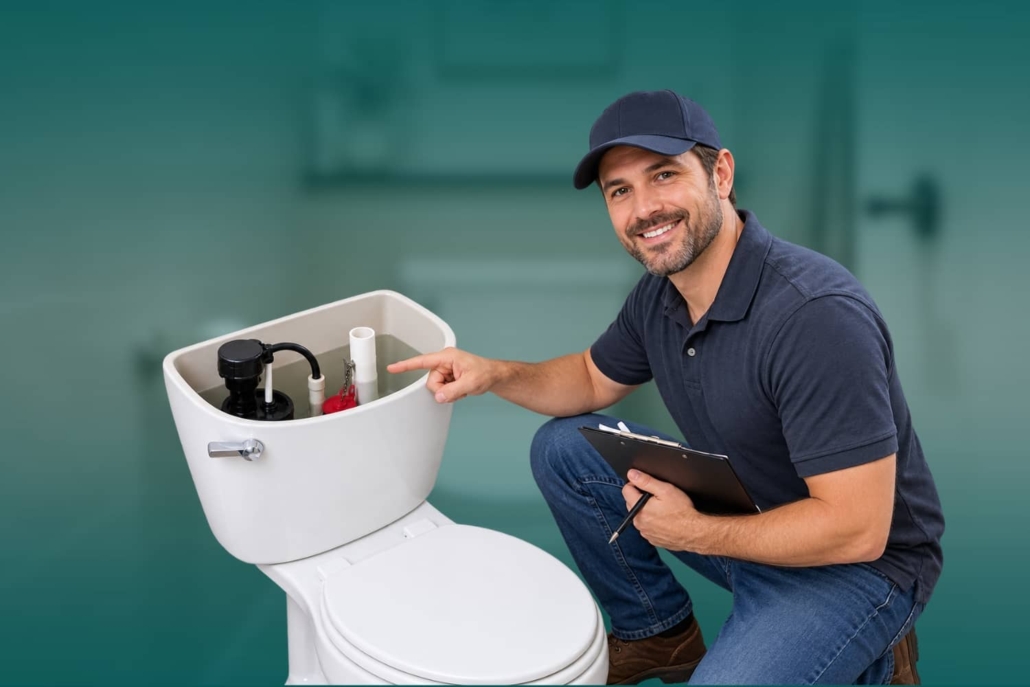
A running toilet or weak flush often comes down to one simple fix inside your tank. Learning how to adjust the water level in toilet mechanisms helps you stop water waste, lower utility bills, and protect your bathroom flooring from accidental overflows.
Whether you live in Jacksonville, Orange Park, or St. Augustine, toilet fill valves operate on basic mechanical principles. Adjusting the water line takes only a few minutes and standard household tools.
Understanding Your Toilet Tank Mechanism
Before turning any screws or adjusting clips, you must identify the type of fill valve inside your toilet tank. Most homes across Northeast Florida feature one of three standard designs.
Here are the primary fill valve types found in residential toilets:
-
Float Ball Valves: An older style featuring a long metal or plastic arm attached to a hollow plastic ball. The floating ball rises with the water level to shut off the valve.
-
Cylinder Float Valves: A modern, vertical design where a small plastic cylinder slides up and down the main fill valve shaft.
-
Floatless Fill Valves: Modern pressure-sensing valves that sit at the bottom of the tank without visible floating arms or cylinders.
How to Adjust Water Level in Toilet Tanks with a Float Ball
A float ball valve uses leverage to shut off incoming water. When the water level reaches the target height, the floating ball lifts the arm and closes the internal valve seal.
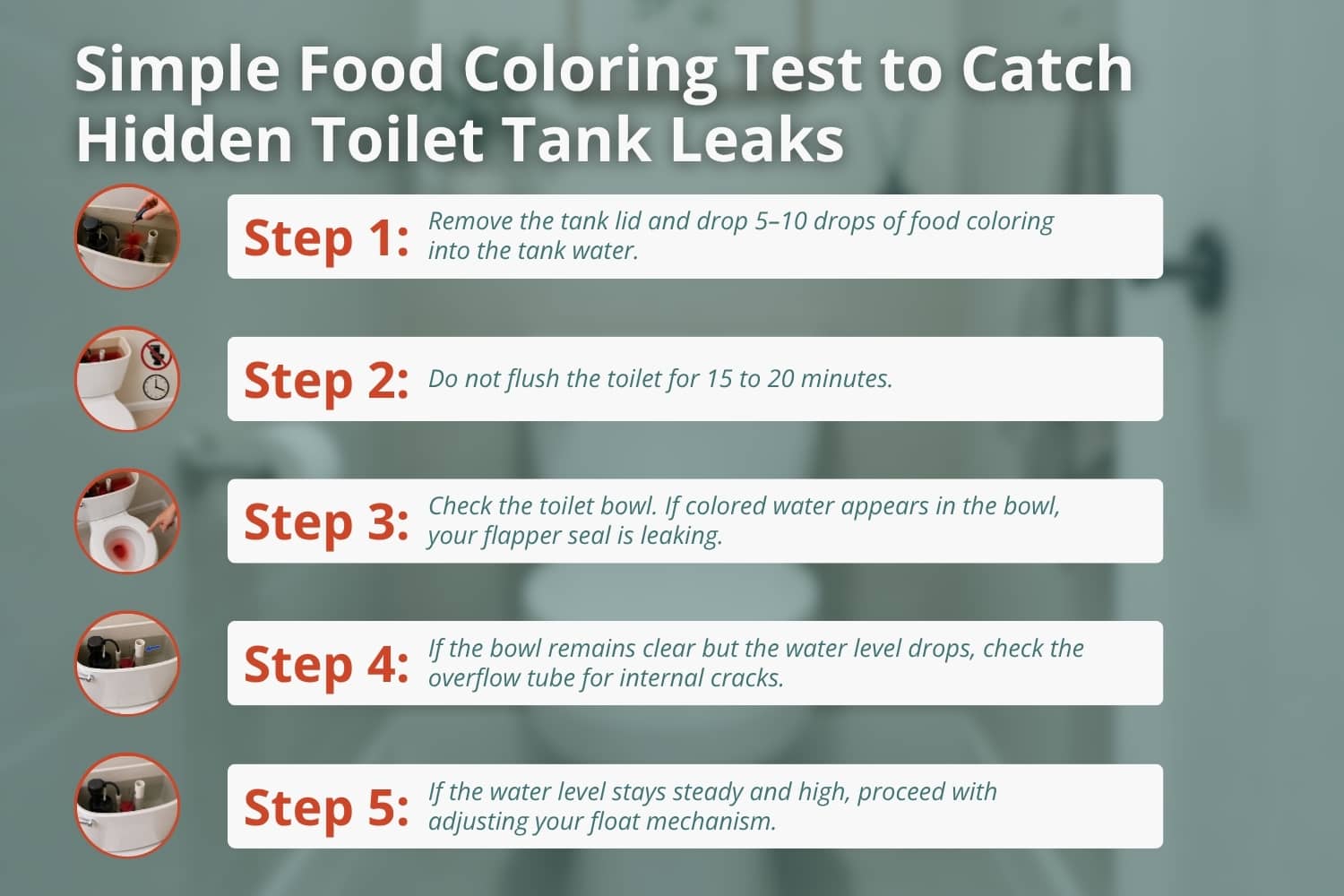
Follow these steps to adjust a float ball mechanism:
-
Remove the tank lid and set it safely on a towel.
-
Locate the long arm extending from the fill valve to the plastic float ball.
-
Check the water level relative to the overflow pipe. The ideal water level sits roughly one inch below the top of the open overflow tube.
-
Locate the adjustment screw where the float arm attaches to the top of the fill valve.
-
Turn the screw clockwise with a screwdriver to lower the float ball and reduce the tank water level.
-
Turn the screw counterclockwise to raise the float ball and increase the tank water level.
-
If your float arm lacks an adjustment screw, gently bend the metal arm downward to lower the water line or upward to raise it.
-
Flush the toilet to test the new water level and confirm the water stops filling at the correct mark.
How to Adjust Water Level in Toilet Tanks with Floatless Valves
Floatless fill valves use a diaphragm mechanism that senses water pressure at the bottom of the tank rather than relying on a visible float.
Follow these steps to adjust a floatless valve mechanism:
-
Turn off the main water supply valve located on the wall behind the toilet.
-
Remove the tank lid and locate the floatless valve body at the bottom of the tank.
-
Locate the plastic adjustment screw positioned on the top or side of the valve housing.
-
Turn the adjustment screw clockwise to lower the water level or counterclockwise to raise it.
-
Turn the water supply valve back on, allow the tank to fill, and test the flush depth.
Ideal Toilet Water Levels and Common Symptoms
Maintaining the correct water height keeps your toilet functioning efficiently while protecting your home from water damage.
| Water Level Status | Tank Conditions | Common Symptoms |
| Too High | Water sits above or spills into the overflow pipe continuously | Running toilet noises, constant water waste, higher monthly utility bills |
| Too Low | Water sits more than 1.5 inches below the overflow pipe line | Weak flushes, double flushing required, frequent clogs in drain lines |
| Proper Level | Water rests steadily 0.5 to 1 inch below the top of the overflow pipe | Strong single flush, quiet operation, efficient water usage |
Why Water Level Settings Matter in Northeast Florida
Proper toilet tank settings protect your home from specific environmental conditions common to Northeast Florida. Coastal air humidity, local water hardness, and home age all play a role in how your plumbing operates.
Here is why maintaining correct water levels is essential for local homeowners:
-
Hard Water Mineral Buildup: Municipal water across Jacksonville, Clay County, and surrounding areas contains minerals that leave crusty deposits on fill valves and flappers. Excessive water levels cause mineral crusting around overflow pipes, leading to permanent leaks.
-
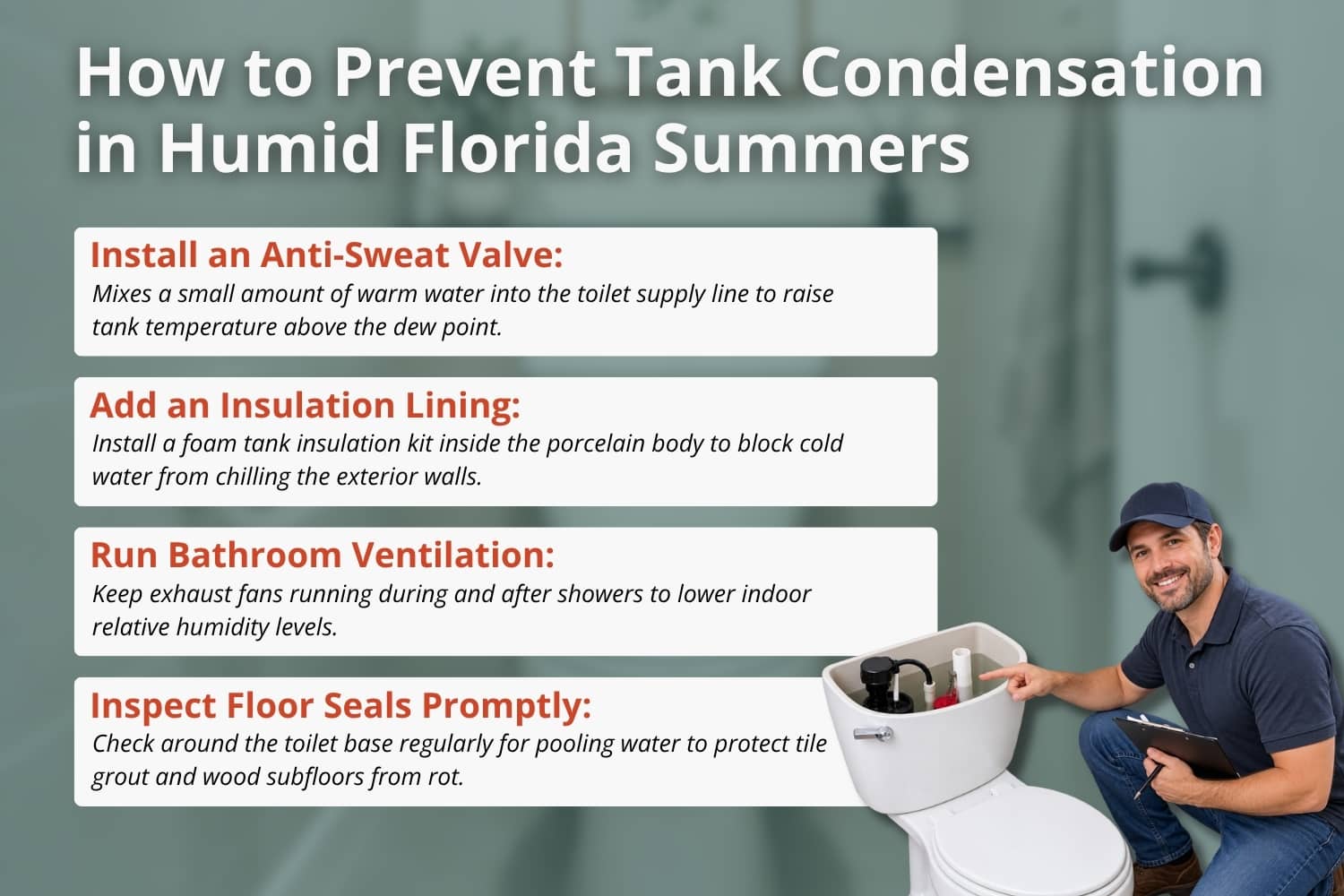
Tank Condensation and Mold: In humid Florida climates, filling a tank with cold municipal water causes the exterior ceramic to sweat. Water dripping off high-filling tanks onto bathroom floors creates ideal conditions for subfloor rot and hidden mold growth.
-
Higher Water Costs: A toilet that runs constantly due to an overfilled tank can waste hundreds of gallons of water daily, drastically increasing monthly utility bills.
-
Drain Line Flow: Toilets require a full-volume flush to clear waste through long residential lateral pipes. A water level set too low leaves solid waste sitting in drain lines, increasing the risk of main line blockages.
[Visual Idea: Informational diagram demonstrating how toilet tank sweating creates moisture buildup on bathroom flooring in humid climates.]
Troubleshooting Persistent Toilet Tank Issues
If adjusting the fill valve float does not correct your water level, another component inside the tank may be worn out or damaged.
Here are common issues that cause water level problems:
-
Worn Flapper Valves: Over time, chlorine and hard water break down rubber flapper seals. A leaking flapper allows water to drain continuously into the bowl, forcing the fill valve to run indefinitely.
-
Cracked Overflow Tubes: A hairline crack in the plastic overflow pipe allows water to trickle down into the bowl regardless of your float settings.
-
Debris in the Fill Valve: Sand or mineral scale trapped inside the upper valve diaphragm prevents the seal from closing completely.
-
High Home Water Pressure: Excessive municipal water pressure can overpower old fill valve seals, forcing water past the shutoff mechanism.
Related Questions to Explore
How do inspectors evaluate plumbing safety during a general home inspection?
Inspectors test supply line pressure, assess shutoff valves, check drain speeds, and inspect visible supply lines and fixture connections. They look for active leaks, improper venting, and material degradation across all bathrooms and kitchens to catch plumbing defects early.
Why should home buyers consider a sewer scope inspection for older properties?
Standard visual checks only cover visible indoor pipes. A sewer scope inspection uses a specialized camera to examine underground lateral lines, spotting hidden tree root intrusions, cracked cast iron, low spots, and offset joints beneath the foundation or lawn.
What hidden hazards can undetected bathroom moisture cause over time?
Persistent moisture leaking beneath tiles or behind walls weakens the subfloor and creates ideal conditions for hidden mold growth. A targeted mold inspection identifies elevated spore levels and locates moisture pockets before rot damages structural framing or degrades indoor air quality.
How does thermal imaging help locate hidden plumbing leaks?
Infrared thermal imaging cameras detect subtle temperature differences across walls, ceilings, and floors. Because evaporating water cools surrounding materials, thermography pinpoints active leaks and saturated subflooring non-invasively without cutting into drywall.
When to Call a Professional
Adjusting a toilet water level is typically a simple home maintenance project. However, certain warning signs point to broader plumbing or structural issues that require professional evaluation.
You should contact a professional property inspector if:
-
You notice recurring water stains, soft floor tiles, or dark mold growth around the base of your toilets.
-
Adjusting the fill valve fails to stop your toilet from running or filling inconsistently.
-
You experience frequent drain backups across multiple bathroom fixtures in your home.
-
You are preparing to buy or sell a property and need a comprehensive evaluation of all plumbing, roof, electrical, and structural systems.
Thorough property inspections give you clear answers about your home systems, helping you protect your property investment and avoid unexpected repair costs.
Keeping Your Northeast Florida Plumbing Systems Safe
Learning how to adjust the water level in toilet tanks gives you an easy way to save water and prevent unnecessary plumbing issues. Taking time to inspect your fill valves, flapper seals, and water height ensures your home operates efficiently every day.
When buying a home, preparing for an insurance audit, or keeping up with routine property maintenance, expert guidance gives you complete confidence. Contact Inside & Out Property Inspectors INC. today to schedule a complete home inspection, 4-Point inspection, or sewer scope evaluation across Northeast Florida. Our experienced team identifies hidden safety risks early so you can keep your home secure, dry, and fully protected.