What is a Pre-Slab Inspection & Why Do New Builds Need One?
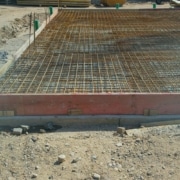
Building a new home is an exciting milestone, but it is a complex process where critical components are hidden from view very early on. One of the most vital yet overlooked stages is the pre-slab phase. This occurs after the footers are dug and underground plumbing and electrical lines are set, but right before the concrete is poured.
Because these systems are about to be buried under tons of concrete, ensuring they are installed correctly is paramount. A pre-slab inspection is your first line of defense against future foundation issues, drainage failures, and plumbing leaks. Once the concrete is poured, fixing a mistake becomes a massive, expensive undertaking that involves jackhammering your brand-new floors.
At Inside & Out Property Inspectors, we believe catching these errors early is the only way to ensure the long-term structural integrity of your new construction project.
The Importance of the Pre-Slab Phase in Florida
In North Florida, our soil conditions and high water table make the foundation phase particularly sensitive. We often deal with sandy soil that can shift or settle if the site is not prepared correctly. A pre-slab inspection verifies that the builder has followed the architectural plans and local building codes before you reach the point of no return.
This phase is not just about the concrete itself. It is about every system that lives beneath it. In Jacksonville’s humid environment, proper moisture barriers and termite treatments are essential components of this stage. If these are rushed or skipped, you may face mold issues or pest infestations years down the line that could have been easily prevented.
Local Insight: Jacksonville’s average annual rainfall is approximately 52 inches. This high volume of water puts constant pressure on home foundations, making the quality of your underground drainage and vapor barriers a top priority.
What Happens During a Pre-Slab Inspection?
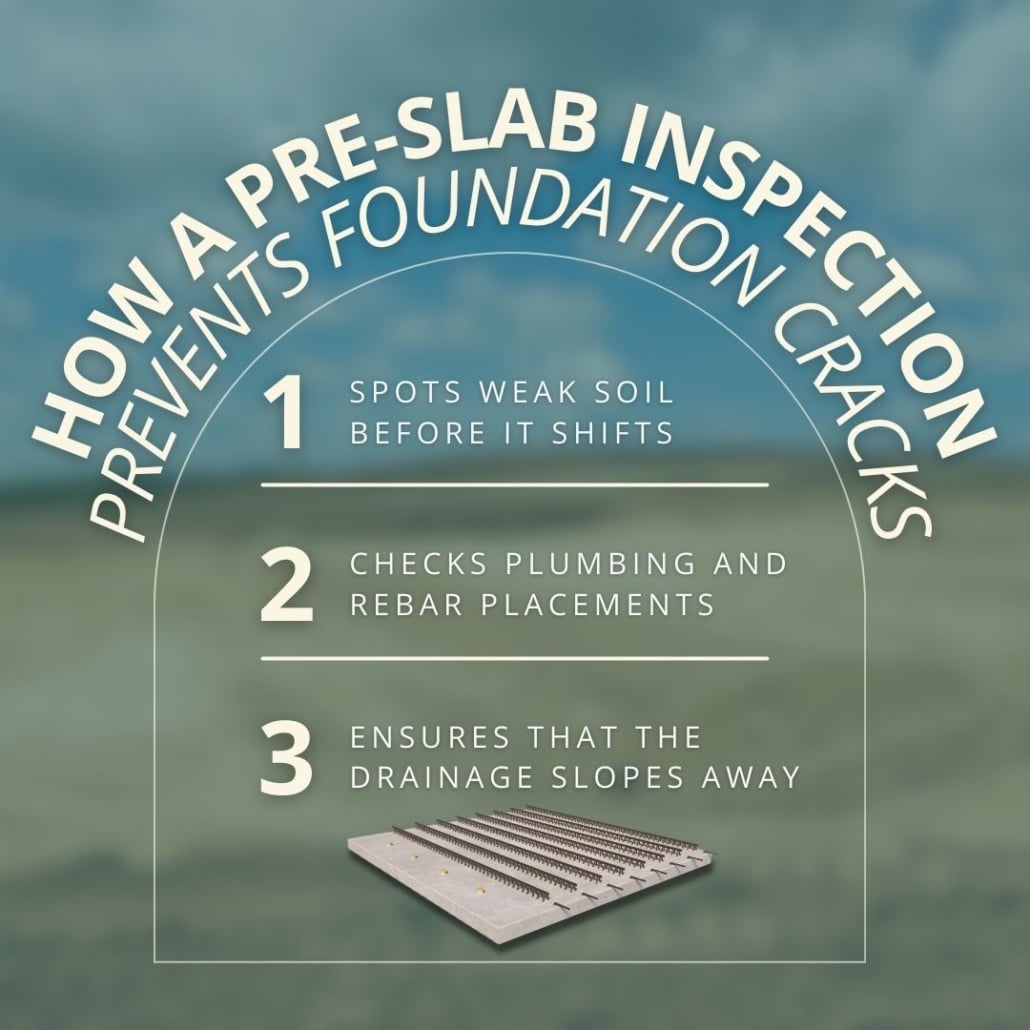
During this inspection, we look at the skeleton of your home foundation and utilities. We verify that everything is positioned exactly where it needs to be to support the weight of the house and function properly for decades.
1. Vapor Barrier Verification
Florida’s high humidity means moisture is constantly trying to rise from the ground into your home. Your inspector will check to ensure a high-quality vapor barrier is installed over the soil. This is usually a thick plastic sheet that stops dampness. We look for holes, tears, or gaps in the plastic that could allow ground moisture to seep into the concrete slab.
If moisture gets into the slab, it can lead to buckled flooring, peeling paint, or mold growth inside the home. A properly installed barrier is a simple shield that prevents thousands of dollars in future water damage. We check every seam to make sure it is taped and sealed correctly.
2. Plumbing and Utility Lines
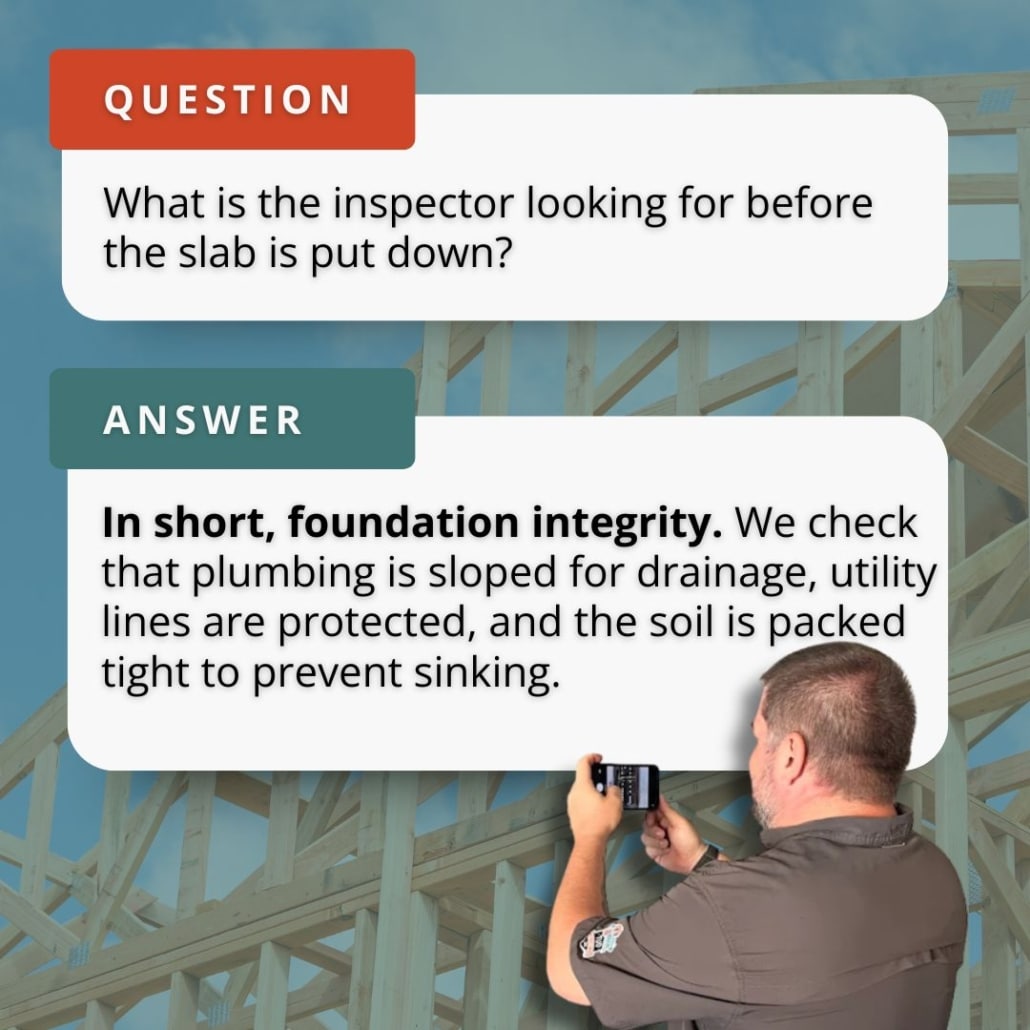
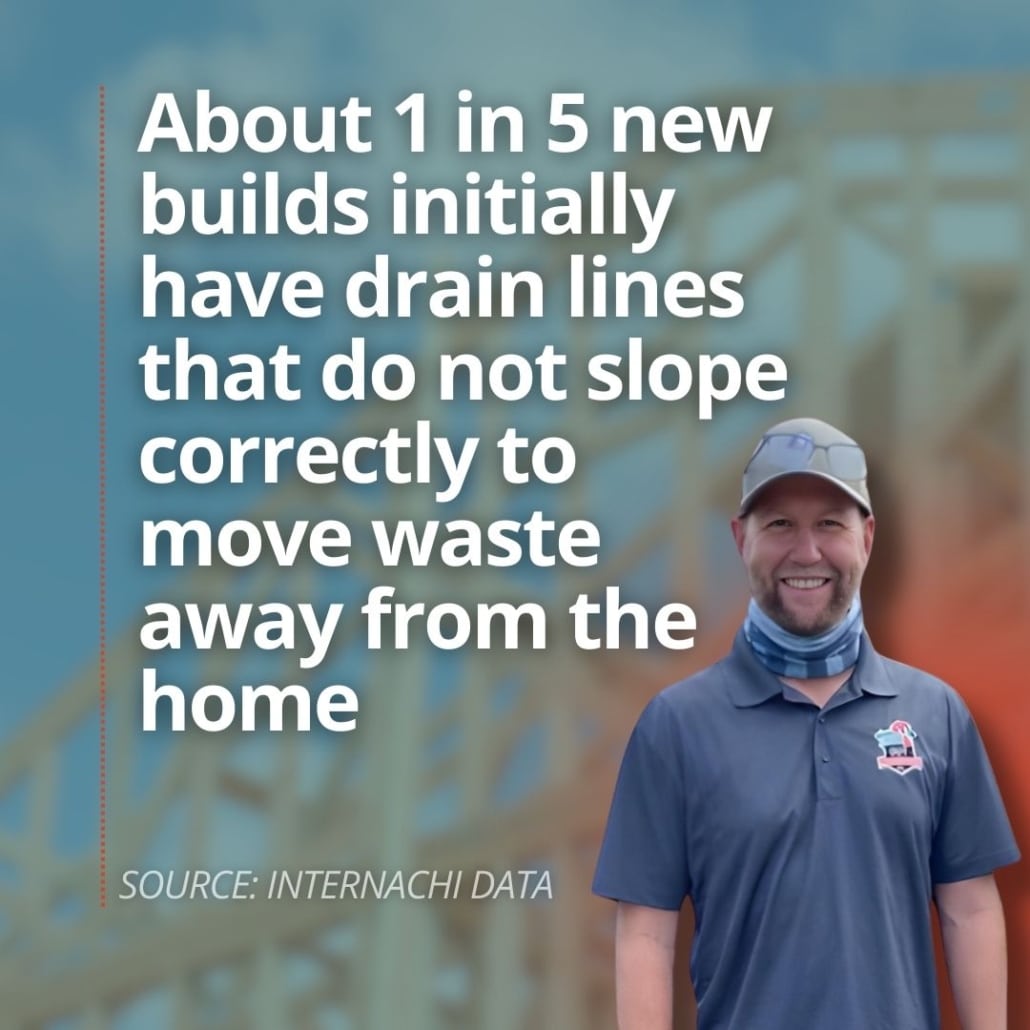
Before the pour, all drain lines and water supply pipes are laid out in the dirt. We’ll verify that these pipes are properly supported and sloped so that waste flows away from the house correctly. A pipe that is not sloped correctly will lead to clogs that you cannot fix without breaking the floor.
We also check for sleeving. This is a protective wrap around the pipes. It protects the pipes from the abrasive nature of the concrete as it expands and contracts over time. Without sleeving, the concrete can actually rub against the pipes until they leak.
3. Soil Compaction and Termite Pre-Treatment
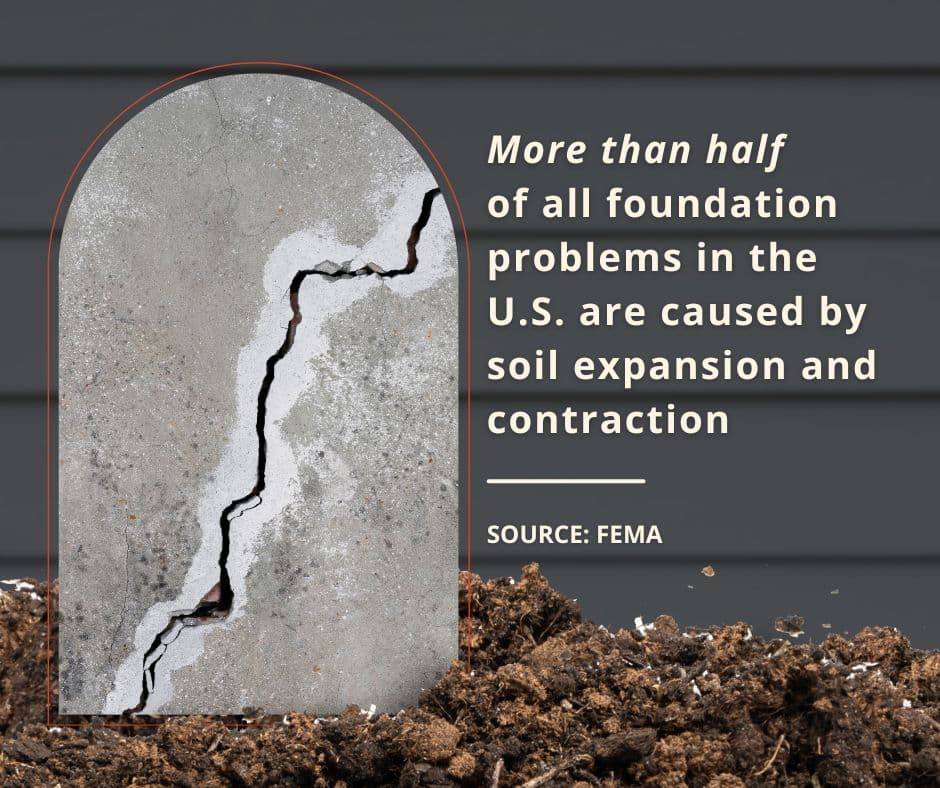
The ground beneath your home must be solid. We look for signs that the soil has been properly compacted to prevent the slab from cracking or sinking. If the dirt is loose, the heavy concrete will eventually cause the house to settle unevenly.
Additionally, we verify that the soil has received a professional termite pre-treatment. In Jacksonville, where Formosan termites are a major threat, this chemical barrier is vital protection for your future floor joists and wall studs. We check to see that the treatment covers the entire area where the house will sit.
Why Are Independent Inspections Necessary?
Many homebuyers assume that because a city or county inspector visits the site, a private inspection is redundant. However, municipal inspectors are often under heavy workloads and may check a dozen houses in a single morning. They are checking for minimum code compliance, not necessarily the highest quality of workmanship or the long-term interests of the homeowner.
Similarly, builders often perform their own “self-inspections” or walk-throughs. While many reputable builders have strong internal quality controls, their primary goal is to keep the project moving at a high speed. In a fast-paced market like Florida, where crews are often stretched thin, an independent inspector acts as the only unbiased set of eyes dedicated entirely to the buyer.
How a private inspection is the better move:
- Dedicated Time: We spend the time necessary to check every detail without rushing to the next site.
- Buyer Advocacy: Our priority is protecting your investment and safety, not just checking a box for the city.
- Detailed Reporting: You receive a full report with high-resolution photos of exactly what is under your floor.
- Direct Communication: We explain the findings to you in plain language so you can discuss them with your builder.
Risks of Skipping This Phase
The biggest risk of skipping a pre-slab inspection is the hidden defect. If a plumbing union is loose or a vapor barrier is missing a large section, you will not know it on move-in day. You might discover it years later when a mysterious wet spot appears on your carpet or your hardwood floors start to warp.
Pricy Post-Pour Repairs:
- Foundation Piers: If the dirt under the house wasn’t packed down tight, the floor can sink. Fixing this can cost $20,000 or more.
- Slab Jackhammering: Accessing a single leaking pipe under a slab can cost thousands in labor and messy repairs.
- Mold Issues: If moisture crawls through a hole in the plastic barrier, it can ruin your cabinets and walls. After confirming with a professional mold inspection, cleaning up mold in a home often costs thousands of dollars and hurts your air quality.
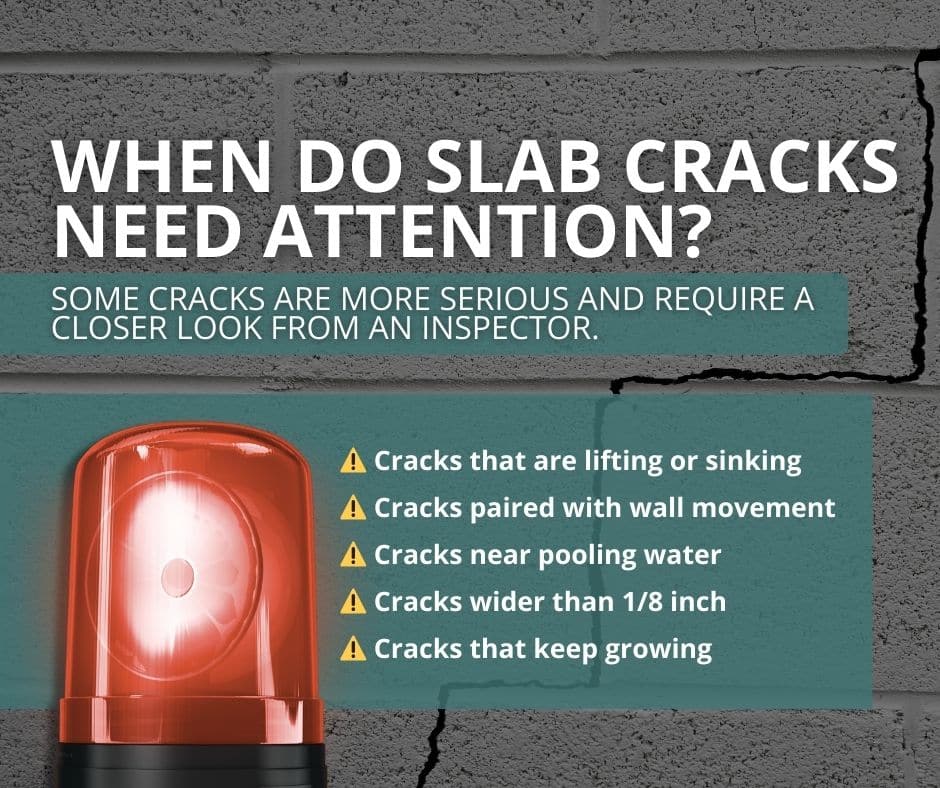
- Structural Cracking: An uneven slab can cause cracks to travel up your walls and across your ceilings.
Local Market Context
The Jacksonville housing market is one of the fastest-growing in Florida. According to the Northeast Florida Association of Realtors (NEFAR), new construction remains a significant portion of home inventory in Duval and St. Johns counties. With hundreds of homes being built simultaneously, crews are often stretched thin.
This high-speed environment increases the likelihood of small but significant errors during the foundation phase. A phase inspection acts as a necessary quality control check. It ensures that your house gets the individual attention it deserves, even when the market is moving at lightning speed. We act as a second set of eyes to catch what a busy crew might miss.
How This Phase Supports the New Construction Process
A pre-slab inspection is the first of three “milestone” checks we recommend for new construction in North Florida. These stages work together to ensure your home is built to a higher standard than the “code minimum.”
Phase 1: Pre-Slab (The Foundation)
This is our only chance to see plumbing and moisture barriers before they are buried under concrete forever. We catch foundation and drainage errors early so they don’t lead to cracked walls or warped floors years later.
Phase 2: Pre-Drywall (Framing & Systems)
Before the walls go up, we inspect the home’s “skeleton.” We check electrical wiring, plumbing stacks, and structural framing. It is much easier (and cheaper) to fix a pinched wire or a missing fireblock now than after the drywall is finished.
Phase 3: Final Inspection (The Move-In Ready Home)
This is our comprehensive assessment of the finished product. We test every appliance, the HVAC system, and the roof. Since the foundation and framing were already cleared, we can focus entirely on the safety and functionality of your new home.
Related New Construction Questions
Does a pre-slab inspection slow down my build?
Most pre-slab inspections take only a few hours. By coordinating with your builder, we can usually visit the day before the concrete pour to avoid any schedule delays.
Is a “Four-Point Inspection” required for new construction insurance?
Some Florida insurers require a Four-Point Inspection or a Wind Mitigation report to qualify for specific discounts. A professional Phase 3 report provides documented proof of your roof, plumbing, and electrical systems that insurers look for.
Why should I get a final inspection on a brand-new home?
A final inspection ensures all systems, like the HVAC and appliances, work correctly. It also catches cosmetic or safety issues that may have occurred during the final weeks of building.
When to Call a Professional
You should call a professional inspector as soon as your builder gives you a tentative date for the foundation pour. Because this stage moves quickly, having your inspection scheduled in advance is crucial. Sometimes the forms are set, and the concrete arrives within twenty-four hours.
At Inside & Out Property Inspectors, we understand the Jacksonville building cycle. We work with you and your builder to ensure your home is built right from the ground up. We provide a detailed report with photos that you can share with your builder to get any issues fixed immediately.
Conclusion
A pre-slab inspection is an essential step in the new construction process. By verifying the vapor barrier, plumbing, and soil preparation, you protect your home from the ground up. Do not leave the foundation of your investment to chance.
Starting your homeownership journey with a professional phase inspection provides the peace of mind that your Jacksonville home is built to last. If you are ready to schedule your first phase inspection, contact Inside & Out Property Inspectors today. We are here to help you build with confidence.