Jacksonville Guide to Aluminum Wiring in House Risks
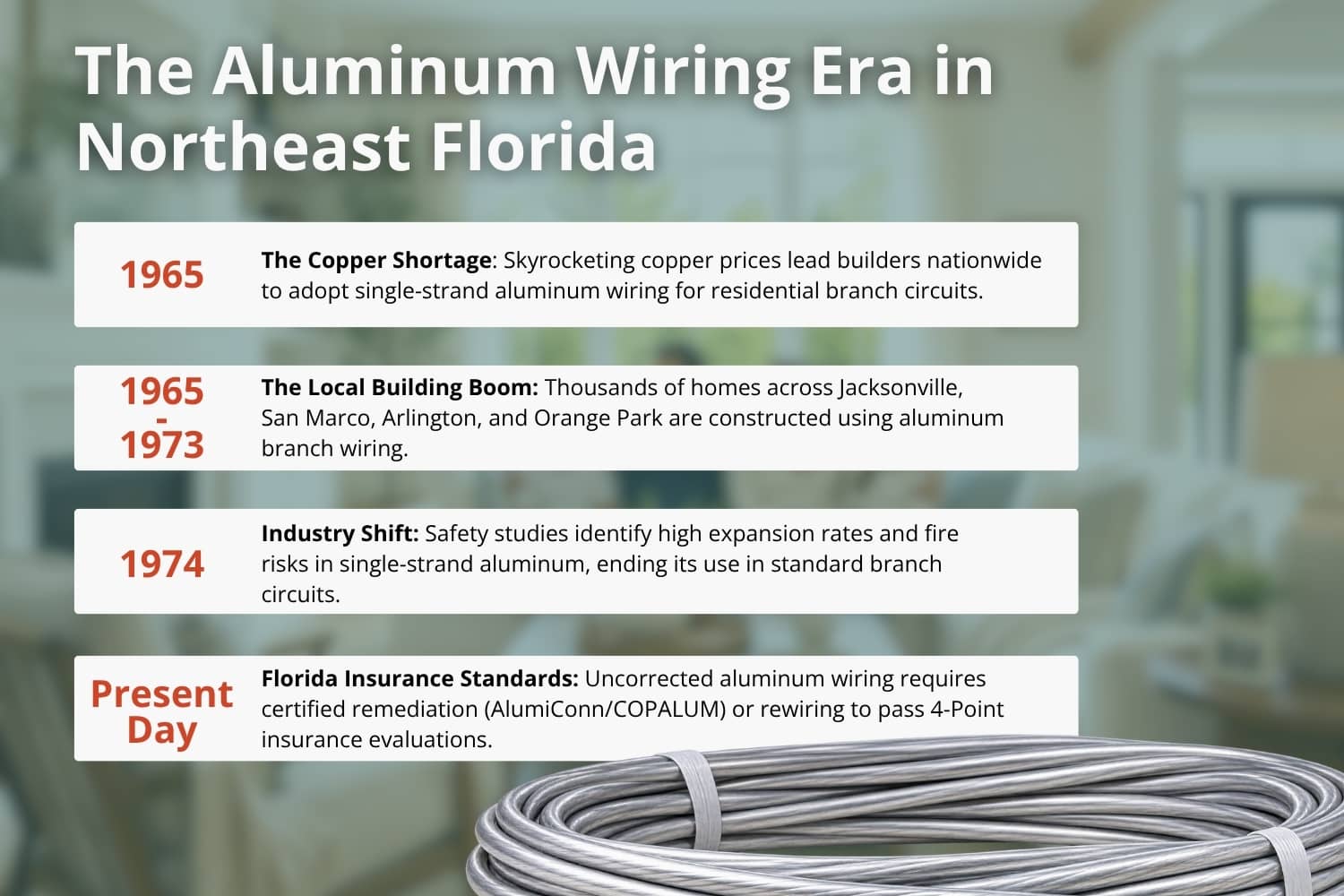
Buying or owning a home in Northeast Florida comes with a lot of excitement. From enjoying coastal breezes to settling into established neighborhoods, there is plenty to love. However, if your home was built between 1965 and 1973, you may face a hidden safety concern. Having aluminum wiring in house systems during this era was common across Jacksonville, Orange Park, and surrounding areas.
While aluminum carries electricity just like copper, single-strand aluminum wiring creates distinct safety hazards over time. As this wiring ages, it increases the risk of electrical fires and creates challenges for home insurance. Understanding how single-strand aluminum wiring works, why it causes problems, and what steps you can take will help keep your Northeast Florida home safe and insurable.
What Is Single-Strand Aluminum Wiring?
Single-strand aluminum wiring is a type of branch circuit wiring used in residential homes during the mid-1960s to the early 1970s. Builders used it as a low-cost alternative to copper during a time when copper prices soared. Branch circuits feed electricity directly to standard wall outlets, light switches, and light fixtures.
In Jacksonville neighborhoods established during that building boom, such as Arlington, San Marco, and parts of Westside, thousands of homes were wired using single-strand aluminum. While the metal conducts electricity well enough, it reacts very differently to heat and pressure compared to copper.
It is important to note that multi-strand aluminum wiring is still used safely today for main power feed lines and heavy appliance circuits. The primary safety concern centers entirely on single-strand branch wiring connected to everyday switches and outlets.
Why Having Single-Strand Aluminum Wiring in House Systems Creates Safety Risks
Single-strand aluminum wiring causes safety problems because of how the metal behaves inside electrical boxes over time. Unlike copper, aluminum expands and contracts rapidly when electric current flows through it.
Here are the main reasons why single-strand aluminum wiring creates hazards in homes:
High Thermal Expansion: Aluminum expands much more than copper when heated. Every time you turn on a light or plug in a vacuum, the wire warms up and expands. When turned off, it cools down and shrinks. This constant movement causes connections at switch terminals and outlet screws to loosen over time.
Oxidation and Rust: When aluminum meets oxygen, it forms aluminum oxide. Unlike copper oxide, which still conducts electricity, aluminum oxide acts as an insulator. This buildup creates electrical resistance, which generates excess heat inside wall boxes.
Metal Creep: Aluminum is a softer metal than copper. Under the constant pressure of a screw terminal inside an outlet, the wire gradually reshapes and flattens out. This process, known as creep, leads to loose electrical connections.
Electrical Arcing: Loose wires combined with high resistance cause electricity to jump across gaps. This jump is called an arc. Arcing creates extreme temperatures that easily melt plastic outlets, ignite wall insulation, or cause hidden fires behind drywall.
Over time, these combined issues turn simple everyday electrical use into a serious fire hazard hidden behind your walls.
How Aluminum Wiring Compares to Copper Wiring
To see why single-strand aluminum needs extra attention, it helps to compare its physical traits directly with copper wiring.
Up to 55 times more likely to reach fire conditions
Insurance Status
Accepted by all insurance carriers
Requires special inspections or approved repairs
These stark differences explain why insurance companies treat single-strand aluminum as a high safety risk and why proper evaluation is essential for your home.
Signs You May Have Aluminum Wiring in House Installations
You cannot always see the wires behind your walls, but several signs suggest your home might have single-strand aluminum wiring.
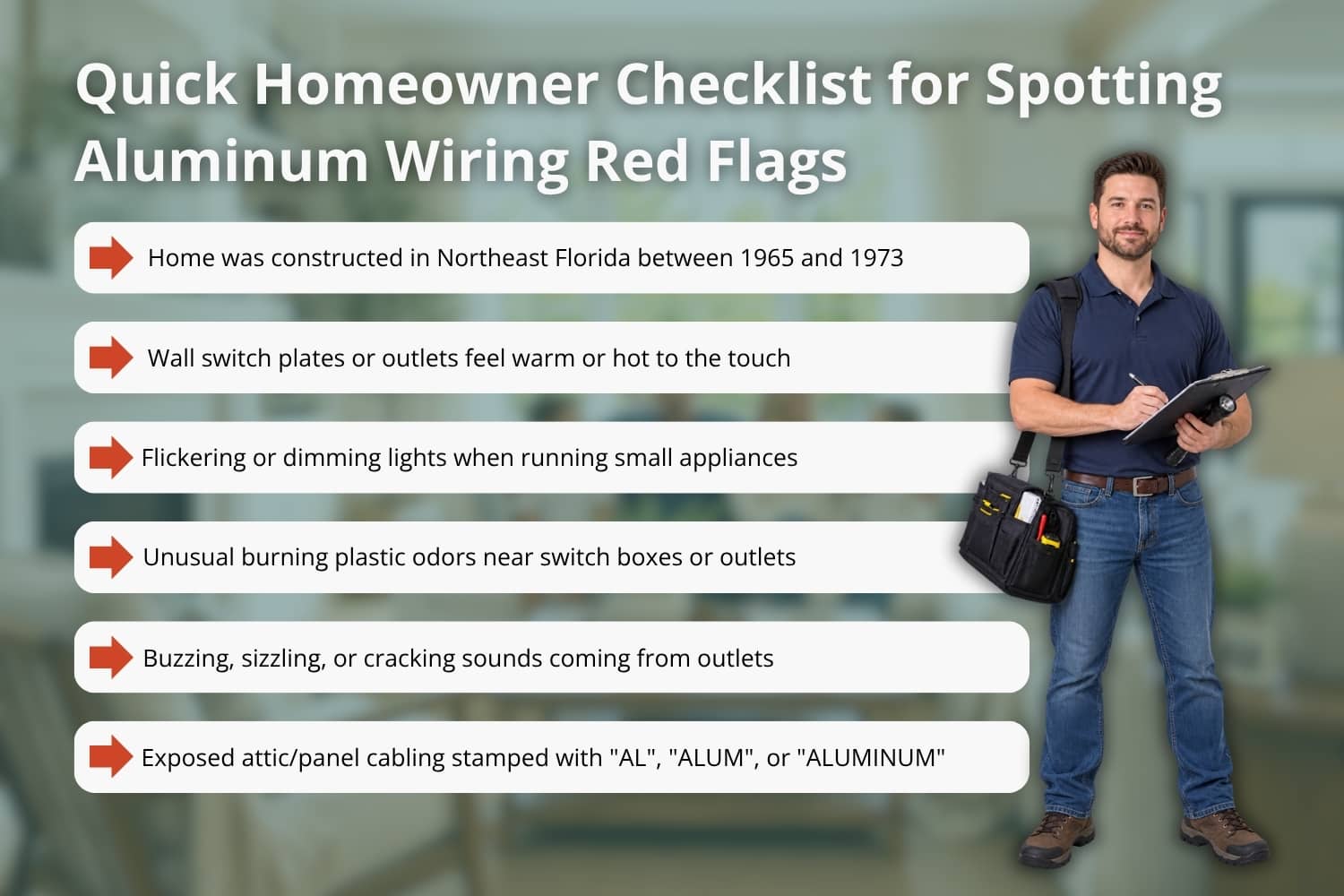
First, check the age of your house. If your Jacksonville home was constructed between 1965 and 1973, there is a strong chance aluminum branch wiring was used. Second, check for these warning signs around your home:
Wall switch plates or outlet covers that feel warm or hot to the touch.
A strange burning plastic smell near light switches or wall plugs.
Lights that flicker or dim randomly when small appliances turn on.
Outlets or switches that stop working for no obvious reason.
A soft buzzing or sizzle sound coming from inside switch boxes.
Static or interference on audio equipment and televisions.
If you open your main electrical panel or look at exposed wiring in the attic, you may see stamped markings on the plastic wire jacket. Look for letters such as AL, ALUM, or ALUMINUM stamped every few feet along the outer sheath.
Florida Home Insurance Challenges with Aluminum Wiring
Securing home insurance in Florida requires extra effort, and having aluminum wiring in house circuits makes it even more challenging. Insurance companies across Duval County, St. Johns County, and Clay County closely review electrical systems before issuing policies.
Most Florida home insurance carriers require a specialized 4-Point Inspection for homes older than 20 years. During this 4-Point inspection, the inspector examines four critical systems: the roof, plumbing, HVAC, and electrical wiring.
If single-strand aluminum wiring is present, many insurance carriers will refuse coverage until the system is evaluated by a licensed professional or repaired using approved remediation methods. Insurance companies view uncorrected aluminum wiring as a high risk for electrical fires. Leaving it unaddressed can result in policy denial, non-renewal, or significantly higher premium rates.
How Home Inspectors Find Aluminum Wiring Risks
A standard visual home inspection offers a great start, but thorough property inspectors use advanced technology to spot hidden electrical hazards without damaging your walls.
During a professional inspection, your inspector will remove panel covers, inspect branch wiring connections, and look for signs of overheating. They will also verify whether any past repairs were done using proper, safety-tested methods or dangerous DIY fixes.
Using a Thermography Inspection (thermal imaging) adds an extra layer of protection. Infrared cameras detect hidden temperature differences behind walls, inside switch boxes, and across breaker panels. Because loose aluminum connections generate heat long before they smoke or spark, thermal imaging spots hot spots invisible to the human eye. This gives you clear answers about your electrical safety before a small issue turns into a real emergency.
Safe Fixes for Aluminum Wiring in House Systems
If your home has aluminum branch wiring, you do not always need to tear down your drywall to replace every single line. Modern engineering provides safe, approved solutions that bring your home up to safety standards without a total teardown.
Here are the primary ways to address single-strand aluminum wiring safely:
1. Complete Home Rewiring
Replacing all single-strand aluminum branch wiring with modern copper wire is the permanent solution. While this is the most costly and invasive option, it eliminates the risk and provides total peace of mind. It also makes getting home insurance fast and straightforward.
2. COPALUM Crimp Connectors
The COPALUM connector method uses a special crimping tool to attach a short piece of copper wire (a pigtail) to the end of the aluminum wire. The copper tail then connects safely to standard wall outlets and switches. This system creates a cold-weld connection that prevents oxidation and loosening. It requires an electrician certified specifically for this specialized system.
3. AlumiConn Connectors
AlumiConn lug connectors offer another widely approved method for pigtailing. Each wire enters its own separate port with a mechanical screw coated in a special antioxidant gel. This prevents the aluminum and copper wires from touching directly, stopping galvanic corrosion and keeping connections secure.
4. CO/ALR Devices
In smaller projects, replacing outlets and switches with devices specifically labeled CO/ALR (meaning Copper/Aluminum Revised) helps improve safety. These devices use materials designed to expand and contract at rates similar to aluminum. However, this is usually considered a temporary fix rather than a full system remediation for insurance purposes.
Warning: Never use standard twist-on wire nuts (even wire nuts filled with antioxidant grease) to connect aluminum wire directly to copper wire. Standard wire connectors loosen quickly and represent a major fire hazard.
Related Questions to Explore
What other electrical and structural issues do insurance companies look for during an inspection?
Beyond wiring, insurance providers often require a 4-point inspection to evaluate the age and condition of the roof, heating and cooling system, and plumbing lines. Outdated electrical panels, polybutylene pipes, or older roofs can trigger similar insurance hurdles.
How can inspectors detect hidden home defects without tearing open walls?
Thermal imaging inspections use infrared technology to detect subtle temperature changes behind walls and ceilings. This non-invasive tool helps spot missing insulation, hidden plumbing leaks, moisture intrusion, and dangerous electrical hot spots early.
What additional specialized inspections should home buyers consider in Northeast Florida?
Standard home inspections cover major structural and mechanical systems, but specialized checks offer deeper protection. Adding sewer scope inspections checks main drain lines for blockages, while mold inspections and wind mitigation assessments help identify hidden environmental hazards and qualify buyers for insurance discounts.
How does moisture impact older homes in Jacksonville?
Coastal humidity and heavy rainfall can degrade exterior cladding over time. Professional stucco inspections and moisture testing help detect trapped water behind walls that leads to wood rot, structural framing damage, or poor indoor air quality.
When to Call a Professional
Dealing with electrical safety is never a DIY job. If you live in or are planning to purchase an older home in Jacksonville, St. Augustine, or surrounding Northeast Florida communities, scheduling a professional inspection is the safest first step.
You should contact a professional property inspector if:
You are buying or selling a home built between 1965 and 1973.
Your home insurance company is requesting a 4-Point Inspection or an electrical certification.
You notice warm switch plates, flickering lights, or burning plastic odors near outlets.
You want to evaluate previous electrical work to ensure it meets modern safety standards.
Professional inspectors deliver clear, detailed reports that give you the exact information you need to make smart home repairs and protect your property investment.
Ensuring Electrical Safety in Your Northeast Florida Home
Understanding the risks associated with single-strand aluminum wiring in house setups gives you the power to take smart, proactive steps. While uncorrected aluminum wiring presents real fire hazards and insurance challenges, modern remediation techniques make these systems safe and insurable once again.
If you are buying a home, preparing for an insurance review, or simply looking for peace of mind in your current house, expert guidance makes all the difference. Contact Inside & Out Property Inspectors INC. today to schedule a detailed home inspection, 4-Point inspection, or thermal imaging assessment across Northeast Florida. Our team helps you spot hidden issues early so you can keep your home safe, comfortable, and fully protected.
https://insideandoutpropertyinspectors.com/wp-content/uploads/2026/09/Jacksonville-Guide-to-Aluminum-Wiring-in-House-Risks.jpg10001500BJ Johnsonhttps://d39oyu4lp7snwz.cloudfront.net/wp-content/uploads/sites/54/2019/08/31171419/io-favicon-300x300.pngBJ Johnson2026-09-02 13:26:352026-09-16 20:53:32Jacksonville Guide to Aluminum Wiring in House Risks
Understanding why some electrical panel types are considered non-insurable helps you prepare for inspections, avoid last-minute surprises, and make informed decisions about safety and insurance.
Electrical panels are rarely top of mind for homeowners. If the lights turn on and the outlets work, the panel itself is easy to ignore. That changes quickly during a home inspection or insurance review, when certain electrical panels are flagged as non-insurable.
For buyers, sellers, and homeowners in Jacksonville and surrounding areas, this can be surprising and stressful. A panel may appear to function normally and still raise concerns with insurance companies. In Florida’s current insurance environment, those concerns can delay closings, affect coverage options, or require upgrades sooner than expected.
What Does “Non-Insurable Electrical Panel” Actually Mean?
When an electrical panel is labeled non-insurable, it does not mean the panel is illegal or automatically unsafe. It means many insurance providers consider that specific panel type to present a higher risk based on documented performance history, testing data, or claims trends.
Insurance companies evaluate risk differently from building departments. Their goal is to limit losses before they occur. If a panel design shows a higher likelihood of failure during overloads or short circuits, insurers may refuse coverage or require replacement as a condition of the policy.
From an inspection perspective, this designation is about transparency. Inspectors identify the panel type and document known concerns so homeowners understand how it may affect safety and insurability.
Why Insurance Companies Pay Close Attention to Electrical Panels
Electrical fires remain a leading cause of residential fire damage. According to national fire data, electrical distribution systems are consistently among the top causes of home fire losses.
The electrical panel is designed to act as a safety gatekeeper. It should:
Distribute electricity safely throughout the home
Interrupt power during overloads or faults
Protect wiring from overheating
When a panel does not reliably perform these functions, the risk of fire increases significantly. Insurance companies rely on long-term loss data rather than appearance alone. Even panels that look clean and well-maintained may be flagged if internal components have a history of failure.
In Florida, insurers often scrutinize electrical systems more closely due to higher claim volumes and tighter underwriting standards.
Panel Type Matters More Than Age Alone
Age is often blamed for panel issues, but design and manufacturing history are usually more important.
Some older panels continue to perform safely when properly installed and maintained. Others contain design flaws that increase failure risk regardless of age or condition.
Homes today use far more electricity than homes built decades ago. Older panel designs may not be equipped to handle current demand safely, even if they appear functional.
Common Electrical Panels Often Flagged as Non-Insurable
Inspectors commonly encounter a small group of non-insurable electrical panel types that insurance companies frequently flag due to known concerns.
These include:
Federal Pacific Electric panels
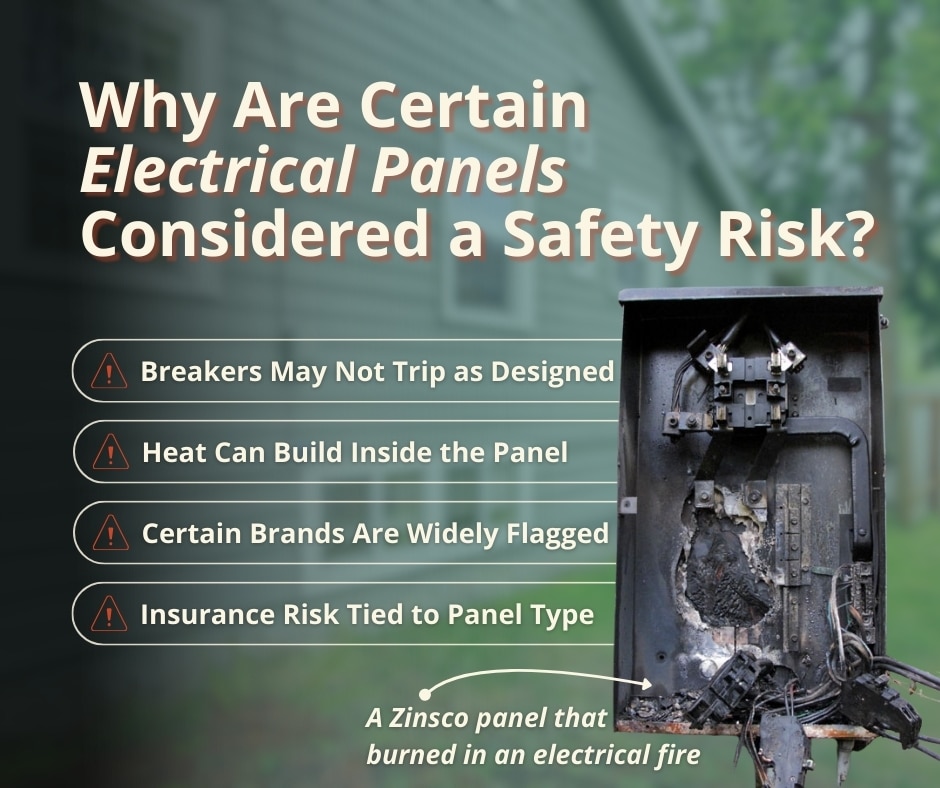
Zinsco panels
Challenger panels
Certain older Pushmatic panels
Each of these panels has a documented history that affects how insurers evaluate risk, regardless of visible condition.
Why Federal Pacific Panels Are a Frequent Concern
Federal Pacific Electric panels are one of the most widely recognized non-insurable panel types. The primary concern involves breaker performance under fault conditions.
Independent testing and field experience have shown that some Federal Pacific breakers fail to trip during overloads or short circuits. When breakers do not trip, wiring can overheat without interruption, increasing fire risk inside walls and panel cabinets.
Because this failure happens internally, the panel may appear to function normally until a dangerous event occurs. This uncertainty is why insurers often require replacement rather than repair.
Why Zinsco and Similar Panels Are Flagged
Zinsco panels raise concerns for different reasons. Over time, some Zinsco breakers have been found to fuse to the bus bar instead of disconnecting properly.
When this occurs:
Power may not shut off when needed
Heat can build at connection points
Damage can progress without a visible warning
These issues are not always detectable during a visual inspection, which makes risk harder to predict. As a result, many insurers treat Zinsco panels as high risk even when no outward damage is present.
Why a Panel Can Appear to Work and Still Be a Problem
One of the most confusing aspects for homeowners is being told a panel is an issue even though everything seems fine.
Electrical panels are designed for abnormal conditions, not everyday use. The real test occurs during faults, overloads, or short circuits. Panels with known failure histories may operate normally until the moment they are needed most.
Inspectors flag these panels because the risk exists even without symptoms. Insurance companies focus on the probability of failure, not whether failure has already occurred.
How Inspectors Identify Non-Insurable Panels
During a home inspection, inspectors do more than confirm that power is present. They identify the panel brand, model, and configuration, and evaluate overall condition.
When a known high-risk panel is present, it is documented so homeowners understand potential insurance implications. Inspectors do not determine insurance approval, but they provide the information insurers rely on.
Why Non-Insurable Panels Matter in Real Estate Transactions
Electrical panel issues often surface during buying or selling, when timelines are tight, and insurance approval is critical.
In Jacksonville and surrounding areas, where insurance approval is often tied to closing, panel issues can quickly become deal-impacting.
Code Compliance vs Insurance Requirements
A panel can meet building code requirements and still be considered non-insurable. This disconnect often frustrates homeowners.
Building codes focus on installation standards at the time a home was built or remodeled. Insurance requirements focus on current risk based on performance data and claims history.
This explains why a panel may pass a municipal inspection yet still be rejected by insurers. Code compliance does not override documented risk.
How Florida Insurance Trends Affect Panel Decisions
Florida’s insurance market has tightened significantly in recent years. Insurers are reducing exposure by applying stricter underwriting guidelines, especially for older homes and electrical systems.
As a result, panel types that may have been accepted in the past are now more frequently flagged. Identifying these issues early through inspection helps homeowners plan upgrades on their timeline instead of reacting under pressure.
When Replacement Is Typically Recommended
Inspectors do not perform electrical repairs, but they may recommend further evaluation by a licensed electrician.
Replacing a high-risk panel often improves safety, insurability, and resale confidence.
Common Misunderstandings About Non-Insurable Panels
Many homeowners believe visible damage must be present for a panel to be a concern. Others assume insurers will make exceptions if the panel appears clean.
In reality, insurers rely on panel type, documented failure rates, and historical data. Appearance alone does not outweigh known risk factors.
Other Related Questions
How does a home inspection evaluate electrical safety overall?
Inspectors review the main panel, subpanels, wiring methods, visible connections, and safety concerns to provide a broad assessment of electrical system condition.
What electrical issues most often affect insurance approval in Florida?
Panel type, outdated wiring methods, and signs of overheating are common factors that influence insurance decisions.
What other systems are reviewed during a full home inspection?
Inspectors also evaluate roofing, structure, plumbing, HVAC, and other major components that affect safety and value.
You want a complete evaluation of electrical and structural systems
Electrical concerns may affect other areas of the property
Inspectors identify issues, document conditions, and explain implications. They do not perform repairs or upgrades.
A licensed electrician is needed when:
A panel has been flagged for further evaluation
Replacement or upgrades are required
Electrical repairs are needed to meet insurance or safety requirements
Understanding the difference helps homeowners move forward efficiently.
Conclusion
Certain electrical panels are considered non-insurable because of documented safety and performance concerns, not because they suddenly stop working. Insurance companies focus on risk, and panel type plays a major role in that evaluation.
For homeowners in Jacksonville and surrounding areas, identifying these issues early helps avoid delays, unexpected costs, and insurance complications.
Inside & Out Property Inspectors provides clear, unbiased insight into electrical system concerns so homeowners can make informed decisions with confidence. Book your inspection today.
https://insideandoutpropertyinspectors.com/wp-content/uploads/2026/01/non-insurable-electrical-panels.jpg10001500BJ Johnsonhttps://d39oyu4lp7snwz.cloudfront.net/wp-content/uploads/sites/54/2019/08/31171419/io-favicon-300x300.pngBJ Johnson2026-01-14 15:00:382026-08-24 19:40:22Why Are Certain Electrical Panels Non-Insurable in a Home?
Ever feel like your hot water just can’t keep up? Whether it’s a cold shower halfway through or waiting forever for the water to reheat, these frustrations might point to one problem—a water heater that’s too small for your home.
Having the right water heater size isn’t just about convenience. It affects everything from energy use to how well your household runs day-to-day. If you’re unsure whether your water heater is up to the task, this guide will help you recognize the signs and figure out the next steps.
Why Water Heater Size Matters
The size of your water heater plays a huge role in how well it supports your daily routine. If it’s too small, you’ll likely experience constant frustration, from running out of hot water to skyrocketing energy bills.
On the other hand, a water heater that’s too large can lead to unnecessary energy waste and higher costs over time. Finding the right balance is key.
Water heaters are typically sized by their tank capacity or, for tankless models, their flow rate. For traditional tank systems, common sizes range from 30 to 80 gallons.
Smaller tanks are often ideal for one- or two-person households, while larger families usually need something bigger to handle multiple showers, dishwashing, and laundry at the same time.
Key factors that determine the right size include:
The number of people in your household
Your daily hot water usage (like showering, washing dishes, or running appliances)
The types of appliances connected to your water heater
For tankless systems, flow rate is the critical measure. This tells you how many gallons of hot water the unit can produce per minute. If you try to run too many appliances or fixtures simultaneously, you might not get enough hot water—especially with a smaller unit.
When your water heater matches your household’s needs, everything runs smoother. There’s enough hot water when you need it, energy is used efficiently, and you avoid the wear and tear that comes with overworking your system. If things feel off, it’s worth looking into.
Signs Yours Might Be Too Small
A water heater that’s too small can cause ongoing issues in your home. Watch for these signs in your hot water experience and the heater’s performance:
1) Running out too quickly
If showers suddenly go cold or you can’t fill the bathtub before running out of hot water, your water heater may not have enough capacity to meet your needs.
2) Multitasking trouble
If using the dishwasher or washing machine at the same time as a shower causes noticeable drops in hot water availability, your system might be too small to handle multiple demands.
3) Higher-than-normal energy bills
An overworked water heater uses more energy to keep up. If your utility bills seem unusually high, it could be a sign that your unit is too small and constantly running to meet your household’s needs.
4) Slow recovery time
After running out of hot water, smaller units can take a long time to reheat. If you’re waiting a while for hot water to return, your water heater might not have the capacity to keep up with your household.
5) Frequent maintenance issues
A water heater that’s too small can wear out faster because it’s constantly overworked. Frequent repairs or reduced efficiency might signal that it’s time for an upgrade.
If you notice one or more of these signs, it might be worth reassessing whether your water heater is the right size for your household’s needs.
What to Do if Your Water Heater is Too Small
If your water heater seems too small to meet your household’s needs, there are a few practical steps to consider.
Upgrade to a larger tank: For traditional water heaters, a larger tank can provide more hot water without running out too quickly.
Switch to a tankless system: Tankless water heaters provide hot water on demand. They’re ideal for households with high water usage, as they aren’t limited by tank size.
Evaluate your household’s needs: A professional can help assess your water usage and recommend the right size system based on your family size, appliances, and habits.
Improve efficiency: Insulating your water heater and pipes or lowering the temperature setting can help stretch the hot water you have while reducing energy costs.
Routine care helps prevent problems and ensures your system works efficiently.
Flush the tank yearly to remove sediment that builds up over time and reduces capacity.
Check the anode rod every few years to prevent rust and corrosion inside the tank.
Inspect for leaks or rust around the tank and connections to catch issues early.
Insulate the water heater and pipes to improve energy efficiency and retain heat longer.
When to Call a Professional
A professional inspection is often the best way to identify whether your water heater is too small or if another issue is causing problems. A licensed expert can:
Assess your household’s hot water needs and recommend the right size system.
Check for signs of wear, damage, or inefficiency.
Suggest whether repairs, maintenance, or replacement is the best option.
Conclusion
A water heater that’s too small for your home can disrupt daily life, raise energy costs, and lead to constant frustration. Recognizing the signs and addressing them promptly can make a big difference in your home’s comfort and efficiency.
https://insideandoutpropertyinspectors.com/wp-content/uploads/2024/12/how-to-know-if-your-water-heater-is-too-small.jpeg10001500BJ Johnsonhttps://d39oyu4lp7snwz.cloudfront.net/wp-content/uploads/sites/54/2019/08/31171419/io-favicon-300x300.pngBJ Johnson2024-12-19 18:59:452024-12-24 19:42:27Signs Your Water Heater Might Be Too Small
Electrical systems are an essential part of every home, but many homeowners feel a bit lost when it comes to understanding how they work. Knowing the most common electrical terms can help you avoid common issues, improve home safety, and make more informed decisions when it’s time to call in a professional.
Whether you’re troubleshooting, planning an upgrade, or just curious, understanding the key terms below can make a shocking difference. Let’s jump in!
Why Knowing Your Electrical Terms Matters
If you’ve ever tried to troubleshoot a tripped breaker or figure out why an outlet stopped working, you know that electrical issues can be confusing. However understanding key electrical terms can give you a major advantage.
Not only will you be better prepared to explain the problem when a professional arrives, but you’ll also have a clearer sense of what to expect during routine inspections or upgrades. This knowledge can help you stay ahead of potential hazards, such as overloaded circuits or improper grounding before they become costly repairs or safety risks.
In the long run, knowing these terms can save you time, money, and unnecessary stress while making sure your home’s electrical system is as safe and efficient as possible.
13 Electrical Terms Worth Knowing
1) Circuit
A circuit is the complete path that electricity travels through in your home, powering outlets, lights, and appliances.
When you flip a switch or plug something in, the circuit is what allows electricity to flow to that device. Circuits are designed to handle a certain load, so overloading one by plugging in too many devices at once can cause it to trip and shut off to prevent overheating.
For example, if you run a vacuum cleaner and a space heater on the same outlet, the circuit may overload and cut power to that area.
2) Voltage
Voltage is the force that pushes electrical current through wires and circuits. Think of it like water pressure in a hose—the higher the voltage, the more forcefully electricity is pushed through.
Most homes have standard 120-volt outlets, but larger appliances like ovens or dryers require 240 volts to operate efficiently.
3) Ampere (Amp)
Amps measure the amount of electrical current flowing through a circuit. Every circuit in your home is rated to handle a certain number of amps.
If the flow exceeds this limit, the breaker will trip to prevent overheating. For instance, most household circuits are rated for 15 or 20 amps, meaning they can safely power a few devices, like a TV and lamp, but adding a high-amp device, like a space heater, might cause the breaker to trip.
4) Wattage
Wattage measures how much power a device uses. It’s a combination of voltage and amps.
For example, a 60-watt light bulb uses 60 watts of power when it’s on. Knowing the wattage of your appliances and devices helps you manage energy usage and avoid overloading circuits.
5) Breaker
A breaker is a safety device that automatically shuts off electricity if a circuit becomes overloaded or if there’s a short circuit.
It’s designed to protect your home from electrical fires. If you notice a breaker frequently tripping, it may be a sign of an issue with that circuit, such as too many devices being plugged in, faulty wiring, or an appliance malfunction.
6) Grounding
Grounding provides a safe path for electricity to follow in case of a fault, like a short circuit. It helps prevent electrical shocks and reduces the risk of fires.
Ground wires are usually connected to outlets, metal boxes, and the earth. If grounding is missing or done incorrectly, your home is more vulnerable to electrical hazards.
7) GFCI (Ground Fault Circuit Interrupter)
A GFCI is a type of outlet designed to protect against electrical shocks by shutting off the power if it detects any imbalance in the flow of electricity. These are required in areas with water, such as kitchens, bathrooms, and outdoor outlets.
For example, if an appliance in your bathroom gets wet and electricity starts flowing in an unintended path, the GFCI will trip and cut power to prevent a shock.
8) AFCI (Arc Fault Circuit Interrupter)
An AFCI is a special type of breaker that protects against electrical fires caused by arcing faults.
Arcing happens when electrical current jumps between damaged wires or loose connections. AFCIs are now required in newer homes, particularly in bedrooms and living spaces, because they detect and stop arcs before they can cause a fire.
9) Short Circuit
A short circuit occurs when electrical current flows through an unintended path, often due to exposed or damaged wiring. This can cause sparks, overheating, or even fires if not addressed quickly.
For instance, if two wires in a light fixture touch each other, they can create a short circuit, potentially leading to a fire hazard.
10) Electrical Panel
The electrical panel is the control center for your home’s electrical system. It houses the breakers or fuses that manage the flow of electricity to different circuits in your home.
If your home’s electrical needs grow (such as adding new appliances), you may need to upgrade your electrical panel to handle the increased load.
11) Fuse
Fuses are similar to breakers but are found in older electrical systems.
Instead of resetting like a breaker, a fuse will blow (or burn out) when a circuit becomes overloaded. Once a fuse blows, it needs to be replaced. If your home still uses fuses, it may be worth upgrading to a modern breaker system for improved safety and convenience.
12) Neutral Wire
The neutral wire completes the electrical circuit by carrying electricity back to the electrical panel. It helps balance the load of electricity in a circuit.
A properly functioning neutral wire is crucial for safety, as it ensures that excess electrical current doesn’t build up and cause shocks or fires.
13) Surge Protection
Finally, surge protection safeguards your home’s electronics from sudden voltage spikes, which can occur during storms or power surges.
A surge protector diverts excess electricity away from your devices, preventing damage. It’s recommended to use surge protectors for valuable electronics like computers, TVs, and home theater systems.
Tips for Electrical Safety at Home
Inspect outlets and switches regularly: Check outlets and switches for signs of wear, overheating, or damage. If they feel warm or you notice any discoloration, there could be an underlying issue.
Upgrade old wiring: Older homes often have outdated wiring systems that may not handle today’s electrical demands. Upgrading to modern wiring can reduce the risk of fires and improve efficiency.
Install GFCI outlets where needed: Kitchens, bathrooms, garages, and outdoor areas should have GFCI outlets to protect against electrical shocks. These outlets shut off power if they detect moisture or a current imbalance.
Avoid overloading outlets: Plugging too many devices into a single outlet can lead to overheating and fire hazards. Use power strips with built-in surge protectors for safety, especially when dealing with multiple electronics.
Test smoke and carbon monoxide detectors: Smoke and carbon monoxide detectors are key safety tools. Test them regularly to ensure they’re working properly and replace batteries as needed.
When to Call a Professional
Some electrical issues are beyond the scope of an at-home fix and should be handled by a licensed professional.
If you notice frequent breaker trips, flickering lights, or burning smells coming from outlets, it’s time to call an expert. These can all be signs of underlying electrical problems that could lead to fires or damage if left unchecked.
Other tasks, like upgrading your electrical panel, installing new wiring, or adding dedicated circuits for large appliances, should always be done by an electrician.
Attempting these projects without the right tools and knowledge can be dangerous and may violate local building codes.
Wrapping Up
Knowing these key electrical terms empowers you to better understand your electrical system, communicate with inspectors and electricians, and keep your home safe.
Lots of people rely on a power strip or two every day to keep our homes running smoothly, from charging our phones to powering our favorite gadgets. But with that convenience comes some risk—misusing a power strip can pose serious safety hazards like fires or other damage.
That’s why it’s important to know how to use power strips safely, and this post lays out simple, practical tips that can help you protect your home and appliances.
How Does a Power Strip Work?
Power strips are designed to expand the number of available outlets in your home by allowing multiple devices to be plugged into a single wall socket. They function by drawing electrical current from one outlet and distributing it to several outlets on the strip.
However, it’s important to understand that power strips do not increase the amount of electrical power available—they simply distribute it. This means that if too many high-power devices are plugged in, the strip can struggle, leading to potential safety hazards.
There are different types of power strips, each with its own set of features. Basic power strips offer simple multi-outlet solutions, while more advanced models include surge protection to guard against voltage spikes. Some even offer smart features, such as energy monitoring and remote control, which can add convenience and safety.
The Risks of Improper Use
Improper use of power strips can lead to significant safety risks, including fire hazards, electrical damage, and personal injury.
One of the most common risks is overloading, which can happen when too many devices are plugged into a power strip. Overloading can cause the strip to overheat, potentially leading to a fire. According to the U.S. Fire Administration, an estimated 24,200 residential electrical fires occur annually, resulting in hundreds of deaths and injuries, plus $1.2 billion in property loss.
High-wattage appliances like space heaters, refrigerators, or microwaves should never be plugged into a power strip, as they draw too much power for the strip to handle safely.
Another risk comes from using power strips in inappropriate locations. For example, placing a power strip in a damp area like a bathroom or kitchen can result in electrical shocks or short circuits due to moisture exposure.
Shopping for the Safest Power Strip
When purchasing a power strip, safety should be your top priority. Consider these factors when selecting one:
Surge Protection
Certification and Standards
Wattage and Amps
Number of Outlets
Firstly, a power strip with built-in surge protection is crucial for protecting your devices from sudden voltage spikes, which can cause serious damage to electronics. Surge protection ensures that any excess voltage is diverted away from your devices. Look for power strips that have been certified by recognized safety organizations, such as UL (Underwriters Laboratories). Certification indicates that the power strip meets specific safety standards and has been tested for quality and reliability.
Also, consider the wattage and amperage rating of the power strip. Make sure it can handle the combined power draw of all the devices you plan to plug in. Lastly, make sure the power strip has enough outlets for your needs.
However, avoid the temptation to choose a strip with more outlets than you need, which can encourage overloading.
Safety Tips for Power Strip Use
Proper use of power strips is essential for preventing common electrical hazards. Follow these critical safety tips to protect your home:
1) Place Strips in Safe Areas: Position power strips in areas with good ventilation, don’t cover them with rugs, curtains, or furniture. Proper airflow prevents overheating, which can lead to fires. Avoid using power strips in damp locations like bathrooms or kitchens to reduce the risk of electrical shocks.
2) Avoid Daisy Chaining: Never plug one power strip into another. This practice, known as daisy chaining, can overload your electrical circuit and significantly increase the risk of fire. Each power strip should be connected directly to a wall outlet.
3) Unplug When Not in Use: Unplug power strips when they’re not in use, particularly if they’re connected to high-power devices like televisions or gaming consoles. This habit prevents overheating and saves energy.
4) Inspect Regularly: Regularly check power strips for signs of wear and tear, such as frayed cords, exposed wires, or loose connections. If you notice any damage, replace the power strip immediately to prevent fire risks.
5) Limit High-Wattage Devices: Avoid plugging high-wattage appliances—like space heaters or large kitchen gadgets—into power strips. These devices draw more power than a typical strip can handle and should always be plugged directly into a wall outlet.
Other Electrical Safety and Maintenance
Maintaining your home’s overall electrical safety is just as important as using power strips correctly. Regular inspections are essential, especially in older homes. An electrician can identify and address potential issues, such as outdated wiring or overloaded circuits before they become serious hazards.
Make sure appliances frequently plugged into power strips are in good condition. Regularly clean and inspect these devices to ensure they operate safely and efficiently.
If you’ve recently added new appliances or noticed signs of strain on your electrical system—such as frequently tripped breakers or warm outlets—consider upgrading your system.
When to Call for Help
Professional help is sometimes necessary to maintain a safe electrical system in your home. If you notice circuit breakers tripping frequently, outlets or power strips that feel warm or hot to the touch, or any visible damage to your power strips, contact an electrician.
These are signs that your electrical system may be malfunctioning, posing a serious safety risk. Older homes should also get evaluations by a professional, especially after renovations.
Upgrading your system can significantly reduce the risk of electrical fires and ensure your home can safely meet its power needs.
Conclusion
Power strips are convenient and essential tools for managing multiple devices in your home. However, their safe use is crucial to avoiding hazards like electrical fires and equipment damage. Prioritize safety by selecting the right power strips, following best practices for their use, and maintaining your home’s electrical system.
Take time to inspect your current setup, replace any damaged strips, and consider scheduling a professional inspection to ensure everything is in good working order. If it’s been a while since your electrical system (or the whole home) was inspected, call Inside and Out Property Inspections today in Jacksonville, FL, and surrounding areas.
https://insideandoutpropertyinspectors.com/wp-content/uploads/2024/08/power-strip-safety-tip.jpeg10001500BJ Johnsonhttps://d39oyu4lp7snwz.cloudfront.net/wp-content/uploads/sites/54/2019/08/31171419/io-favicon-300x300.pngBJ Johnson2024-08-29 12:34:512026-10-22 01:49:55Power Strip Safety Tips to Protect Every Home