Jacksonville Guide to Aluminum Wiring in House Risks
Buying or owning a home in Northeast Florida comes with a lot of excitement. From enjoying coastal breezes to settling into established neighborhoods, there is plenty to love. However, if your home was built between 1965 and 1973, you may face a hidden safety concern. Having aluminum wiring in house systems during this era was common across Jacksonville, Orange Park, and surrounding areas.
While aluminum carries electricity just like copper, single-strand aluminum wiring creates distinct safety hazards over time. As this wiring ages, it increases the risk of electrical fires and creates challenges for home insurance. Understanding how single-strand aluminum wiring works, why it causes problems, and what steps you can take will help keep your Northeast Florida home safe and insurable.
What Is Single-Strand Aluminum Wiring?
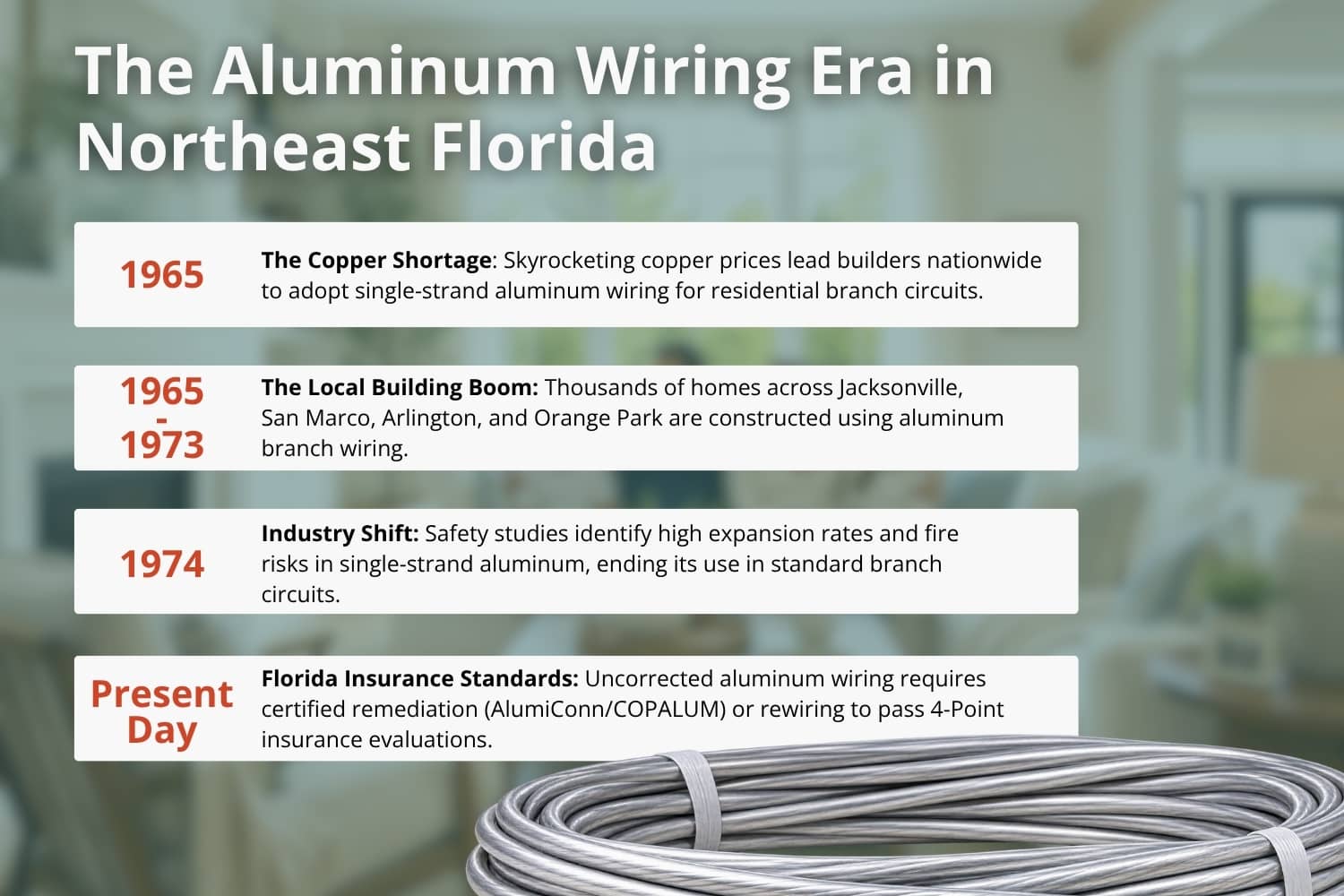
Single-strand aluminum wiring is a type of branch circuit wiring used in residential homes during the mid-1960s to the early 1970s. Builders used it as a low-cost alternative to copper during a time when copper prices soared. Branch circuits feed electricity directly to standard wall outlets, light switches, and light fixtures.
In Jacksonville neighborhoods established during that building boom, such as Arlington, San Marco, and parts of Westside, thousands of homes were wired using single-strand aluminum. While the metal conducts electricity well enough, it reacts very differently to heat and pressure compared to copper.
It is important to note that multi-strand aluminum wiring is still used safely today for main power feed lines and heavy appliance circuits. The primary safety concern centers entirely on single-strand branch wiring connected to everyday switches and outlets.
Why Having Single-Strand Aluminum Wiring in House Systems Creates Safety Risks
Single-strand aluminum wiring causes safety problems because of how the metal behaves inside electrical boxes over time. Unlike copper, aluminum expands and contracts rapidly when electric current flows through it.
Here are the main reasons why single-strand aluminum wiring creates hazards in homes:
High Thermal Expansion: Aluminum expands much more than copper when heated. Every time you turn on a light or plug in a vacuum, the wire warms up and expands. When turned off, it cools down and shrinks. This constant movement causes connections at switch terminals and outlet screws to loosen over time.
Oxidation and Rust: When aluminum meets oxygen, it forms aluminum oxide. Unlike copper oxide, which still conducts electricity, aluminum oxide acts as an insulator. This buildup creates electrical resistance, which generates excess heat inside wall boxes.
Metal Creep: Aluminum is a softer metal than copper. Under the constant pressure of a screw terminal inside an outlet, the wire gradually reshapes and flattens out. This process, known as creep, leads to loose electrical connections.
Electrical Arcing: Loose wires combined with high resistance cause electricity to jump across gaps. This jump is called an arc. Arcing creates extreme temperatures that easily melt plastic outlets, ignite wall insulation, or cause hidden fires behind drywall.
Over time, these combined issues turn simple everyday electrical use into a serious fire hazard hidden behind your walls.
How Aluminum Wiring Compares to Copper Wiring
To see why single-strand aluminum needs extra attention, it helps to compare its physical traits directly with copper wiring.
Up to 55 times more likely to reach fire conditions
Insurance Status
Accepted by all insurance carriers
Requires special inspections or approved repairs
These stark differences explain why insurance companies treat single-strand aluminum as a high safety risk and why proper evaluation is essential for your home.
Signs You May Have Aluminum Wiring in House Installations
You cannot always see the wires behind your walls, but several signs suggest your home might have single-strand aluminum wiring.
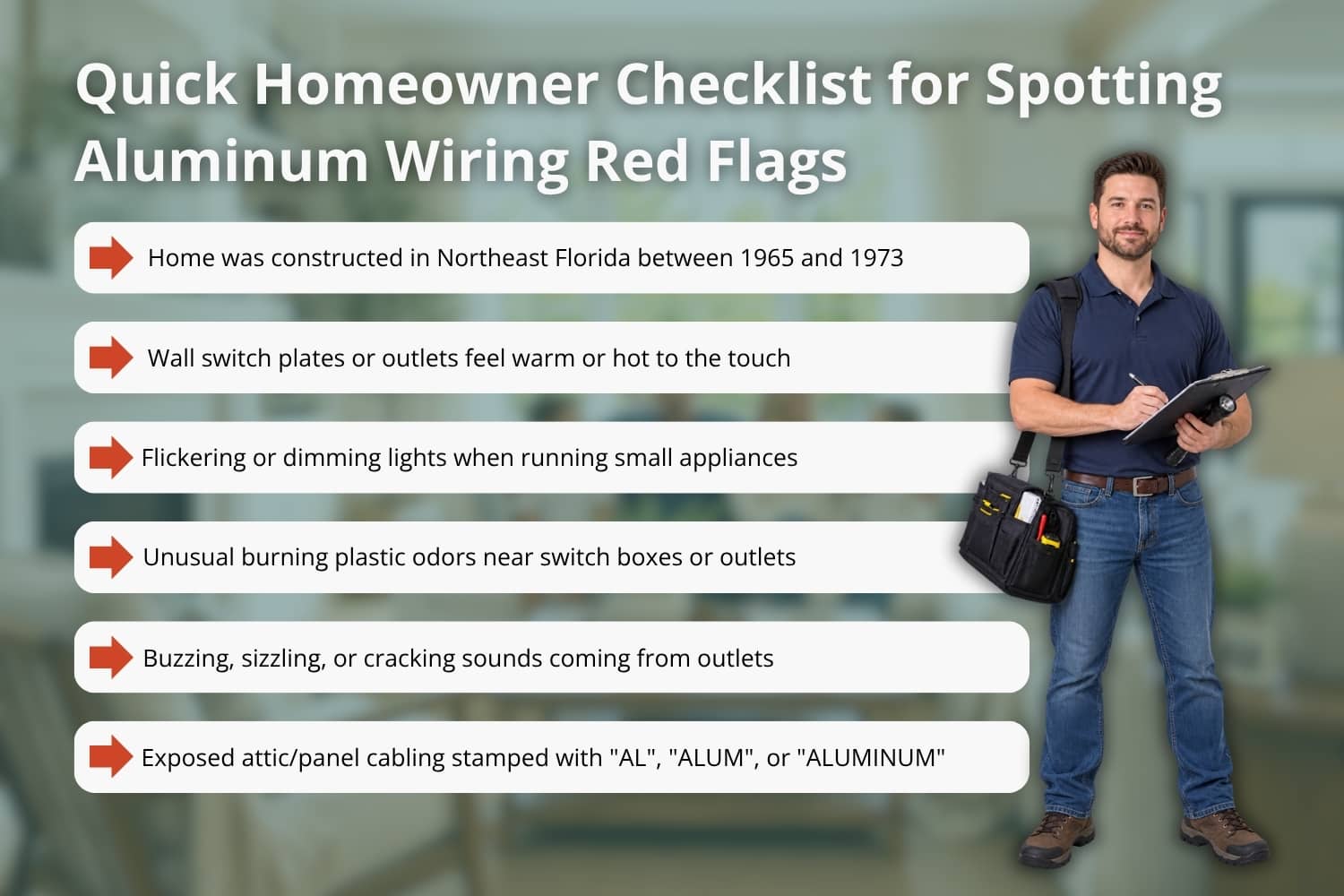
First, check the age of your house. If your Jacksonville home was constructed between 1965 and 1973, there is a strong chance aluminum branch wiring was used. Second, check for these warning signs around your home:
Wall switch plates or outlet covers that feel warm or hot to the touch.
A strange burning plastic smell near light switches or wall plugs.
Lights that flicker or dim randomly when small appliances turn on.
Outlets or switches that stop working for no obvious reason.
A soft buzzing or sizzle sound coming from inside switch boxes.
Static or interference on audio equipment and televisions.
If you open your main electrical panel or look at exposed wiring in the attic, you may see stamped markings on the plastic wire jacket. Look for letters such as AL, ALUM, or ALUMINUM stamped every few feet along the outer sheath.
Florida Home Insurance Challenges with Aluminum Wiring
Securing home insurance in Florida requires extra effort, and having aluminum wiring in house circuits makes it even more challenging. Insurance companies across Duval County, St. Johns County, and Clay County closely review electrical systems before issuing policies.
Most Florida home insurance carriers require a specialized 4-Point Inspection for homes older than 20 years. During this 4-Point inspection, the inspector examines four critical systems: the roof, plumbing, HVAC, and electrical wiring.
If single-strand aluminum wiring is present, many insurance carriers will refuse coverage until the system is evaluated by a licensed professional or repaired using approved remediation methods. Insurance companies view uncorrected aluminum wiring as a high risk for electrical fires. Leaving it unaddressed can result in policy denial, non-renewal, or significantly higher premium rates.
How Home Inspectors Find Aluminum Wiring Risks
A standard visual home inspection offers a great start, but thorough property inspectors use advanced technology to spot hidden electrical hazards without damaging your walls.
During a professional inspection, your inspector will remove panel covers, inspect branch wiring connections, and look for signs of overheating. They will also verify whether any past repairs were done using proper, safety-tested methods or dangerous DIY fixes.
Using a Thermography Inspection (thermal imaging) adds an extra layer of protection. Infrared cameras detect hidden temperature differences behind walls, inside switch boxes, and across breaker panels. Because loose aluminum connections generate heat long before they smoke or spark, thermal imaging spots hot spots invisible to the human eye. This gives you clear answers about your electrical safety before a small issue turns into a real emergency.
Safe Fixes for Aluminum Wiring in House Systems
If your home has aluminum branch wiring, you do not always need to tear down your drywall to replace every single line. Modern engineering provides safe, approved solutions that bring your home up to safety standards without a total teardown.
Here are the primary ways to address single-strand aluminum wiring safely:
1. Complete Home Rewiring
Replacing all single-strand aluminum branch wiring with modern copper wire is the permanent solution. While this is the most costly and invasive option, it eliminates the risk and provides total peace of mind. It also makes getting home insurance fast and straightforward.
2. COPALUM Crimp Connectors
The COPALUM connector method uses a special crimping tool to attach a short piece of copper wire (a pigtail) to the end of the aluminum wire. The copper tail then connects safely to standard wall outlets and switches. This system creates a cold-weld connection that prevents oxidation and loosening. It requires an electrician certified specifically for this specialized system.
3. AlumiConn Connectors
AlumiConn lug connectors offer another widely approved method for pigtailing. Each wire enters its own separate port with a mechanical screw coated in a special antioxidant gel. This prevents the aluminum and copper wires from touching directly, stopping galvanic corrosion and keeping connections secure.
4. CO/ALR Devices
In smaller projects, replacing outlets and switches with devices specifically labeled CO/ALR (meaning Copper/Aluminum Revised) helps improve safety. These devices use materials designed to expand and contract at rates similar to aluminum. However, this is usually considered a temporary fix rather than a full system remediation for insurance purposes.
Warning: Never use standard twist-on wire nuts (even wire nuts filled with antioxidant grease) to connect aluminum wire directly to copper wire. Standard wire connectors loosen quickly and represent a major fire hazard.
Related Questions to Explore
What other electrical and structural issues do insurance companies look for during an inspection?
Beyond wiring, insurance providers often require a 4-point inspection to evaluate the age and condition of the roof, heating and cooling system, and plumbing lines. Outdated electrical panels, polybutylene pipes, or older roofs can trigger similar insurance hurdles.
How can inspectors detect hidden home defects without tearing open walls?
Thermal imaging inspections use infrared technology to detect subtle temperature changes behind walls and ceilings. This non-invasive tool helps spot missing insulation, hidden plumbing leaks, moisture intrusion, and dangerous electrical hot spots early.
What additional specialized inspections should home buyers consider in Northeast Florida?
Standard home inspections cover major structural and mechanical systems, but specialized checks offer deeper protection. Adding sewer scope inspections checks main drain lines for blockages, while mold inspections and wind mitigation assessments help identify hidden environmental hazards and qualify buyers for insurance discounts.
How does moisture impact older homes in Jacksonville?
Coastal humidity and heavy rainfall can degrade exterior cladding over time. Professional stucco inspections and moisture testing help detect trapped water behind walls that leads to wood rot, structural framing damage, or poor indoor air quality.
When to Call a Professional
Dealing with electrical safety is never a DIY job. If you live in or are planning to purchase an older home in Jacksonville, St. Augustine, or surrounding Northeast Florida communities, scheduling a professional inspection is the safest first step.
You should contact a professional property inspector if:
You are buying or selling a home built between 1965 and 1973.
Your home insurance company is requesting a 4-Point Inspection or an electrical certification.
You notice warm switch plates, flickering lights, or burning plastic odors near outlets.
You want to evaluate previous electrical work to ensure it meets modern safety standards.
Professional inspectors deliver clear, detailed reports that give you the exact information you need to make smart home repairs and protect your property investment.
Ensuring Electrical Safety in Your Northeast Florida Home
Understanding the risks associated with single-strand aluminum wiring in house setups gives you the power to take smart, proactive steps. While uncorrected aluminum wiring presents real fire hazards and insurance challenges, modern remediation techniques make these systems safe and insurable once again.
If you are buying a home, preparing for an insurance review, or simply looking for peace of mind in your current house, expert guidance makes all the difference. Contact Inside & Out Property Inspectors INC. today to schedule a detailed home inspection, 4-Point inspection, or thermal imaging assessment across Northeast Florida. Our team helps you spot hidden issues early so you can keep your home safe, comfortable, and fully protected.
https://insideandoutpropertyinspectors.com/wp-content/uploads/2026/09/Jacksonville-Guide-to-Aluminum-Wiring-in-House-Risks.jpg10001500BJ Johnsonhttps://d39oyu4lp7snwz.cloudfront.net/wp-content/uploads/sites/54/2019/08/31171419/io-favicon-300x300.pngBJ Johnson2026-09-02 13:26:352026-09-16 20:53:32Jacksonville Guide to Aluminum Wiring in House Risks
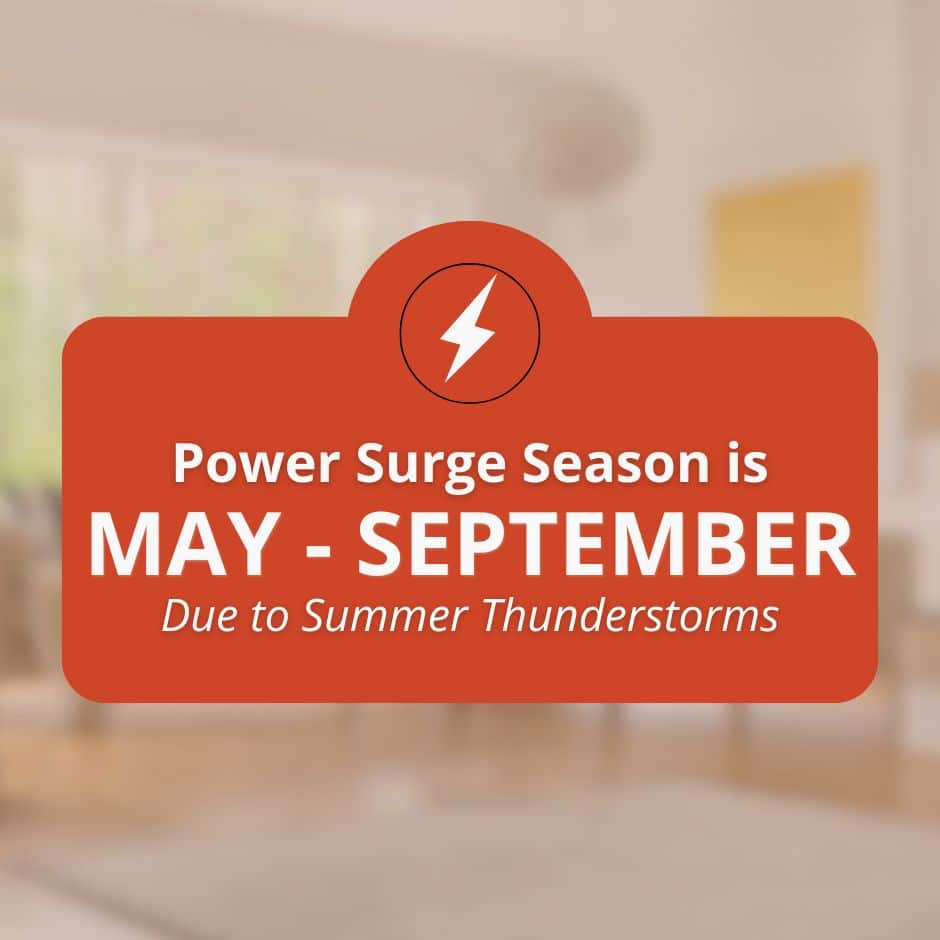
A power surge can last less than a millisecond, but the damage it leaves behind can cost hundreds, sometimes thousands of dollars. If you’ve had an appliance die without explanation, noticed flickering lights during a storm, or come home to tripped breakers after a Florida afternoon thunderstorm, you’ve likely experienced one.
For homeowners in Jacksonville, St. Augustine, and across Northeast Florida, power surges aren’t a rare event. Florida leads the nation in lightning strikes, and the combination of aging electrical systems and the demands of year-round air conditioning creates conditions where surges are a genuine, ongoing risk. Understanding what causes power surges, what they damage, and what a home inspector actually evaluates helps you protect your home and make smarter decisions when buying or selling.
What Is a Power Surge?
A power surge is a sudden jump in electrical voltage that briefly exceeds what your home’s wiring and connected electrical devices are designed to handle.
Power surges are caused by sudden increases in voltage, often exceeding 169 volts in standard 120-volt systems. That excess voltage can destroy the sensitive electronics inside appliances, HVAC systems, and smart home devices in an instant.
What many homeowners don’t realize is that power surges can occur frequently. Low-level surges happen dozens or even hundreds of times each day, often without any visible signs of damage. Over time, this creates what some electricians call “electronic rust,” which is the gradual degradation of internal circuitry that shortens the lifespan of connected electrical devices well before their time.
What Causes Power Surges: Internal vs. External
Power surges fall into two broad categories, and knowing the difference matters for how you protect against them.
Roughly 60 to 80 percent of power surges are caused by internal activities within the home, meaning the biggest threat is often already inside your walls.
Internal Power Surges
Internal surges are the most common cause of day-to-day power surge damage. More than half of household power surges are internal, caused by devices with motors starting up or shutting off, which momentarily diverts electricity to and from other appliances on the same circuit.
Large appliances cycling on and off are the primary culprit. High-energy devices like air conditioners, refrigerators, and washing machines cause internal surges due to their large power demands when their motors start. In Florida, where AC units run nearly year-round, these micro-surges happen constantly and gradually wreak havoc on sensitive electronics throughout the home.
Overloaded circuits occur when too much power is drawn from a single circuit, often from overusing extension cords or plugging too many devices into the same circuit. A basic power strip without surge protection offers no defense against this. Circuit breakers frequently tripping on the same circuit is a clear signal that the circuit is being asked to do more than it was designed for.
Faulty or outdated wiring is a significant internal cause of power surges. Damaged or exposed electrical wires lead to erratic currents and voltage spikes. Outdated wiring cannot manage modern electrical loads effectively.
In older Jacksonville neighborhoods, parts of Orange Park, and the historic areas of St. Augustine, inadequate wiring is more common than many buyers expect. This is also a fire risk, not just a surge risk.
External Power Surges
External power surges are commonly caused by lightning strikes, tree limbs touching power lines, vehicle accidents involving utility poles, or utility equipment failures, all of which can send excess voltage directly into your home.
Lightning strikes are the most destructive. Florida is the lightning capital of the United States, and a direct strike on or near your home can send an overwhelming amount of voltage through power lines into your electrical system instantly. Even a strike that hits a power line several blocks away can travel through the grid and into connected electrical devices immediately.
Power outages and restoration are a lesser-known external cause. Power surges can also occur when electricity is restored after a power outage, as the sudden influx of electrical current creates a voltage spike that can damage plugged-in devices. This is especially relevant in NE Florida during hurricane season, when outages and restorations happen repeatedly in short windows.
Electric utility switching is another source that many homeowners never consider. Power companies’ switching processes to balance demand can cause brief voltage transients that travel into homes on the affected circuit.
What Power Surges Can Damage
Devices containing microprocessors, such as TVs, computers, microwaves, and smart home equipment, are particularly vulnerable, as even a 10-volt fluctuation can disrupt their functioning. In a modern home, it includes nearly every major device.
Some surge damage is instantaneous; a device simply will not turn on after a significant power surge. Other damage accumulates invisibly, with electronic equipment becoming unreliable or failing years before expected.
How to Protect Your Home From Power Surges
A layered approach offers the best protection against both internal and external surges:
A whole-house surge protector installed at the electrical panel by a certified electrician is the most effective defense against external power surges from lightning and utility events. Whole-house surge protector units are generally a worthwhile investment, especially in areas with a high number of lightning strikes, which describes most of Northeast Florida. It intercepts large voltage spikes before they reach your connected electrical devices.
Point-of-use surge protective devices provide a critical secondary layer. Surge protectors at the outlet level, especially combined with a reliable grounding system, protect electrical devices from all but the most severe power surges. Look for a listed joule rating; a basic power strip without one offers no surge protection at all.
Proper grounding is essential. A properly grounded electrical system gives excess voltage a safe path out of the home. Improper grounding is both a surge risk and a safety hazard.
Unplug during storms because no surge protector guarantees full protection from a direct lightning strike. Unplugging sensitive electronics and computer equipment during severe weather remains the most reliable precaution.
What a Home Inspector Looks For
Home inspectors are not electricians. They do not open walls, probe wiring behind surfaces, or perform electrical diagnostic testing. What they do is conduct a thorough visual assessment of accessible components of the electrical system.
During a home inspection, the electrical evaluation includes:
The electrical panel’s condition, brand, and signs of double-tapping or improper wiring
Visible wiring in accessible areas, including the attic, crawlspace, and garage
Evidence of overusing extension cords or DIY electrical work
Presence or absence of whole-house surge protection
For Florida homes, the panel brand matters significantly. Federal Pacific and Zinsco panels are well-documented safety concerns and are frequently flagged by insurers as non-insurable. If you suspect faulty wiring or have concerns about your electric system, a home inspection is the right starting point, but a certified electrician is the appropriate next step for diagnosis and repair.
Power Surges and Florida Home Insurance
Florida insurers take electrical systems seriously. A 4-point inspection covering the electrical system, HVAC, plumbing, and roof is frequently required for older homes before a homeowner’s insurance policy can be issued or renewed. The electrical component looks specifically at panel type, wiring material, and overall condition.
Combining a full home inspection with a 4-point inspection when purchasing an older home in Jacksonville or St. Augustine gives you the most complete picture of the electrical system before closing.
Questions Homeowners Ask About Power Surges
Are internal surges really a bigger risk than lightning? For most homes, yes. While lightning damage is dramatic, internal power surges caused by large appliances like air conditioners cycling on and off cause far more cumulative damage over time. A whole-house protector addresses external surges, but point-of-use surge protective devices protect sensitive electronics from internal surges on the same circuit.
Does a home inspection catch surge-related electrical problems? A home inspection identifies visible issues that contribute to surge risk, such as outdated wiring, overloaded circuits, an inadequate or flagged electrical panel, and the absence of surge protection. It is a visual assessment, not a full electrical diagnostic. If issues are flagged, a certified electrician should evaluate further before you close.
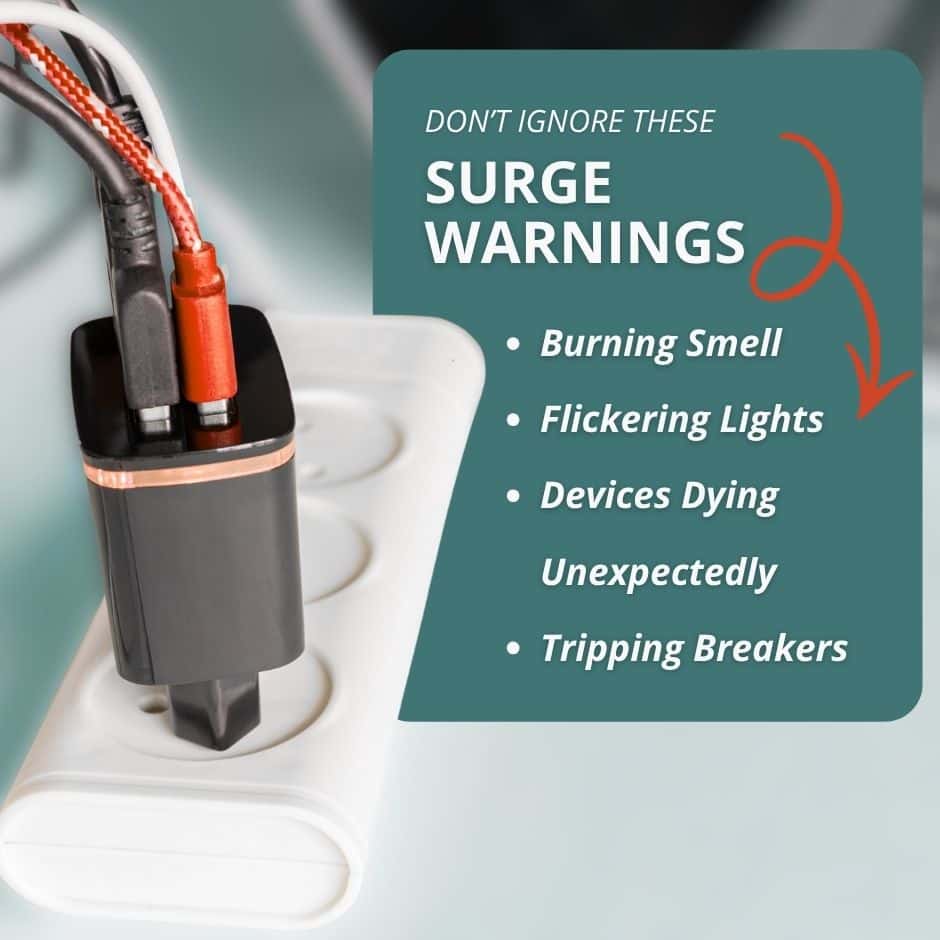
Can a power surge cause a house fire? Yes, in some cases. A large power surge through faulty wiring or damaged exposed electrical wires can generate enough heat to ignite surrounding materials. This is why surge events in older homes should never be ignored, especially when accompanied by a burning smell or buzzing sound coming from the panel or walls.
What’s the difference between a surge and a power outage? A power outage is a complete loss of electrical power. A power surge is the opposite: a sudden jump in electrical voltage above normal levels. Both can damage devices, but surges cause more immediate hardware damage because of the excess voltage spike itself. During a pre-drywall inspection, we verify that your electrical panel is correctly grounded.
When to Call a Professional
If you are buying a home or have just moved in, look into a warranty inspection or home inspection with Inside & Out Property Inspectors. If any of the following are present in your home, contact a certified electrician:
Flickering lights or a buzzing sound with no clear cause
Circuit breakers frequently trip on the same circuit
A burning smell coming from outlets, the panel, or inside the walls
Exposed electrical wires or outlets that feel warm to the touch
Scorch marks or discoloration near any outlet or switch
Conclusion
For buyers and sellers across Jacksonville, St. Augustine, Nocatee, Ponte Vedra Beach, Fleming Island, Orange Park, and throughout Northeast Florida, Inside and Out Property Inspectors provides thorough home inspections covering the full electrical system.
We also offer 4-point inspections for insurance purposes, wind mitigation inspections, and a full range of specialty services to give you a complete picture of any property.
We’re inspectors, not electricians, and we’ll always be upfront about what a visual inspection can and cannot tell you. But knowing what to look for, what questions to ask, and when to bring in a specialist is exactly what a good inspection equips you to do.
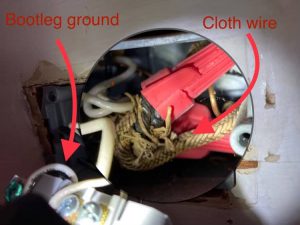
We hear the word “bootleg” often such as bootleg cassettes or bootleg computer software to name a few. It means things that are created and sold illegally. Often people will sell bootleg videos of movies or concerts. These are illegal recordings that a person made while at the concert or movie and then sells it. In the case of electricity, a bootleg ground is when a jumper wire is installed on a receptacle, in betweenfrom the neutral wire to the ground screw. The purpose is to ground the receptacle when going from a two-prong outlet to a three-prong.However, it is illegaland does not actually ground the receptacle.
Let’s take a look at why you need to know about bootleg ground, what it means, why it is dangerous, GFCI protected outlets, how to know you have one and what if you have one, alternatives, other areas to check and when to call a professional.
Why You Need to Know About Bootleg Ground
Homes built prior to 1960 that have grounded receptacles and not rewired could have bootleg ground. Why? Often it is done out of not knowing any better, but sometimes it is done to pass it off as being grounded when it is not. You want to have your receptacles grounded properly so family members are not electrocuted in the home. In addition, it is illegal to have bootleg ground.
What it Means to Ground
In a home, you want the receptacle grounded. Back in the 1960s, homes only had two-prong outlets and there was a neutral wire and a hot wire. Wires were not grounded, thus making homes dangerous if a fault were to occur. Now, many people will have the prong outlets updated in their older homes, going from two prongs to three prongs so they don’t need to use an adapter.
However, the problem is when rewiring the home, some contractors were not installing the proper ground wire to make the home safe. This is usually a wire that runs from the breaker box to the newly installed three-prong outlet. Instead, the wire is not installed and creating a hazard in the home.
Some people say that having the ground wire tied to the neutral wire at the electrical panel is okay and having them tied together on the other end at the three-prong outlet will work just fine. However, that is not a true statement and the wire must be connected properly. People try to get around it as it is expensive to do.
https://www.youtube.com/watch?v=gjo60o_nJ2I
Why Bootleg Ground is Dangerous
This is dangerous because of the flow of electricity. Hot and neutral wires are the only ones designed to carry the electricity and the ground wire is not made to carry the electricity. However, what happens is if there is a problem on the neutral wire that it becomes disconnected or damaged as it is connected to the three-prong, anything that is plugged in can strengthen and cause electrocution. In addition, it can start an electrical fire.
Bootleg and Reverse Polarity
Reverse polarity is a hot/neutral reverse of wires and causes the same issue as described above with electrocution hazard.
GFCI Protected Outlets
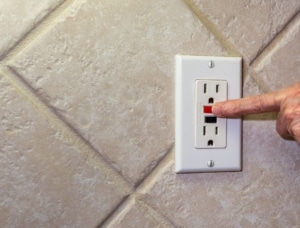
Many homes use GFCI protected outlets. If there is a bootleg ground, it may not trip as it should in a ground fault and also cause electrocution. Having a bootleg ground puts a whole family at risk and not worth their safety.
How to Know if You Have a Bootleg Ground
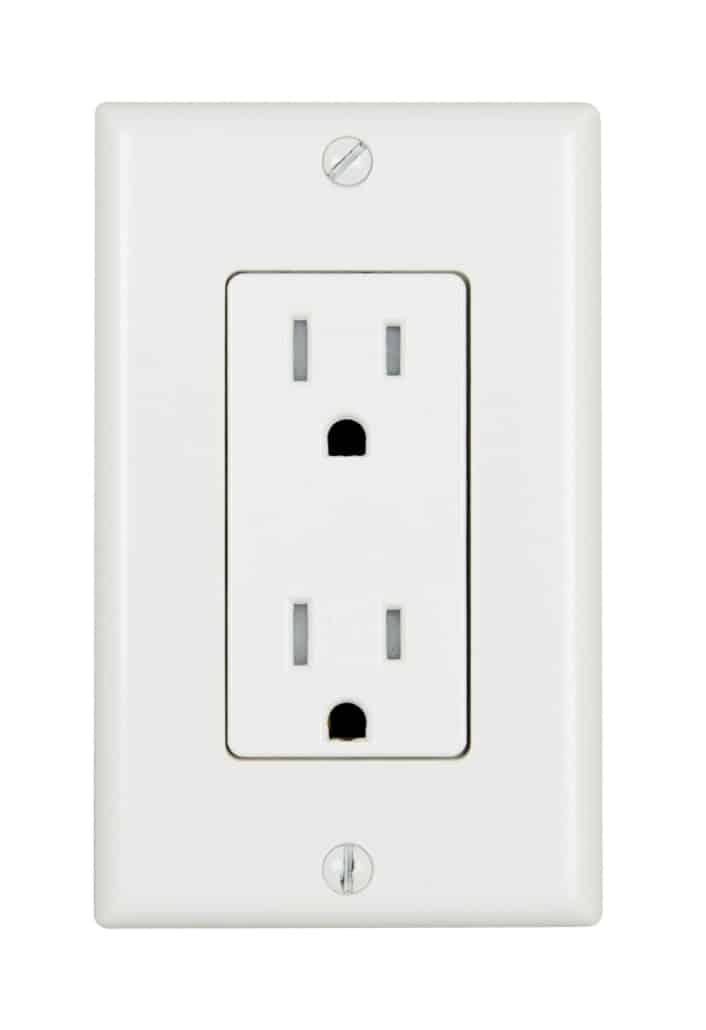
Bootleg grounds are commonly installed in homes built before the 1960s. To find out if you have a bootleg ground, turn off the electric at the panel box. Remove the receptacle cover and see if there is a jumper wire. If you are not sure, pull the receptacle out of the wall to check. Also, check that the white wires go to the white metal screws. Likewise, the green screw connects to a bare copper or green wire for proper ground. Unsure? Contact a licensed professional to help.
Want to find out if you have a bootleg ground with a test? Well, if you use a three-light tester, there may be a false reading. However, if you use a circuit analyzer or hire an inspector, you will get the actual result and peace of mind.
Home inspectors won’t check for bootleg grounds during a home inspection, as it is beyond the scope of their job. However, sometimes people who have bootleg grounds in the home will have some two and three-prong outlets in the home, instead of all the same. People who put in bootleg ground usually don’t change all of them in the home.
Moreover, while outlets may show proper grounding, there might be a lack of ground wires in the electrical panel. Therefore, homeowners or experienced home inspectors might suspect the home has bootleg grounds.
What if You Have Bootleg Grounds
Contact a professional for his/her recommendation/repairs.
Leave the two pronged outlet covers so it is known there is no protection from the ungrounded circuit.
Install GFCI protected receptacles or breakers.
Rewire the home with grounding wires.
Alternative to Bootleg Ground
Instead of installing these in the home, contact a licensed professional to properly ground three-prong outlets. It usually is not very expensive and will follow the National Electrical Code.
Other Areas to Check and Maintenance
1. Check that the metal box is grounded
In addition to making sure the receptacles are grounded, you want to know that the metal box is grounded. Where is this? It is behind the outlet. When you take the receptacle cover off and pull the outlet out, you can use a tester to see if it is grounded. Its purpose is to make sure that it doesn’t send electricity through the ground to the breaker box.
2. Tamper Resistant Outlet
You also want to make sure that you have a tamper resistant outlet. This is an outlet that when something is stuck into it that is not a plug, the shutters close up in it. This is to protect whoever is putting something in there that doesn’t belong.
3. Maintenance of the Water Heater near the Electrical Panel
Most people have an electrical panel near the water heater in their garage. It is just as important to make sure the water heater is functioning properly so keep up with maintenance on it so you don’t have any water or electricity issues.
When to Call a Professional
Call a professional when you need help figuring out if you have a bootleg ground, or if you need rewiring in the home or new three prong outlets added. Some homeowners can do this on their own, but don’t be afraid to call a professional if you need help.
https://insideandoutpropertyinspectors.com/wp-content/uploads/2021/04/Bootleg-ground.jpeg562750BJ Johnsonhttps://d39oyu4lp7snwz.cloudfront.net/wp-content/uploads/sites/54/2019/08/31171419/io-favicon-300x300.pngBJ Johnson2021-04-26 22:30:512024-12-24 19:37:46Bootleg Grounds: Everything You Need To Know
Finding what you think is the home of your dreams is an exciting time! You have looked at other houses, you have made a list of pros and cons, but you are not sleeping at night…are you having buyers remorse or getting cold feet for this upcoming purchase?
There are so many thoughts that go through one’s head when buying a home. Next step, you have a home inspector to look at your new home and the report comes back. How do you know when to walk away after a home inspection? Some issues may be cheap to fix or a negotiated expense with the seller, some may be hefty prices to fix, and walking away may be best. Let’s take a look.
Can You Walk Away From a Home After an Inspection?
The answer is yes! It is one of the most common times to walk away when a home is under contract. Buyers don’t always know what is inside the home or the parts that make up the home until the inspection is complete. This is why an inspection is highly advisable. The house may look beautiful and perfect but you don’t know what is lurking inside the plumbing, the roof, and etc. Some major issues in the report will be needing repair or replacement and they are discussed below. These issues will allow you to think about when you need to walk away after home inspection.
Foundation issues can be a major problem in a home
A. Foundation
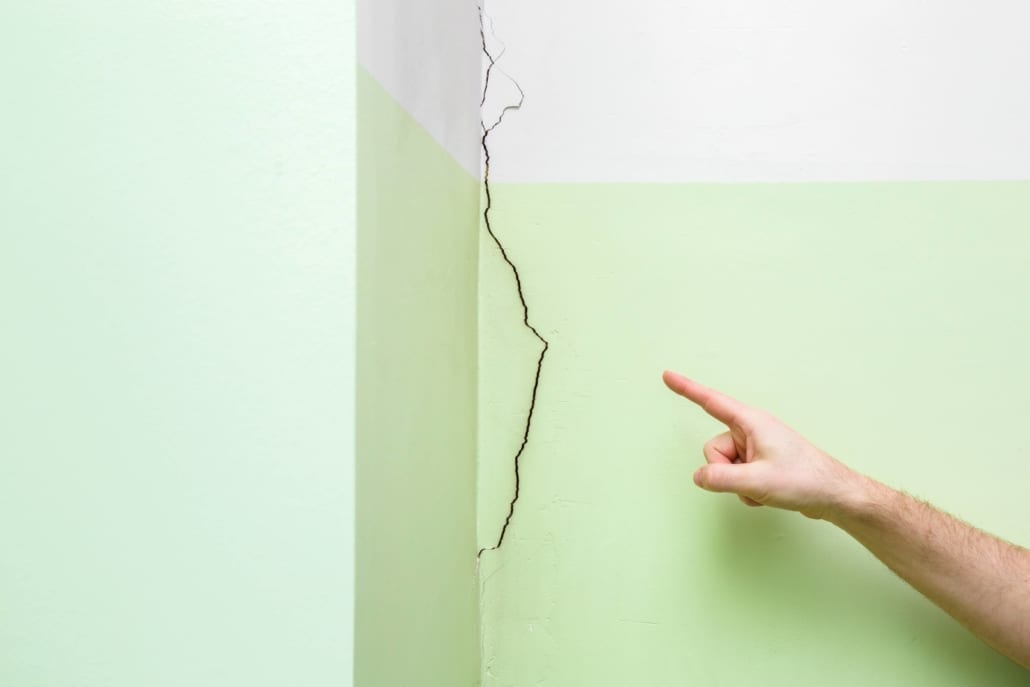
Did your home inspection report come back with major issues? Is one of them the foundation? If yes, this may be a problem. The foundation holds up the home and is very important that it is intact.
Inspection of this structural issue is about $600 while repairs can cost from low thousands to tens of thousands depending on the issues. You will want to consult with a structural engineer for a quote if this is a home that you love and find out what the real cost will be. If it is out of your budget, this is a good time to walk away after home inspection.
Termites can cause a lot of damage in a home
B. Termites
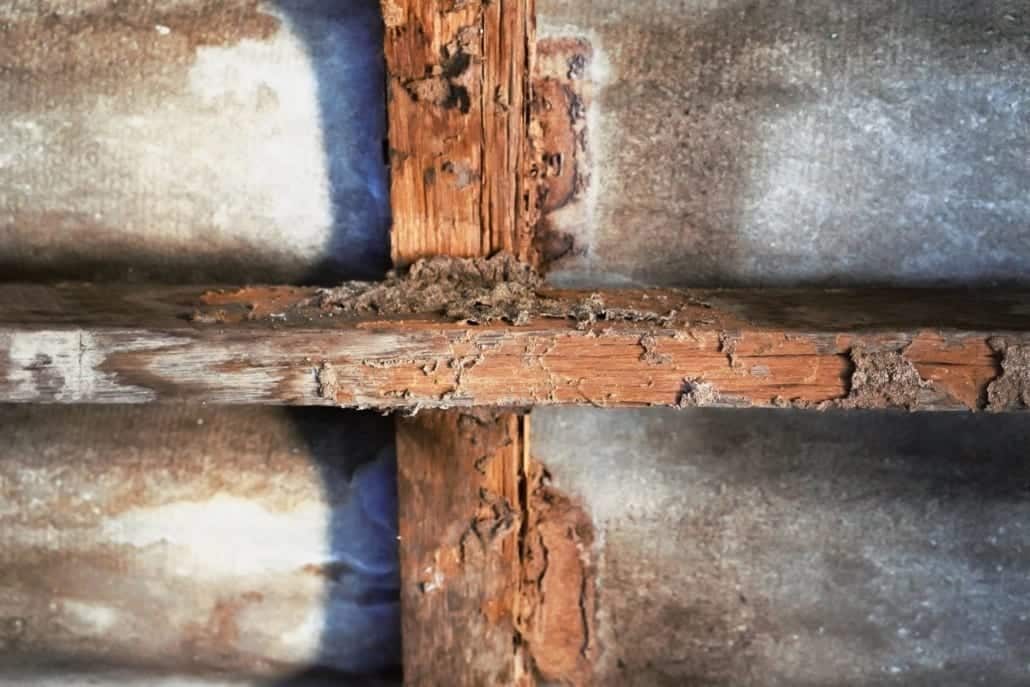
Termites in a home are not a good thing. It can be very difficult to get rid of them depending on the extent of the infestation and the damage they have caused. However, a termite inspector will need to investigate and give an estimate to repairs. He/she will also let you know if the termites have left evidence that they were there or if they are still active. Buyers should also know that it is common for older homes in the southern states to have evidence of termites. The inspector will look to see if there is any structural damage to the property. If there are active termites, you will have to consider the cost of termite treatments (about $750) and repairs depending on the severity. Repairs can cost from $200 – $2500 or more, depending on the issues.
Water damage may be worse than it looks
C. Water Damage
Water damage is another issue as there can be mold where you can’t see it. The buyer may have fixed the water issue and only the stains are left behind, but did the owner check for mold? Mold can cause health problems and can range from $500 to over $6,000 depending on the type of mold. A professional will need to come in, collect spores, and look at them under a microscope to see what is in the home.
Water damage may also mean that there are soft areas in the walls, floors, etc., and other areas of the home. Again, call a professional in to survey the issues.
Electrical issues can cause fires
D. Electrical Issues/ Damage
If the inspection report finds there is a faulty electrical system or there is damage to it, this is a problem. A faulty electrical system can cause a fire in the home and electrical sources to short out or not work properly. An even bigger concern is if the home was built in the 1970s and an electrical panel like GTE Sylvania Zinsco or FPE panels was installed in a home. Replacement of this type of panel will average about $1500. Another example could be from aluminum wiring.
Roof needs to be intact and pass inspection to protect the home
E. Roof Issues Can Be a Good Reason to Walk Away After Inspection
The roof is an important part of a home and does need replacing over time if the home is older. Sometimes weather events can cause it to need to be repaired instead of replaced. If it is minor work, it won’t be very expensive but a professional can tell you if it is more than just replacing a few shingles.
You will need to make sure whomever you or the seller hire for the work is licensed and insured. However, if it is a major issue and the whole roof needs replacing, that can be very expensive. There can be room for negotiation with the seller to drop the price if that is something you are willing to take care of, but there are no guarantees. This type of issue also allows you to walk away after inspection.
F. Unpermitted Work Found in the Home
Homeowners often have a “friend” that can do the handyman work or they use someone who has a low quote to do the work on the home. An example would be building an addition to the house.
However, if there is no permit for the work, you risk the safety of those in the home and you may have to pay the fines the seller didn’t pay. Do you know what is inside the walls or if they are attached properly so they don’t fall in? It is risky when finding major work done in the home and no evidence of permits. This is another good time to walk away after home inspection.
G. Financing and Insurance
Pre-approval before looking at homes makes sense. You need to know the amount you are approved for and what you can afford. But, don’t go and buy a new car or furniture before you close on a home. This act can cause you to lose financing. You also want to make sure that you don’t stretch yourself too thin. Do you have extra room in the financing or your savings for any issues that come up in the inspection? Or are the issues too expensive? If it does not seem like it will work, it may be time to walk away.
You will also need to think about insurance. Some loans have requirements on inspections and some states, like Florida, have requirements on 4-point inspections as well.
A Title with a lien on it will not allow you to buy or sell the home until it is taken care of.
H. Title Issues
Your inspection may come back with minor issues and you may be rejoicing. Then comes the title company pulling the title and there is a lien on the home or overdue HOA dues. If the seller isn’t willing to deal with these, it is time to walk away. Both of those issues don’t allow the seller to sell the house and it can’t be yours – or anyone else’s in the near future.
Conclusion
It is hard not to fall in love with a home, but it needs to financially make sense. There will always be a perfect home out there for everyone and may take time to find. Inspections by professionals do cost hundreds of dollars so budgeting for them is important if you find a home with a lot of issues. Talk to your realtor and don’t be afraid to negotiate with the seller about issues on the inspection report.
We should be aware of what is common in a home inspection versus an unforeseen issue we are unable to deal with. An experienced Realtor can help you navigate through the process. Do you have a question about an issue in an inspection report? Please drop us a line below and we can help!
https://insideandoutpropertyinspectors.com/wp-content/uploads/2020/08/couple_walking_away_50-1030x481-1.jpeg4811030BJ Johnsonhttps://d39oyu4lp7snwz.cloudfront.net/wp-content/uploads/sites/54/2019/08/31171419/io-favicon-300x300.pngBJ Johnson2020-08-18 13:23:582021-11-29 13:59:45When to Walk Away After Home Inspection